It didn't augur well. On the day that Hong Kong's annual Film market was due to kick off for its 14th instalment, visibility across the already soupy harbour was at a minimum thanks to the worst smog in 15 years. Last year, it was the economic cloud of the GFC that shrouded Filmart 2009 in gloom. Was this a sign that 2010 going to be more of the same?
With the determination and optimism that characterises the film industry, people flew in from around the world to see who was ready to do (show) business. And business is what they did.
As has been always the case at Filmart, major players from France, the UK, and South Korea have a very firm aim on the potential of selling to the huge Chinese market. Malaysia, Philippines, Thailand and Taiwan also boosted their presence from previous years with colourful pavilions decorated with pictures of the superstars of their individual regions.
But as big as these market stands were, they were dwarfed by the enormity of the installations from Mainland China. Of the United Nations of countries exhibiting at the market, 20 per cent of the stands represented Chinese companies. As a reflection of the increased presence, the Chinese stands in the market also seem to be becoming larger and taller as the importance of supplying film (and television) to Chinese consumers becomes increasingly alluring for international sales agents.

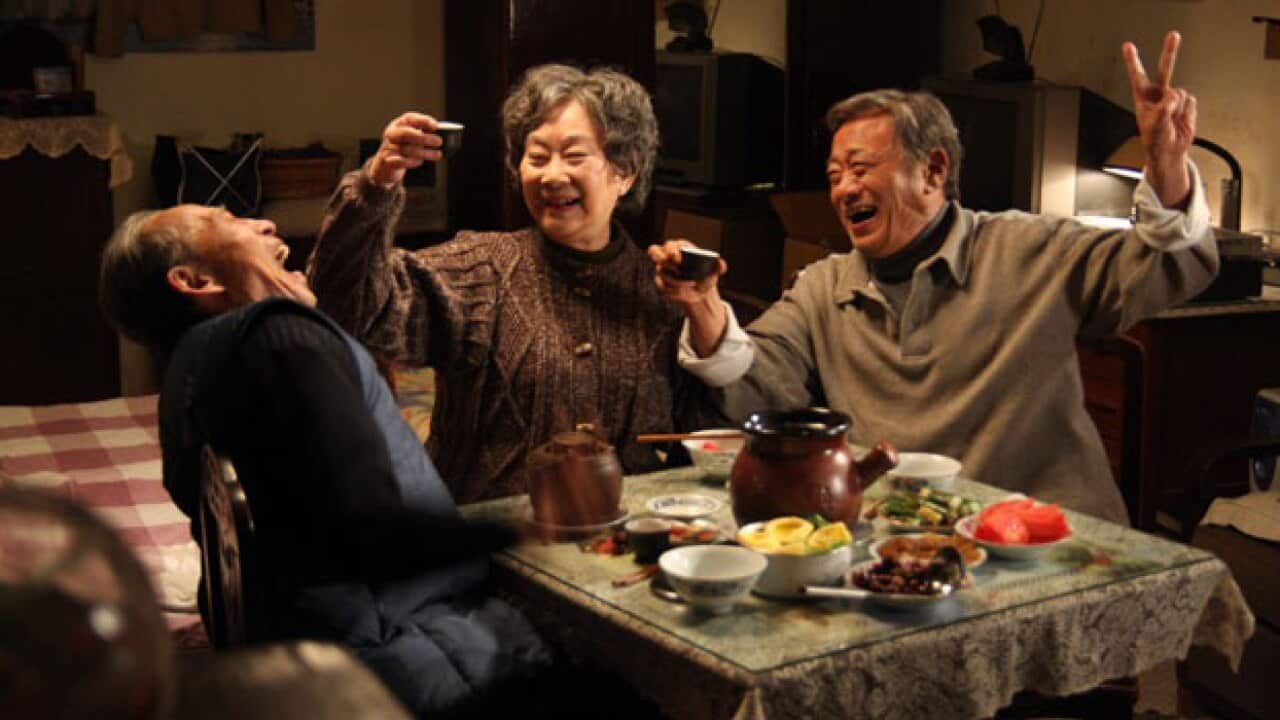
The flow of films outward from China to the international markets was more like an approaching tsunami whose impact has yet to be felt. Screenings of the playful Tang Dynasty comedy drama The Robbers (left), the lurid crime thriller Invisible Kill or the art house sensibility of Berlin Golden Bear winner Wang Quanan's latest film Apart Together were just trickles of a humongous flood of films from a Chinese industry that is ready to offer its wares to the world.
But while China is the dragon in the market's lounge room, there's plenty more on offer from the other Asian players who converge in Hong Kong every March. There was a total of 260 film screenings over the four day event.

The hottest Hong Kong film previewed was Dante Lam's Fire of Conscience. Kicking off with the most startling use ever of CGI in a non-fantasy film, Lam's crime and cop corruption drama opened with a black and white mezzotint tableaux of freeze frames of several interconnected crime scenes. Then the film launches into colour with a neck-snapping whip pan that sets the pace for the action that follows. Stars Leon Lai (Three) and Richie Jens (Exiled) give their best performances in years.
Other Hong Kong films like itinerant Clara Law's latest effort (and I do mean effort) art house meditation on immigration Like a Dream and Ivy Ho's romantic comedy Crossing Hennessy garnered less enthusiasm, though both films did have their fans.
The soon to be released (April) sequel to Donnie Yen's 2008 hit Ip Man (called Ip Man 2 not surprisingly) remained unseen, but interest in another film about the martial artist who trained Bruce Lee was running high. Since other directors (including Wong Kar-wai) also have Ip man projects in the works, that's probably a good sign for everyone.
The biggest surprise was Taiwanese gangster epic Monga. A movie that took steady aim for genre greatness and hits the bullseye, this beautiful looking film recalled, but did not repeat the tropes and the grand sweep of gangster films like Francis Ford Coppola's The Godfather, Johnnie To's Election and Takeshi Kitano's Hana-bi and Sonatine. The second film by actor/comedian Doze Niu Chen-Zir, Monga is a quantum leap from his first feature, a HD mockumentary pic with in-jokes about the Taiwanese film industry. This stunning gangster film has a powerful aura and identity all its own, that will thrill fans of the genre.
From Thailand the challenging and possibly homophobic slasher movie Slice generated a lot of interest for both its stylish violence and its controversial content. From Japan the hot ticket was political paranoia thriller Golden Slumber (after The Beatles' Abbey Road song), but considerable interest was also generated by Koji Wakamatsu's Caterpillar politically charged version of a horror story of a multiple amputee who returns home from WWII. Other notable sales deals were Japanese films like the stilted samurai drama Tajomaru and Surely Someday, a rock and roll comedy drama directed by Japanese actor Shun Oguri.
A South Korean film that was piquing curiosity was kept under wraps from journalists and festival programmers. Iris: The Movie spins off from the hit TV show, features Lee Byun-hun (kimchi Western, The Good, The Bad, The Weird as well as American blockbuster G.I. Joe.) With a story that features Special Forces agents, a beautiful profiling agent and a threat of nuclear terrorist attack, the result is sure to be shamelessly commercial while it upholds the mantle of top quality South Korean production.
It wasn't a spectacular rebound from the gloom of last year's economic downturn, but as if presenting a meteorological metaphor, by the end of Filmart the smog had cleared away from Hong Kong's harbour. The outlook for the Asian film industries looks bright and Hong Kong was the place to be.
With all this buying and selling and government Film Commissions from around the world in full force, it is somewhat surprising that Australian funding bodies overlook Asia's increasingly important film market. Vying for Asia's top spot with Tokyo and Pusan film markets, Hong Kong's Filmart is certainly carving a niche that makes it often referred to in the same breath as the industry's top tier, Berlin, Cannes and AFM (American Film Market to the uninitiated). Given Australia's proximity and frequent trumpeting of its role in Asia, it is quite distressing to see that Australian film funding bodies are still stuck in their colony induced blinkered Western mindset.
Surprisingly, one Oz project got sales anyway. Euro/Asia heavyweight sales agent Fortissimo Films announced its purchase of Australian high school drama Wasted on the Young the upcoming debut from Ben C. Lucas.
On the buying side, rival Australian distributors and both keen followers of the Asian markets Madman Entertainment and Odin's Eye were on hand to see that that no asian bargain was overlooked.
Covering all the activity of the market are the film industry trades. Recent (financial and marketing) difficulties at Variety have taken the focus from the on-going stresses faced by the less solidly based trade papers Screen International and The Hollywood Reporter (or THR to use its less North American sounding KFC-style acronym). Reporters and reviewers (including me) from all three trades were casting a wary eye across new industry website Film Business Asia started up by veteran Asian specialist Patrick Frater. Is online trade (which resembles but has some advances upon the now defunct “Variety Asia Online” website once managed by Frater) going to run with the wolves or is it perhaps going to trigger the demise of at least one of the established trade publications? It was the one story none of the trades wanted to publish.