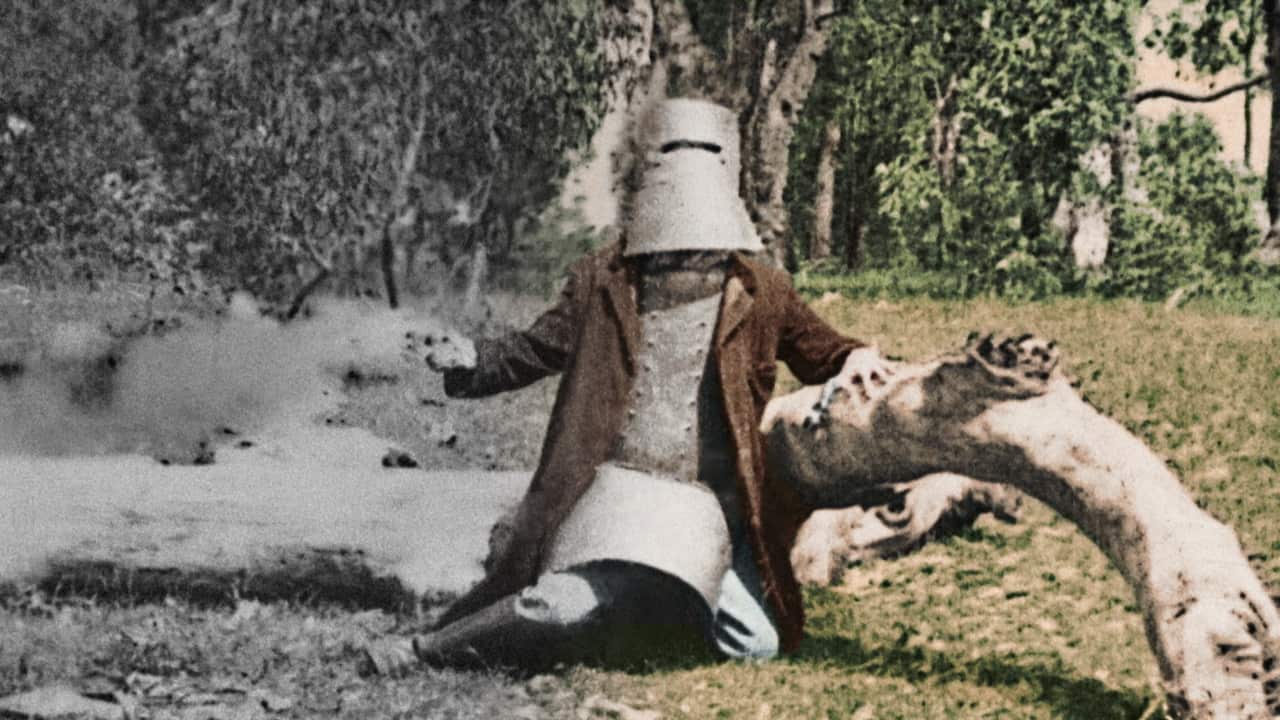
You wouldn’t have known it at one stage, but Australia was home to the world’s first ever feature-length film – 1906’s The Story of the Kelly Gang (not the one with Mick Jagger). Shot in and around Melbourne, it sparked a wave of imitators, each clamouring to tell their bushranger story for a local audience hungry for folk heroes and mad villains on horseback.
Alas, because nothing good can last forever, bushranger films were banned by police in 1912, in case people got ideas about blacksmithing up suits of armour and attempting to derail trains. But that wasn’t the end of our nascent film industry, which continued pumping out hit after hit (relatively speaking), although the beginning of WWI dealt a significant blow to the number of productions.
On the red carpet…
Annette Kellerman, arguably our first major movie star and polymath, went the Lady Godiva route in 1916, portraying a mermaid clad in nothing but hair for A Daughter of the Gods. (That was a Hollywood flick, but that pride you’re feeling is akin to watching George Miller win an Oscar or Thor: Ragnarok win the acclaim of comic-book geeks.)
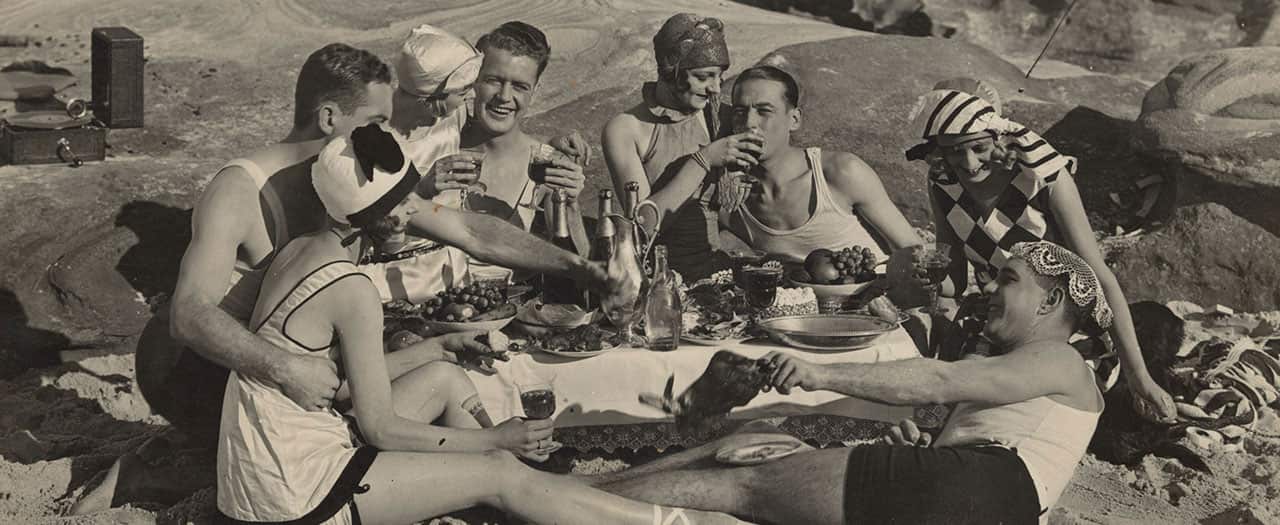
Skipping ahead to the mid-1920s, and Louise Lovely was dazzling cinema patrons in Jewelled Nights, an adventure romance that she wrote, directed and starred in. The McDonagh sisters – Paulette, Phyllis and Isabella – were particularly prolific, beginning with the family-funded Those Who Love and continuing to make films into the 1930s.
Suffice to say, there was a lot going on down under, and we had a strong local audience eager to consume strong local stories about strong local men and women.
Enter the baddies…
But first, the trailers, in the form of some figures from Screen Australia. In 1910, TJ West – the first Aussie to construct a permanent picture theatre – had 14 venues, with a nightly audience of 20,000. By 1912, there were 25 cinemas in Melbourne alone, with a combined seating capacity of 50,000. A decade on, and out of a population of 6 million people there would be 2.25 million cinemagoers each week. In short, it was flourishing, both in terms of creativity and profitability. And then came the Americans, behaving more like moustache-twirling villains than white-hat heroes. In a tactic that is all too familiar in business, they flooded Australian picture theatres with cheap fare that the local industry couldn’t compete with.
But lest this sound like nothing more than sour grapes almost a century on, it was such a big deal at the time that a Royal Commission was called. The Royal Commission on the Moving Picture Industry in Australia took place over the course of two years, from 1926–28. It wasn’t just about slagging off Americans – there was also some concern about the content of the films being shown on Antipodean screens, sex stuff and kids not being able to concentrate in school. You can read the full thing here if you like, but the main thing to know is that they made some recommendations… and the whole thing didn’t amount to much, really, in the long run. Anticlimactic, we know.
And look, to be fair to the invaders, the local industry had made changes in the 1910s that allowed for this sort of behaviour – independent producers had merged under the umbrella of Australasian Films and Union Theatres, then formed something of a cartel. This paved the way for exclusive deals to be signed over the following decades, shutting local movies out of the picture theatres in favour of American films, which had already recouped their production costs at their home box office (not HBO, that came much later).
Leaving the door open for a sequel…
It wasn’t as though there were no Australian movies made after this fait accompli – we won our first Oscar with Kokoda Front Line! in 1942, for example – but the local industry wouldn’t really recover until John Gorton established the Australian Film Development Corporation in 1970 (replaced by Gough Whitlam with the Australian Film Commission five years later). Gorton would play himself in 1976’s Don’s Party, while Whitlam made an appearance – while still in power – in 1974’s Barry McKenzie Holds His Own.
See scenes from the world’s first feature film, The Story Of The Kelly Gang brought vividly to life in 4-part series Australia In Colour, airing on Wednesday nights at 8:35pm on SBS. Catch the latest episode at SBS On Demand: