Watch FIFA World Cup 2026™ LIVE, FREE and EXCLUSIVE

SEASON 2 EPISODE 3

William Wang on defying his parents and Confucius

Comedy Karma - Web Banner - William Wang v2.jpg

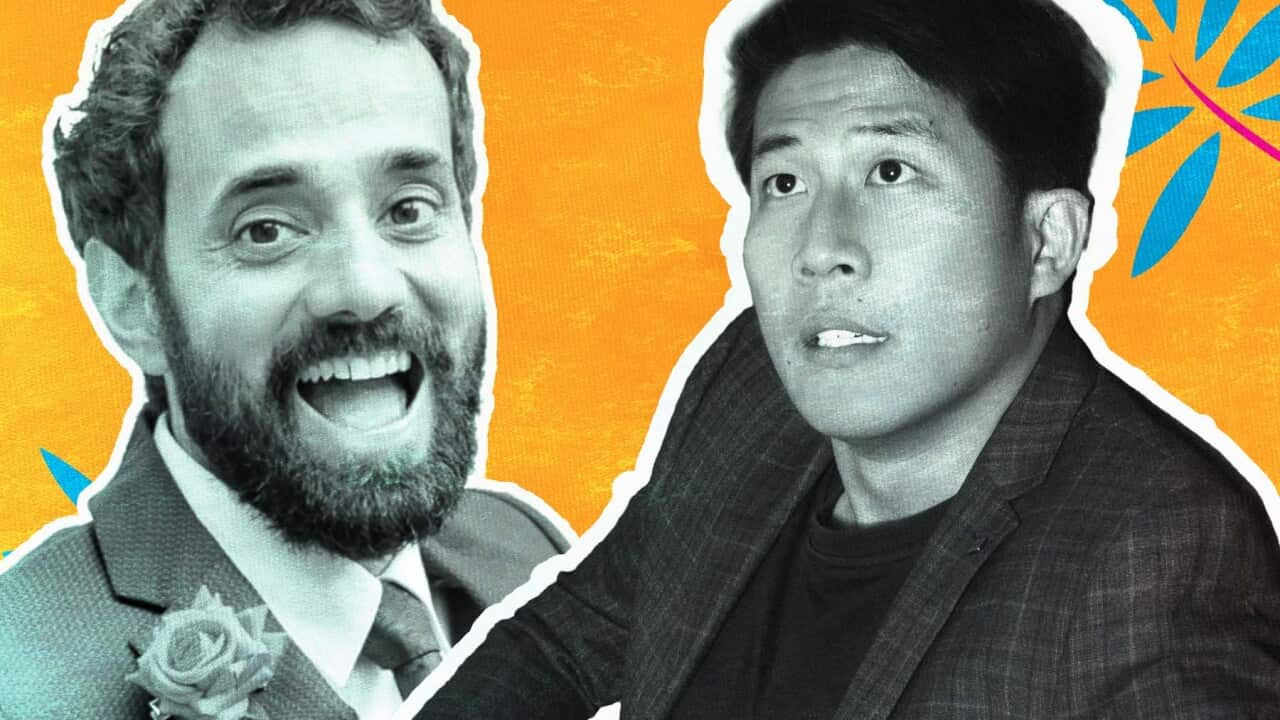
What happens when someone asks about your "breed" instead of ethnicity? Comedian William Wang turns awkward encounters into comedy gold while exploring themes of cultural identity, the one-child policy's impact, and why some audiences don't always appreciate his humor.


In this episode of Comedy Karma, Aditya speaks to Chinese-Australian comedian William Wang. From being disciplined by teachers to discovering stand-up through Russell Peters, Wang chats about the complexities of immigrant identity and comedy. Wang opens up about navigating cultural stereotypes, finding his comedic voice in Australia and tells the stories behind some of his best jokes.

I wouldn't know, I'm a rescue.
William Wang, Comedian

Find full episodes of Comedy Karma on the SBS South Asian YouTube channel. Follow the series your podcast app such as the SBS Audio app, Apple Podcasts, Spotify and more.

Comedy Karma is created and hosted by Aditya Gautam

Additional Editing by Tarun Tyagi

SBS Team: Joel Supple, Bernadette Phương Nam Nguyễn, Max Gosford and Philip Soliman

Aditya Gautam

I would like to acknowledge the traditional owners of the land I'm recording from. I pay my respect to the Cammaraygal people and their elders, past and present. I also acknowledge the traditional owners from all Aboriginal and Torres Strait Islander lands. You're listening from coming up in this

episode.

William Wang

I was in the- I don't know what I did, but he kicked me from the front of the room to the back. Back up the room.

Aditya Gautam

Holy, dude.

William Wang

It just flew across the room. I don't want to identify myself as Chinese. I don't, I don't feel that way, but I, I can understand it. Also, like, a lot of people, like, see Chinese people who maybe grew up here or like Singaporean Chinese or like Malaysian Chinese or like, like, they don't want to,

like, if they get really offended, which has like, I don't, I don't understand. It's like, shape you in a certain way because siblings. And then I see how she interact with her siblings and I feel like, okay, I would never do that for anyone. You know what I mean? So we have like a party bus I don't

know if, I'm allowed to say this, but I don't think they care. They just had like a party bus like every Thursday. I think that was like, party day.

Aditya Gautam

Hello, everyone. Welcome to Comedy Karma season two. I'm, Aditya Gautam, your host. In this podcast, I talk to comedians from all over the world who now live and perform stand up comedy in Australia. Today I'm talking to William Wang. William Wang is a Chinese Australian comedian. He has, won lots

of awards. He's, been a RAW finalist. He's performed for thousands of people in big, massive shows. he's been doing his solo shows across Australia and, selling out. He's doing great things. Let's start the show with one of his jokes.

William Wang

It's very hard to tell, Asians apart, right? I was at a party and then this lady asked me, she goes, you must be Korean, cause you good looking. Yeah, she had a few drinks. I was like, no, but thank you. She said, what is your I think she was gonna say ethnicity but she couldn't remember that word.

I'm not making stuff. She goes, what is your breed? I wouldn't know. A rescue.

Aditya Gautam

All right. William Wang. That's a great joke. Did this actually happen to you, this incident, of someone calling you like saying the breathe.

William Wang

yeah, yeah. So this happened a couple of years ago. I did, I did a part time job in RSL club. In one of the RSL club. Like a bowling club, I think. Yeah. So it's a lot of like older people there. And then just this one lady, I think she's like 80 or something. 70 or 80. And then.

Aditya Gautam

So she wasn't drunk, she was just old?

William Wang

No, she was. Yeah. Probably drunk too. Like they're pretty loose. They're pretty. I think she's like drunk and. And then yeah, she was just like making small, small talk with me and she said, where's your. What's your And she just couldn't remember. And she goes, what's your prade. And then I, I

didn't even find this like funny or offensive at all. Like I just, I didn't like, you know, I just, oh, I'm Chinese. And then she said, oh, that's cool. Like I know like Vietnamese people. And, and she.

Aditya Gautam

So she said you, you must be Korean because you're, because you're good looking. She said that line?

William Wang

no, she didn't say that. Okay, so that was like separate incidents. That's like incident. Just someone said that to me, like this is not in the same, same place. Yeah, so she's. And then I told my like which is just chatting with my co worker and manager and then I said that. And they were like, oh,

that's crazy. And she said, am m I really. Maybe I'll write it down as a joke. And they were like, yeah.

Aditya Gautam

You know, I meet so many Indians. Who. Like, like don't want to be identified as Indian. Yeah, they're like, they're like in. Australia or in India. In Australia, not in India. So that's the thing. When I was growing up in India, even if I saw like Hollywood movies or stuff and I saw an Indian being

made fun of or whatever, I didn't care because it didn't feel any like anything. But when I came to Australia I realised, oh man, like there's a Lot of baggage being Indian. And there are other communities that don't have that baggage.

William Wang

Okay.

Aditya Gautam

They're just. They're. They don't have that so much, like, baggage around it. Did you feel that when you came here, like, as a Chinese person, that there was some baggage about, like, culturally that they thought of you, like, something and.

William Wang

Yeah, well, all the stereotypes, about Chinese and I mean, there's still like, like negative kind of feeling attached to it. Right. Like, you know, you see someone, oh, he's Chinese, and then you automatically just have this kind of feeling about it. But I don't really feel that way because, like,

saying, I don't want to identify myself as Chinese. I don't. I don't feel that way, but I. I can understand it also, like, a lot of people, like, see Chinese people who maybe grew up here or, like, Singaporean Chinese or, like, Malaysian Chinese, or like, like, they don't want to, like, if they get

really offended, which has, like. I don't, I don't understand because it's like. Yeah, because you're like, you do. Obviously, you're Chinese. Like, they speak Chinese too, right? Yeah, they speak Chinese. you know, they look like Chinese and.

Aditya Gautam

Yeah. Is it. I. I think it's because of all the baggage that comes with maybe being Chinese, because there's so many. So much back. Our cultures have so much baggage. Right. Because it's such an old cultures and there's so many. So many things. Oh, Indians are like this. Indians are like this.

Chinese people are like this. Chinese people like that. And people, like, don't want to avoid that.

William Wang

Yeah.

Aditya Gautam

that's maybe where it comes from. but you. You personally never felt that or.

William Wang

only when I'm on dates, like, I'm trying to get late sometimes. I. I just. They go, where are you from? I'm like, I. Yeah, just lie.

Aditya Gautam

What.

William Wang

Where you want me to. I come from. I'm m. From Korea.

Aditya Gautam

Wherever you want me to.

William Wang

Yeah. Ah.

Aditya Gautam

it's this fact that you. These, the people here, their view of Indians or Chinese comes from Hollywood.

William Wang

Yeah.

Aditya Gautam

Because they haven't interacted that much with them.

William Wang

The media. No, I don't. I wouldn't say Hollywood. Probably. Like media, right? Yeah, a lot of. Yeah, yeah.

Aditya Gautam

So you. So you. When you are communicating with them or meeting them with a lot of them, you have to overcome this. This idea of what Chinese is, what Indian is that they have. From the media.

William Wang

from the media. Yeah. Yeah, yeah. But I feel like. So I had this thought Right. Like, say, for example, they go, oh, like Australian people will say, like, Chinese people like this. And they do this and they do that. Or they think they're like,

William Wang

How would you say it? Like, impolite. Or they do something rude or they're like. They're just, Just assholes. Like, a lot of assholes. Right. So I've been thinking about this. I was like. Because, like, you would only remember if you don't know anything about this. Right. You only remember the thing

that jumps out. Right. So, like, if something happened, you see, you go, oh, that's a Chinese person. And then the Chinese person do that.

Aditya Gautam

Yeah.

William Wang

So. And then you just only remember that. You wouldn't remember, like, normal things that they do or like, even, like, you know, good things they do. Because we all just wired that way. So we just remember that. So in a way that's like. It just. That's like a black dot on the white paper.

Aditya Gautam

That's so true. Yeah, that's true. It's like. It's like how you. You re. You hardly ever leave a good review to a restaurant, but you leave a bad review. So if a restaurant is bad, that stays in your head.

William Wang

Yeah, yeah.

Aditya Gautam

The good, decent restaurants, you don't think.

William Wang

Yeah.

Aditya Gautam

Unless it's really good.

William Wang

Really, really good. Yeah. But I don't know that. That many really, really good people.

Aditya Gautam

Exactly.

William Wang

I think that in any culture. Yeah, in any culture. Exactly. So. So that's that.

Aditya Gautam

Yeah, good point. Okay, I'm gonna play the second joke, which is

William Wang

very hard to train cats. Right. It's because you're not supposed to hit them. Right. Yeah. Also, I learned you guys are here. You don't hit your cats. we also don't. I'm from China, but we also don't. If you do, people understand. Because we're. Still hitting our children. It's very hard to go to

people be like, hey, you can't hate, animals. And then you go back to your kid. You're like, that's hypocritical. You gotta hit them both.

Aditya Gautam

I've actually never seen you doing this joke.

William Wang

Oh, that's all. Yeah.

Aditya Gautam

Yeah.

William Wang

Sometimes it goes okay. Sometimes like people you just met with dead silence. Yeah.

Aditya Gautam

Okay. Can you even hit a cat? I thought that's not possible. Because the cat will you up, right?

William Wang

Why?

Aditya Gautam

It's just. Cats are like. Cat won't take it.

William Wang

Oh. Yeah. I guess it depends on whose cat. And also, you'd like. They know they did something wrong. Usually you don't Just hit them out of nowhere, like. Yeah, I mean, I don't hit them, but it's like. I mean, I assume they did something and they probably feel guilty about it.

Aditya Gautam

Yeah. Ah, when I was listening to the joke, I was thinking that man in, In India, that it's such a. It'd be such an absurd thing to talk about not hitting animals. It would be because, again, because it's the same reason that we're still discussing whether we should hit kids or not. It's still, it's

still. It's still.

William Wang

Still on the fence.

Aditya Gautam

Still on the fence about that. It's, how in China right now, so in India right now, it's, Some, like, big schools in big cities have stopped, but, I think in all, like, smaller cities and stuff. So it's like a transition phase.

William Wang

Yeah.

Aditya Gautam

Some schools have stopped hitting the kids, but some schools are still hitting. How. How is it there now? Do you know?

William Wang

Yeah. Yes. I think it's the same bigger city, kind of. They already stopped. we're talking about teacher hating kids. Or parents. Teachers or teachers.

Aditya Gautam

Yeah, yeah. In school.

William Wang

Yeah, Yeah.

Aditya Gautam

I think parents are hitting everywhere, I think.

William Wang

Yeah, yeah. They just hit it when nobody's watching. Yeah. So, yeah, they just hit it at home. That's.

Aditya Gautam

Yeah, I think with parents, it's more. I. I think the transition now is they're not hitting with objects.

William Wang

Okay. Yeah, yeah. With their hand. Yeah, yeah, yeah. Right, right.

Aditya Gautam

It's little low key, like.

William Wang

Yeah, that's. That's fair, you know. yeah, teacher, our. I think it's. I think we're probably ahead of you a little bit. Like when I was young and then they. They kind of just gradually stopped.

Aditya Gautam

Oh, they did in your. Oh, wow.

William Wang

Because I was. Yeah. How old am I? It's like 32.

Aditya Gautam

Oh, yeah. I'm older. So that's it.

William Wang

You're older. Yeah, 40. So when I'm, When I'm, like, when I'm. When I was in my primary school, maybe like year 10, year 12, around year 12, I feel like it's kind of like you're not really allowed to do it.

Aditya Gautam

It's a bit too late for you.

William Wang

Yeah. But then, like when I was young, when I was like, tiny little and I was in like elementary school, they still hitting kids. Yeah, that's because I remember one. I don't remember anything from the school. I don't even know the school's name, but I just remember my math teacher. Like I was in

the class. I don't know What I did, but he kicked me from the front of the room to the back of the room.

Aditya Gautam

Holy shit, dude.

William Wang

It just flew across the. I just remember that. And then I landed on, There was like a. Yeah, just a rubbish pal at the corner at the back. It just kicked me. Just. And then, like, you know, and then I got my parents to school and they, like, they're like, yeah, yeah. He didn't, you know, you should

hit him.

Aditya Gautam

Yeah. Also, he called your parents for whatever you were doing.

William Wang

Yeah, yeah, yeah.

Aditya Gautam

so it wasn't like your parents came because he hit you?

William Wang

No, he's like, I hit him. Ah. And they're like, yeah. What did they do? What was he wearing?

Aditya Gautam

My. In my school, they were. There was this one teacher, I remember, she would slap kids, but the kids that were like, extra naughty, that she would just. Instead of this, she would just roll her fist and then punch them on the face.

William Wang

she's got like, two rings on the.

Aditya Gautam

Yeah, she had rings, too. I remember one of my friends came like, man, she punched me, man. Oh, my. and they would. This. Do that. They had this ruler and they would put smack them on your knuckles, which is really bad.

William Wang

but I feel like that's bad. That's extra bad because they know how to hurt you more. Like, they. They kind of like. They go, okay, if we hit this part of the body, it hurts more, right? But I feel like if you just hit it. If you want to hit something, you just hit it, right? You don't. You don't

study for it. You know? Like, You know what I mean? Like, they. They probably have like a. Like a conference or like, like after class meeting, they go, okay, if you're gon. You hit here, you hit the knuckles and stuff. That's bad.

Aditya Gautam

But you have to do that. I was thinking about it, because if you're going to hit kids to make them better, hitting it gets, It wears off, the effect. So you have to keep making it worse for the effect. So, like, after a while, you get used to the slap. So you have to. Then teachers are like, what do

we do now? They're getting used to the slap. What do we do now? They're getting used to that. What do you do now? Really punch them in the nose.

William Wang

Okay, well, I guess you have to adapt Adopt.

Aditya Gautam

All right, I'm gonna play the third joke, which is, I like their tattoo.

William Wang

They, That's, That's something new to me because I grew up in China. Like, you Know, when I was growing up, tattoo is kind of like, taboo. You're not supposed to get it. Like, if you get a tattoo, you can't get a job, and. Yeah. Which is good. And then I came here, I learned because I asked my

friend, they go, yeah, you know, tattoos, your body, your choice, you do whatever you want. I don't think I can get it because I told my mom and she said no. She said no. I was like, why? She said, because Confucius said you can't get tattoos. Confucius said that? He had a famous quote. He had, He

said. You know what I mean? That's not even Chinese. That's, Now it is. Any Chinese here? Anyone? Oh, yeah, there's a Chinese. What are you doing here? I sound like from the immigration, but, no, I mean. Same, same. Yeah. Okay. What did I do? I'll study here. Study here. are you from China? Right?

Did you. Do you understand what I just said there? The part of it. Part of it. What does that mean? Okay, that sounds pretty rough, but our body belongs to our parents. That's what we think. You know, but that's actually. It's like half the. It kind of like the. That's what he said, the Confucius.

He said your, your body, hair and skin. So they are coming from your parents, so you shouldn't change or damage them as that's the first step of being a good child. I like that quote so much. I tattooed it on my back.

Aditya Gautam

Yeah, nice joke, man. I haven't heard that before. Do you have a tattoo? Actually.

William Wang

I, have one tiny tattoo. Yeah. On my arm.

Aditya Gautam

Yeah.

William Wang

Yeah.

Aditya Gautam

In the. Your parents know about it?

William Wang

I think she knows. Yeah, she's It's like, ah, just like tiny tattoos. A magician's hat. Oh, yeah.

Aditya Gautam

Because you used to be a magician.

William Wang

Yeah, well, I wasn't a magician. I learned some magic tricks. I did some magic tricks.

Aditya Gautam

Oh, okay. Okay.

William Wang

I wouldn't call myself a magician.

Aditya Gautam

Yeah. Is it. Is it a big taboo, though, getting tattoos in China?

William Wang

When I was growing up. Yeah. When I was. When I was growing up, you don't really see a lot of people, have tattoos.

Aditya Gautam

Oh, okay.

William Wang

They, Yeah. Like, also, if you get tattoos, you can't join the army.

Aditya Gautam

Oh, wow.

William Wang

So that's one of the things That's.

Aditya Gautam

A pretty big thing.

William Wang

Yeah. Yeah. They like, if you have tattoo, you can't join army. And, But. And also, that was like, back then.

Aditya Gautam

Yeah.

William Wang

My parents were like, oh, you're just. You're not good in school maybe, you know, that's the other way. You just join the army and stuff. That's when I start studying. I'm like, I can't. I don't think I'll make it in the army. Yeah. Oh, so that's. Yeah, you can't do that. And also you can't do like,

a lot of government jobs, I think. I don't know if it's still that, but like, they, they sort of.

Aditya Gautam

But it. Was it also a cultural thing, like you said, with the, with the, with a quote from Confucius?

Aditya Gautam

Was it an actual cultural thing that you shouldn't.

William Wang

Yeah, I mean, it's like, that's in like a lot of, I mean, older generations mind, I think when they, you know, like the older generation and when, like say parents and when they look at their kids and you go, oh, you have to do this, you have to do that. And then they kind of control a lot of things

because, I mean, you know, like, they think maybe you're like their property and stuff like that. in a good way. You know, like, it's not, it's not like you're. You're just a property, but like, they see it like that way. Like when I cut my hair sometimes my mom is, oh, you shouldn't cut your hair.

Your hair should, like, you keep it that way and stuff like that.

Aditya Gautam

Interesting. Is it?

William Wang

that's, that's why, you know, like, a lot of Chinese people don't cut their hair, like back then, like, you know, you know, 100 years ago. Yeah, yeah, they just don't cut their hair. You have to keep the hair because. That's. Because Confucius said that, so if you want to be a good kid, you don't.

You keep your hair. So that's why they have the long braid.

Aditya Gautam

Ah, that. That makes sense now. You know, you talk to this Chinese, guy in this audience. And I was thinking about it when I heard that, like, when I'm performing, I'm always in, some way I'm trying. If I. Especially if there's an Indian person in the crowd. I'm in some subconscious. I'm trying to

impress them. And I really want them to like my jokes. I want them to like my jokes more than I want a, non Indian to like my jokes. I don't know why, but I do. Because I just feel like, you know, it's because I, feel like they understand me more than anyone else, so they should Be liking this joke

the most because I, you know, they're more closer to the way I think than anyone else is.

William Wang

But do they.

Aditya Gautam

So sometimes they do, sometimes they don't. But I'm always in my head, I'm always like, I want their, appreciation. Is that with you when you're, like, talking in a Chinese person in the crowd?

William Wang

I don't know. I don't think I have that. yeah, I don't want them to like me that much. Usually they don't like me. I don't know. Yeah.

Aditya Gautam

I had this one person in my audience in Adelaide, and he wrote me a very long email after the show about how he felt that I was,

William Wang

Sound like the show went well.

Aditya Gautam

no, he said that. He said that I was making Indians look bad, right?

William Wang

Oh, yeah.

Aditya Gautam

And it messed with my head for a bit. Okay. Because I think about that a lot anyway, because I never want to do that. I never want to make Indians look bad. And I'm sure in your head also, you never, obviously never want to make Chinese people look bad. Like, that's never the goal. Right? It's when

I'm making fun of them. I'm coming from a point of that I'm. It's. I feel like I'm confident enough to make fun of myself and Indians in a confident way. It was like, it's okay. Like, you know, like, when you're not confident, that's when you don't want to make fun of yourself because you're scared.

When you're confident, you can make fun of yourself because it's fine. You're a confident culture and you're confident people. Don't you feel that?

William Wang

M. Maybe. M. Yeah, you're probably right.

Aditya Gautam

Because Australians, they kind of okay with being made fun of.

William Wang

Yeah. Yeah, that's true. That's true.

Aditya Gautam

So. So right now, do you. Do. Are you. Are you. Do you write for the Chinese audience as well?

William Wang

Like, Like a little bit more now? I feel like, I'll just coming from that point of view. Yeah, yeah.

Aditya Gautam

Because I know I don't, I don't know exact details, but her. When. When her. Some of her videos went viral, from the, Australia's Got Talent. I'd heard a lot of stories about she getting a lot of backlash from.

William Wang

From the Chinese community.

Aditya Gautam

he. Did that make sense to you? Like, and is that. Do you. Is that something you're. You're. You're, aware of, that you don't want that to happen to, like, your clip Goes viral and they get. You get a.

William Wang

No. No, I don't think so. I feel like any press is good press, first of all, but it's like also, it's like people are gonna be mad at stuff. Like, you can't stop that. Yeah, right. Obviously she's just making jokes. And then like, some people just get man. And. And in a way I feel like, because

stand up is new in China too, right? So like, you know, they say like India, the people like police will raid the comedy club for just some, some political jokes or he's just making fun of something. It's the same thing. I feel like. Yeah, they just haven't, you know, it's new, so they don't know

how to react.

Aditya Gautam

Yeah. So in India it's very different because in India it's. It's only like a religious group or a, political group that will target you.

William Wang

Right.

Aditya Gautam

People don't give a shit.

William Wang

Right?

Aditya Gautam

Yeah, people. You can make fun of pretty much anything. People will be fine. Unless you're making fun of a God and then that's the only thing you. You don't go there. but other than that, you can make fun. You could actually even make fun of God. Still. Ten years ago, the environment has changed now

in the last 10 years, it's becoming a bit more right wing. but, mostly people don't care because India has, had this culturally, had this thing called Hasya Kavita for thousands of years, which is comedic poetry. And it is something like. It's very integral part of our culture, especially north

India, where we used to have these shows we still do, where these poets will come on stage and they'll do comedic poetry. And it was mostly just roasting the culture and roasting people and roasting the country and the state, and the language. And it was amazing and people loved it. how was comedy

in China when you were growing up? What was the idea of comedy? What was the.

William Wang

It wasn't stand up comedy when I was growing up. It was just a different form of comedy. What kind of, it's called, xiangsheng. So it's like a crosstalk. So, it's a dual act. Usually like two people on stage and then. And they'll just talk to each other. It's like kind of like an act. And one guy

will do the setups and then, so one guy is there to deliver punchlines mostly and then, ah, he's a funny guy and the other guy is like, a support act. But he's like he's the guy who is usually like, they would just target him.

Aditya Gautam

The part of the joke.

William Wang

Yeah, the part of the joke and then you just make fun of him. Then there's like a funny guy and there's like a, like a sad guy. Mostly like, was like Charlie Chaplin. I like. Yeah, so that's, that's just what I watched growing up. But no, I don't think no stand ups. The only one I know until I came

to Australia I think is like Russell, Peters every Indian or Chinese. That's, that's the, the only thing we know.

Aditya Gautam

Man, that's so funny. I was talking to Joe White yesterday. he's Ethiopian, Australian. Even his first stand up was Russell Peters. Russell Peters is such a cultural phenomena that for most people he was, he was the first stand up. it was definitely.

William Wang

I don't know why though. Like, it's just, it's just a weird because our English teacher played that. So I was like, oh, what is this thing? And then they just played that and goes, oh, you're gonna learn. Well, it's kind of like he's like, let's test your hearing. Let's see if you can understand

what he's saying. And then they played that and I just found that's like super funny. And I just searched him and oh, it's like, oh, there's like, oh, he must be the, like the biggest comedian. Like the only one of the few. And then the more you look into it, like, oh, this is like so many.

Aditya Gautam

Exactly.

William Wang

Yeah.

Aditya Gautam

I'm guessing in America and Canada at that time, no one gave a shit about Russell Peters. It was most like Asia.

William Wang

Yeah, yeah, India. And then he's targeting India and then I guess like Chinese. He did the Chinese act out that.

Aditya Gautam

So yeah, English teacher, what grade were you in? When. When that happened?

William Wang

No, that was when I was like 18.

Aditya Gautam

Oh, okay, so like 12th grade or what was.

William Wang

It's that 18 is like. Yeah, yeah, probably more than. Yeah, 18, 19, stuff like that.

Aditya Gautam

Okay, so you, you, you, you did your, you came here at what age when you were in Australia?

William Wang

25. 25, 26.

Aditya Gautam

Okay. And what time did you get exposed to stand up comedy in Australia and when and why did you decide to start doing it?

William Wang

in maybe like two years in Australia. Yeah, two, three years in Australia. I just went to a live show. Yeah. And it's like an open mic or something on Gold coast. And I thought, yeah, maybe I can do this. That's about it. And then we watch some Netflix with my friends and they just show me. That's

when I realised I was like, there's so many comedians. Watch Bill Burr, watch Louis Cicci and all that.

Aditya Gautam

have you ever performed in, China?

William Wang

No.

Aditya Gautam

No.

William Wang

I performed in Mandarin once in Australia.

Aditya Gautam

How did that go?

William Wang

Not very good. I thought I can just translate my jokes, but maybe because my jokes wasn't good back then, even, it's not good now, but, like, it was just, like, translated to it and then it's kind of like lost in the translation and the punchline is weird and yeah, timing is weird, so it was really

bad. And also those, like, they never been to any comedy shows either, so, like, we both don't know what we're doing and it's. Yeah.

Aditya Gautam

Would you. Would you ever try. What was that? Xiangsheng The. The joke form when you two people talking to each other.

William Wang

Would you.

Aditya Gautam

Would you try that ever?

William Wang

I mind, you know, like, maybe in English. Yeah. So we're. We're doing this whole, roasting show and then me M. And me and Henry and we're gonna, like, both hosting it. And then it was, like, thinking about doing something like that, see if it works. Like, that'll be fun. It's like an interesting new

form that I can do. Yeah, but I wouldn't try to Mandarin. but I would maybe do stand up in Mandarin. In Chinese.

Aditya Gautam

Would you, Is stand up a thing now in China? Like, is it getting big?

William Wang

Yeah, it's big.

Aditya Gautam

Would you. Did you. Do you want to go back and do it sometime?

William Wang

I, feel like there might be a way. Yeah, there might be, a path to do it because the market is really big and it's relatively new. You know what I mean? It's very regulated. So that part, I don't know, it's like you're either gonna get on tv, like, then you just be big overnight, or there's not much

opportunity, like, underground, you know, like, the clubs are regulated and it's probably pretty hard to do open mics and stuff. Yeah.

Aditya Gautam

But don't you, like, do you feel that? Because I went to India last year and I tried some in Hindi, in Delhi. And even though I felt like, the. The rhythm and. Because Hindi is very. So it's so different from English, it's. You have to change certain things. But I. I feel that once you understand,

like, how you're telling a joke and how you're structuring a joke, I could. I think it Would translate in Hindi too. like, that understanding. I, could use that to make Hindi jokes, I think, quite easily.

William Wang

yeah.

Aditya Gautam

so I think. Don't you think it would be similar?

William Wang

I feel like it'll be similar. It's just reference. You have to change the reference. And also, like, what type of humour they like. Right. You just have to watch, like, okay, what sort of structure they like and they exposed to. Yeah, right. Like here, like a lot of, you know, sort of punchlines

coming from. I wouldn't like, like, reaction part of the story or like a commentary, but, like, I feel like in China, I see a lot of clips. like puns. They like puns. And then they like. Yeah, just certain structures. You have to. Just trying to figure it out. But I feel like if you been writing in

English or in any other language, you kind of learn the structure. You learn the way of telling a story and, it'll be pretty easy. It's not, you know, you don't start from the beginning exactly. At least. Yeah, yeah.

Aditya Gautam

It's cool, man. All right, I'll play our fourth joke.

William Wang

Which is, I just want you to know I'm rich. I don't need this. My parents are rich. I. I just have to wait. Only child. Yeah. One time my dad didn't get a promotion and my mom was mad and I was madder. She's like, why do you care? You'll see.

Aditya Gautam

Are you. Are you. I think I've asked you this before, but are you rich?

William Wang

no. No, no, no, no. Not rich.

Aditya Gautam

Is it, A Now that you come here, because this whole culture of, just like, being the only child, do you. When you look back at it, is it. What do you think about it? Like, was it, like, weird with just, like a whole, you know, generation of being only child, was that weird or did it didn't. Like, it

didn't just stay in your head because everybody was like, around.

William Wang

That. Yeah. It's interesting that you asked me. Like, now I look back because, yeah, I start to feel like, oh, that's. That might be affecting you as a person in some ways now. You know, but like, even, like in, I, don't really feel that weird. Like, before I came to Australia, I was like, I'm

already in my 20s. Right. And I just feel that's normal because everybody around me is like, only child. Yeah. But after I came to here, the couple, especially with my partner, my girlfriend, because her, like, her. She's got a big family and they're like seven kids, I think, oh, wow.

Aditya Gautam

Yeah. Yeah.

William Wang

And then I meet people like they had big family, like four, five siblings, right? So, and I see them and I just kind of like feel, okay, that's like shape you in a certain way because you have siblings. And then. And I see how she interact with her siblings, and I feel like, okay, I would never do

that for anyone. You know what I mean? Because, like, I'm winning all the time. Like, I never lose, you know? You know what I mean? Like, I just, that's just, that's just how I grew up. Because there's no siblings. You get everything or you get nothing at all, but you don't know. But with a sibling,

you go like, oh, he's getting that. I'm not getting that. But then you learn to give up on certain things and you learn to just let other people win. Right? But for me, it's like, either, I'm winning everything or I've got nothing. This doesn't matter to me if I get nothing because it's just me not

getting nothing. I think it hurts more if you see another person getting something and you're not getting anything. And that's the kind of mentality then you have to overcome. But, yeah, but she, she kind of like, I watch her and. And then I feel like, that's. That's actually good. It teaches you

lessons early in life. And. And then you nice. You're at least you're nice to people. And then you're like, I'm like, just. It's just me. Who cares.

Aditya Gautam

Yeah. That's so interesting because in like, a lot of these, my friends and stuff who are having kids, my sister, they're always like, they're always going like, oh, no, we need to have at least two kids because we need to give this first kid, a sibling.

William Wang

Yeah.

Aditya Gautam

And, in for me because I'm not a parent yet. I'm like, and what's the big deal? But then when I think about it, I'm like, are you only child? No, I'm not an only child, but I'm not a parent. So I was like, yeah, what's the big deal? Just have one kid. But then, but then I thought about it and I was

like, no, man, it's. It's really nice to have the fact that I have a sister because, because I had an older sister. So the way I can trust her. I can't trust anyone in the world like that because you. I can really count on her. and I can't count on anyone in the world. Like I can count on her.

William Wang

Yeah. Right.

Aditya Gautam

So. And I was like, oh, maybe they have a point. It's good to have that.

William Wang

Ah.

Aditya Gautam

Although, you know, I know a lot of siblings who don't have that as well. So it's not a guarantee that you have a good bond. But, but if you do, it's like a, it's like a beautiful bond with the, with the sibling if you if you get along with them. so. Yeah, I can see that.

William Wang

that's also. Yeah, that's the, I think that's the nice part of it. Yeah. Yeah. the way I see it is like you gotta, if you have a sibling. Right. You can also compare yourself to your sibling too. Right. And then you just like, oh, she's doing good or she's doing bad. And then you sort of, you, you

know where you're at. But I'm always thinking I'm the best because I don't have other comparison. There's no. Yeah, that's true. So that's kind of like motivate you or you know, have sympathy for other people too. Like if your sister's not doing that well and then you're trying to help her and then

you trying to, you like. But I'm just.

Aditya Gautam

Yeah, no, that's so true because I have my, My, my wife's sister. She has two kids, young daughters. One is eight and one is four.

William Wang

Yeah.

Aditya Gautam

And I spent a lot of time with them and I noticed how the 8 year old, when the, when the new kid came, there was this learning process for her for the first few years where she had to learn to not be the centre of attention like you're saying, because, suddenly she wasn't the centre of attention.

Suddenly this new kid was the centre of attention. And it hit her really bad. For the first one year she really struggled with it because she was like, what the hell, man? Like, I was everything till like for the last four years and now suddenly this one new thing is getting all the attention. But

she, you could tell that she's become more mature and then you changed.

William Wang

Yeah, yeah. And they just sort of. Yeah. Once you process that and then you're a new, new person. Yeah, yeah. Right.

Aditya Gautam

Another thing I was thinking about when you said this joke was you studied in Bond University in Gold coast, right?

William Wang

Yeah.

Aditya Gautam

You know, I don't think I've ever told you this. So I live, I studied in Gold coast as well. Like that was the first place I came to and in Australia. and, my first job. This was like one, two weeks. I was. I had been living in Gold coast for, like, two weeks. And it was. We. We were cleaning Bond

University.

William Wang

Right.

Aditya Gautam

That was my first ever job. I cleaned the toilets in Bond University. I picked up all the bins in the Bond. and, then next day, I came back in the morning and, first time it hit me because I never done any job before that in my life. Right. All right. First time it hit me that, oh, maybe coming here

was a bad idea. My life was so good back in Delhi because I was like, you know, I did not know how. Like, then I had to come back in the morning and there was no food. Then I was like, I guess I have to cook something. I don't know how to cook something.

William Wang

Aren't you studying to be a chef?

Aditya Gautam

Yeah, I was studying to be a chef. I didn't know how to cook, man. I had never cleaned a toilet in my life. Like, and here I was cleaning random toilets.

William Wang

Would you say, like, the toilets here are, like, easier to clean? They're, like, already pretty good, right?

Aditya Gautam

yeah, it was.

William Wang

Imagine cleaning toilet in India.

Aditya Gautam

Oh, yeah. Hell no.

William Wang

Do anyone clean toilet in India?

Aditya Gautam

Hey, screw you, man.

William Wang

You guys should really think about that.

Aditya Gautam

How was it studying in Gold Coast?

William Wang

It's fun. A lot of party.

Aditya Gautam

Yeah.

William Wang

Yeah. But you. You. So you. Have you been on Bond after the cleaning?

Aditya Gautam

No. No.

William Wang

Oh, never. Yeah, they're, like, pretty wild. I got that vibe, like you said. It's like, yes, A lot of. I feel like there's a lot of rich, trust fund. Trust fund.

Aditya Gautam

Rich Australian kids.

William Wang

Australian kids or European kids. They're just here for the holiday, for the. For the experience. Yeah. So we have, like a party bus. I don't know if I'm allowed to say this, but I don't think they care. They just had like a party bus, like, every Thursday. I think that was, like, party day. So,

like, Thursday night you go. There's a club, like, inside the campus.

Aditya Gautam

Holy.

William Wang

It's like, the small nightclub. Ish. You got DJ and people dancing, and then it's like cheap drinks. So you go there, drink, and then they have a party bus. Just like, send busload of people going to Surfers paradise or Broad beach and going to the nightclubs.

Aditya Gautam

And then you did all that and.

William Wang

They'll bring you back. Yeah, I've done it. Yeah, but it was. Yeah, that's. It's a lot.

Aditya Gautam

It's a lot of party Would you, what do your parents think about you doing comedy?

William Wang

no. Opinion. I don't know. I don't even know. Probably not happy. I think. Yeah, but what are they gonna do? Is this like far away from China?

Aditya Gautam

But they do. Do they know that you're doing it as. Seriously?

William Wang

I think she knows, but I've also got a part time job and she's just like, if you can, you know, feed yourself, I guess that's, that's okay. That's enough. I feel like that's their opinion.

Aditya Gautam

Okay, so they're chill.

William Wang

Yeah, they're pretty chill. Yeah. Your parents are chill?

Aditya Gautam

Yeah, my parents are super chill.

William Wang

Yeah. Your mom. Mom is chill?

Aditya Gautam

Yeah. Have they seen you perform, your parents?

William Wang

No.

Aditya Gautam

Okay.

William Wang

Ah, no, no, I don't think so.

Aditya Gautam

You look, you, you. You're looking forward to that. Someday them seeing.

William Wang

They'll see me performing in English. I don't think they like understand it.

Aditya Gautam

Oh, okay.

William Wang

M. Maybe in Chinese one day. Yeah.

Aditya Gautam

Okay, cool. you want to give a shout out to your social media handles?

William Wang

yeah, yeah, My social media handle, William Wang comedy on, Instagram.

Aditya Gautam

Nice.

William Wang

Yeah.

Aditya Gautam

and William Wang comedy is. What is the future hold the next one year, 20 years too.

William Wang

Who knows? Maybe I'll become a realistic agent. Yeah. Yeah. Who knows? Comedy. Comedy. Hopefully comedy. I'll do comedy in China if that works out.

Aditya Gautam

Yeah, I think that'd be cool, man. I think you should do it. It'd be awesome. Come do it in India. How about that?

William Wang

India? Yeah. I know a bunch of Indian comedians now. I'll try to do something. We should do a tour in India.

Aditya Gautam

Yeah, India, China. relationship building tour.

William Wang

Yeah.

Aditya Gautam

Yeah. Get that. Get that love back in the relationship.

William Wang

Get that love back.

Aditya Gautam

Thanks a lot, man. That was great. Comedy Karma is an SBS original podcast. It was created and produced by me, Aditya Gautam with editing help from Tarun Tyagi. I would like to give a, huge thanks to the SBS teams at the Melbourne and Sydney offices and to Joel Supple for her guidance. You can find

Comedy Karma, on SBS or on any other platform where you get your podcasts. Go listen to more episodes and listen to more jokes. Go do it.

END OF TRANSCRIPT

Share