
تعلّم عبارات إنجليزية مفيدة للتحدّث عن مرض حيوانك الأليف، وتمرّن على استخدام جمل يومية لشرح تغيّرات الأكل والشرب والسلوك، ووصف الأعراض وطلب المساعدة من الطبيب البيطري.
للاستماع إلى أحدث التقارير الصوتية والبودكاست، اضغطوا على الرابط التالي.
SBS Learn English تساعدكم على التحدث والفهم والتواصل مع الآخرين في أستراليا بحلقاتها العديدة التي يمكن متابعتها عبر هذا الرابط.
هذا الدرس مفيد للمتعلمين من المستوى المتوسط. بعد الاستماع للحلقة اختبروا معلوماتكم من خلال هذا الاختبار.
ملاحظات التعلّم
الهدف اللغوي
- تعلّم كيف تصف أعراض المرض لدى حيوانك الأليف وتتحدّث مع الطبيب البيطري عنها.
العبارات والأمثلة
التحدّث عن تغيّرات الأكل والشرب
My cat is off his food.
قطّي لا يرغب في تناول الطعام.
What do you usually feed him?
بماذا تطعمه عادةً؟
I usually feed him dry cat food in the morning.
أطعمه عادةً طعام القطط الجاف في الصباح.
Has she touched her food today?
هل تناولت شيئًا من طعامها اليوم؟
He doesn’t have an appetite.
ليست لديه شهية.
She hasn’t drunk any water at all.
لم تشرب أي ماء على الإطلاق.
He’s barely drinking.
إنه بالكاد يشرب.
She’s barely touched her water bowl.
لم تشرب سوى القليل جدًا من وعاء الماء.
I’m worried he might be dehydrated.
أخشى أن يكون مصابًا بالجفاف.
وصف حالة الحيوان
He seems really flat.
يبدو خاملًا جدًا.
She’s not herself today.
ليست على طبيعتها اليوم.
He seems a bit out of sorts.
يبدو متعبًا قليلًا وليس على طبيعته.
Her coat looks a bit dull.
يبدو فراؤها باهتًا قليلًا.
He’s losing fur around his ears.
يتساقط فراؤه حول أذنيه.
He seems really unwell.
يبدو مريضًا جدًا.
She perked up after drinking some water.
بدت أفضل وأكثر نشاطًا بعد شرب بعض الماء.
He’s still not perking up. We should get help.
ما زال لا يتحسّن. علينا طلب المساعدة.
التحدّث عن القيء ومشكلات الإخراج
Has he vomited at all?
هل تقيّأ إطلاقًا؟
He threw up this morning.
تقيّأ هذا الصباح.
She’s been sick since last night.
وهي مريضة منذ الليلة الماضية.
His poo’s been runny.
برازه رخو.
He’s had diarrhoea since yesterday.
يعاني من الإسهال منذ أمس.
The puppy had a runny tummy.
كان الجرو يعاني من اضطراب في البطن.
التحدّث مع الطبيب البيطري وطلب المساعدة
We should get him checked.
يجب أن نأخذه للفحص.
I’ll keep an eye on him tonight.
سأراقبه جيدًا الليلة.
The vet will check her for dehydration.
سيفحصها الطبيب البيطري للتأكد من عدم إصابتها بالجفاف.
I’ll take his temperature.
سأقيس درجة حرارته.
التعبيرات العامية
Let’s not muck around
تعني ألّا نضيّع الوقت، وأن نتعامل مع الأمر بجدية ونتصرف فورًا.
get someone checked
تعني أن تطلب من مختص فحص شخص أو حيوان بشكل مناسب. وفي هذه الحالة يكون المختص هو الطبيب البيطري.
keep an eye on someone
تعني مراقبة شخص أو حيوان بعناية لمعرفة ما إذا كانت حالته تتحسّن أو تسوء.
المفردات
vet
اختصار لكلمة veterinarian، وتعني الطبيب البيطري.
food / feed
food تعني الطعام، أما feed فتعني إطعام الحيوان.
appetite
الشهية، أي الرغبة في تناول الطعام.
be off their food
تعني عدم الرغبة في تناول الطعام، ويمكن استخدامها للحيوانات وأحيانًا للأشخاص المرضى.
coat
فراء الحيوان أو الشعر الذي يغطي جسمه.
fur
الشعر الناعم الذي يغطي أجسام كثير من الحيوانات.
flat
خامل أو متعب بشكل غير معتاد وقليل النشاط.
not himself / herself
ليس على طبيعته أو طبيعتها.
out of sorts
يشعر بتعب أو توعّك بسيط وليس في حالته المعتادة.
vomit
يتقيّأ.
throw up
تعبير غير رسمي بمعنى يتقيّأ.
barely
بالكاد أو بكمية قليلة جدًا.
poo
كلمة غير رسمية تعني البراز.
runny
رخو أو مائي.
diarrhoea
الإسهال، أي التبرّز أكثر من المعتاد مع براز رخو أو مائي.
litter tray
صندوق مخصّص للقطط لقضاء حاجتها داخل المنزل.
at all
تعبير يُستخدم للتأكيد في الأسئلة والجمل المنفية.
funny tummy
تعبير غير رسمي ولطيف لوصف اضطراب أو مشكلة في البطن، ويُستخدم غالبًا مع الأطفال أو الحيوانات الأليفة.
cat litter
المادة الخاصة التي توضع داخل صندوق فضلات القطط.
dehydration
الجفاف، ويحدث عندما لا يحتوي الجسم على كمية كافية من الماء.
temperature
درجة الحرارة، أي مقياس حرارة الجسم أو برودته.
fever
الحمّى، أي ارتفاع درجة حرارة الجسم عن المعدّل الطبيعي.
perk up
يبدأ بالتحسّن ويبدو أكثر نشاطًا.
symptoms
الأعراض، وهي العلامات التي قد تشير إلى المرض، مثل القيء أو الإسهال أو التعب أو فقدان الشهية.
محور التعلّم
عند التحدّث مع الأصدقاء أو أفراد العائلة، نستخدم كثيرًا كلمات غير رسمية بدلًا من الكلمات الرسمية، خصوصًا عند الحديث عن الجسم أو أمور قد تكون غير مريحة.
في هذه الحلقة، تظهر كلمات رسمية وأخرى غير رسمية لوصف المرض. يمكنك اختيار التعبير المناسب بحسب الشخص الذي تتحدّث معه والموقف الذي تستخدم فيه اللغة.
FORMAL | INFORMAL |
Has lost his/her appetite | Off his/her food |
Is tired and lacks energy | Is really flat |
To vomit | To throw up |
Has diarrhoea | Has runny poo |
Has lost her appetite | Hasn't touched her food |
Not behaving normally | Out of sorts |
To watch carefully | To keep an eye on |
To look and feel more lively | To perk up |
Transcript:
(Note: This is not a word-for-word transcript)
SBS acknowledges the Traditional Custodians of Country and their connections and continuous care for the skies, lands, and waterways throughout Australia.
Have you ever looked at your pet and thought, ‘Something’s not right’? Maybe they won’t eat. Maybe they’re sleeping more than usual. Or maybe they’re giving you that sad little look that makes you cancel all your plans and start typing on your phone, ‘is my dog okay?’
Hi, I’m Josipa, and in this episode, we’re practising everyday English you can use when talking about a sick pet. Our pets can’t tell the vet what’s wrong, so we need to describe their symptoms clearly.
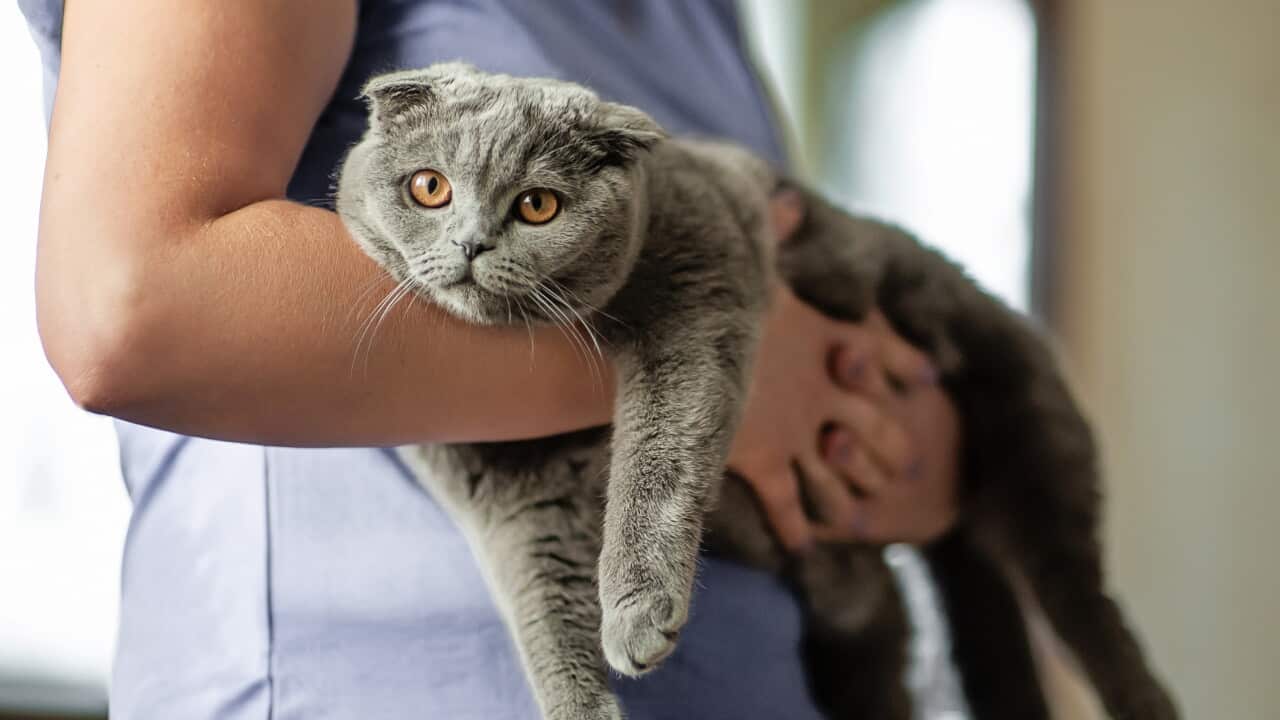
Today, Allan is worried about his cat, Milo. Milo is usually the first one in the kitchen when he hears a food packet open. He normally rubs against Allan’s leg, meows loudly, and acts like he hasn’t been fed in three days, even if he only ate something an hour ago. But today, Milo is sitting very still in the corner, ignoring his food bowl. Allan takes him to see Claire, who is a vet, that’s short for a veterinarian, an animal doctor.
Allan
Milo’s off his food and he seems really flat.
Claire
Poor thing. How long has he been like this? Has he vomited at all?
Allan
Since yesterday. He hasn’t vomited, but he’s barely drinking and his poo’s been runny.
Claire
Right, let’s not muck around. I’ll check him for dehydration and take his temperature.
Poor Milo. When pets are sick, it can be hard to know what’s wrong with them, so we need simple, clear language to describe what we notice is not quite right.
First Allan said,
Milo’s off his food.
If a pet is off their food, it means they do not want to eat. You can use “off their food” for pets, and sometimes also for people who are sick and do not want to eat.
Here, food is the thing your pet eats, But feed is usually the actioon og giving food to an animal.
For example, Claire might ask,
What do you usually feed him?
That means, what food do you usually give him?
You could answer:
I usually feed him dry cat foot in the morning.
You could also ask,
Has she touched her food today?
This means the food is still there, and she hasn’t eaten it.
So, with pets, we might say cat food, dog food, wet food, or dry food. But we use feed when we talk about giving that food to the animal.
Allan also said,
He seems really flat.
If someone or an animal seems flat, they seem tired, quiet, low on energy, or not like themselves. You could also say,
She’s not herself today.
This is a very useful phrase you can use to describe animals and people when they’re behaving differently from usual.
You might also hear people say,
He seems a bit out of sorts.
If someone or an animal is out of sorts, they seem a little unwell, tired, or not quite normal.
With pets, you might also notice changes in how they look. For example:
Her coat looks a bit dull.
An animal’s coat means the fur or hair on its body. We usually say hair for people, but coat sounds more natural when we are talking about an animal’s whole body.
You could also say:
He’s losing fur around his ears.
Fur is the soft hair that grows on many animals.
Then Claire asked,
Has he vomited at all?
To vomit is when food or drink comes back up from your stomach and out of your mouth. Not fun, not pretty, but hey… it has happened to everyone, right?
You can also say throw up in everyday, informal English.
For example,
- He threw up this morning.
- She's been sick since last night.
In this context, been sick can mean vomited. But we can also use the word ‘sick’ when we mean generally unwell, so use the word ‘vomit’ or ’sick’ if you need to be clear that some someone has vomited.
Claire asked, “Has he vomited at all?” We often use ‘at all’ as short for ‘anything at all’ in questions and statements to for emphasis.
For example,
Has he eaten at all?
This means ‘has he eaten anything at all’ and it stresses that we are asking whether he has even eaten a little bit.
Or we can use it for emphasis when we are making a negative statement about something. For example:
- She hasn't drunk any water at all.
- I don’t like this weather at all.
Talking about drinking...Allan said,
He’s barely drinking.
If someone is barely drinking, it means they are drinking only a little, almost nothing. You can use barely in a lot of everyday situations. For example,
I barely slept last night.
That means I slept very little.
Or,
I barely know her.
That means I only know her a little.
If your pet has drunk very little, you might say,
She’s barely touched her water bowl.
Allan then said,
His poo’s been runny.
This is an informal way to say that the poo is soft or watery. A more formal word is diarrhoea. You could say,
He’s had diarrhoea since yesterday.
Diarrhoea is when a person or animal feels unwell, needs to poo more often than usual and their poo is runny. For a cat, you might notice this in the litter tray.
A litter tray is a tray filled with special material called cat litter that cats use as a toilet inside the house.
But let’s say you have a sick puppy, you might say,
The puppy had diarrhoea after eating something from the bin.
Or, more informally, you could say
The puppy had a funny tummy after eating something from the bin.
To have a funny tummy is an informal way of saying that you have problems with your tummy. We often use it when talking about children or pets because it sounds softer and less medical.
These are not lovely phrases, I know. But they are useful. Very useful. Especially when you are talking to a doctor or a vet.
Then Claire said,
Right, let’s not muck around.
Let’s not muck around is an informal phrase that means let’s not waste time. Let’s take this seriously and do something now.
You might use it when something needs quick attention.
For example, If you are worried that she is not drinking and you think you need to see an expert quickly, you could say,
She’s barely drinking. Let’s not muck around.
You could also say,
He seems really unwell. We should get him checked.
To get someone checked means to have a professional look at them. In this case, that professional is a vet.
Another useful phrase is ‘ to keep an eye on him’. to keep an eye on a pet or a person or something else - means to watch them carefully, often to see if they get better or worse. For example,
I’ll keep an eye on Milo tonight and call the vet if he gets worse.
Claire then said,
I’ll check him for dehydration.
Dehydration happens when the body does not have enough water. If a person or an animal is not drinking much, dehydration can become serious.
You could say,
- I’m worried he might be dehydrated.
- The vet will check her for dehydration.
Claire also said,
I’ll take his temperature.
To take someone’s temperature means to check how hot their body is. If a person or animal has a high temperature, they may have a fever.
You can say,
- The vet took Milo’s temperature.
- He has a high temperature; we should call the vet.
Sometimes animals do perk up by themselves after a little rest. Has that ever happened with your pet?
To perk up means to start to look or feel better and have more energy. You can use it for people, too. You could say,
She perked up after drinking some water.
But if your pet is not getting better, you could say,
He’s still not perking up. We should get help.
And remember, if a pet is barely drinking, has runny poo, seems very flat, or you are worried about them, it is always best to contact a vet. These are all symptoms, that is, signs that they may be sick. Other symptoms that might worry you include vomiting, tiredness, or loss of appetite.
للاستماع إلى أحدث التقارير الصوتية والبودكاست، اضغطوا على الرابط التالي.
أكملوا الحوار على حساباتنا على فيسبوك وانستغرام.
اشتركوا في قناة SBS Arabic على YouTube لتشاهدوا أحدث القصص والأخبار الأسترالية.