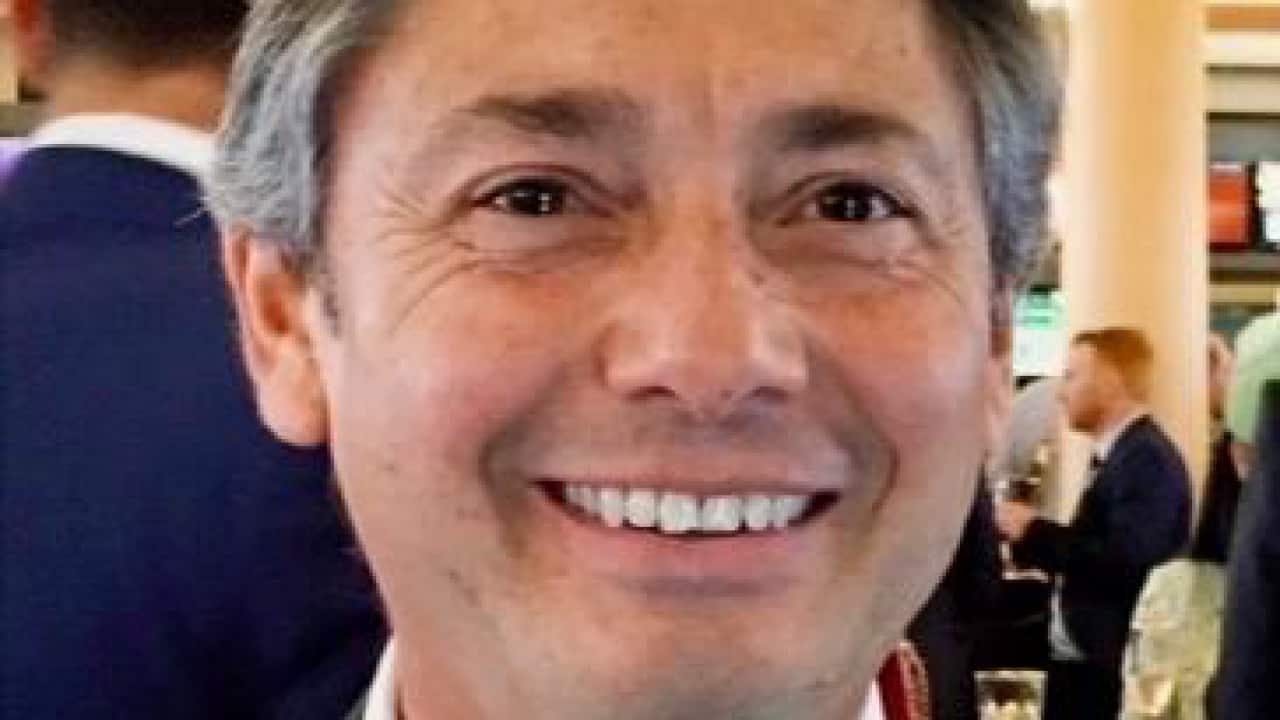
Ճորճ Տօնիկեան. “Անկասկած աւստրալիական հեռատեսիլի ամենաոգեւորիչ պաշտօնը ունէի”

George Donikian, the first news anchor on SBS TV.
Այս տարի SBS կը նշէ իր յիսնամեակը: SBS ձայնասփռումներու սկսաւ 1975 թուականին որպէս փորձառական ռատիօկայան մը մի քանի լեզուներով և ներկայիս կը ձայնասփռէ վաթսունէ աւելի լեզուներով տարբեր հարթակներու վրայ: SBS հեռատեսիլը սկսաւ 1980 թուականին և կայանի առաջին հաղորդավարը և լուրերը ներկայացնողն էր Ճորճ Տօնիկեանը: Սոյն հարցազրոյցին մէջ, Ճորճ կը խօսի սկզբնական տարիներու մարտահրաւէրներու և յաջողութիւններու մասին:
SBS Armenian
SBS is celebrating its 50th anniversary. It started in 1975 with a couple of languages and today is a multi platform broadcaster in dozens of languages. Over the decades, many have contributed to SBS's success with hard work, dedication and commitment. One of the pioneers at SBS TV and the face of
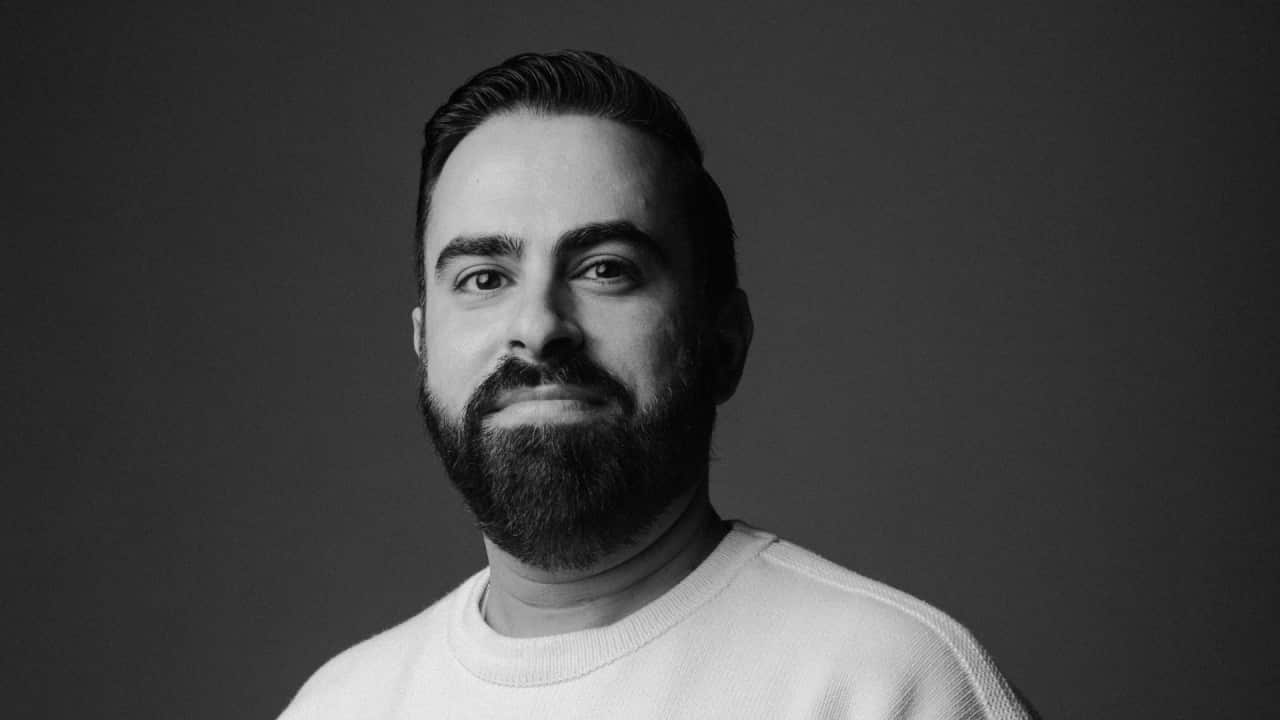
SBS was George Donikian, the first anchor on SBS TV. He was one of the leading figures who shaped SBS's memorable history. George is with me today to talk about the early years of SBS and share his stories and memories. George, welcome to SBS Armenian. Parev Vahe it's great to be with you. I'm
reminded of what an exciting time it was way back then when not only was television very different, the media was very different and Australia was a very different place to be.
SBS Armenian
Yeah, George, 50 years is a real milestone considering the humble beginnings as an experimental radio station. What prompted you to start at SBS tv? Was the position advertised and it appealed to you?
George Donikian
if it was advertised, I certainly didn't see it. all I knew was that there was a new television station about to start and Bruce Gyngell, who would turn out to be my mentor, had called a press conference at the Chevron Hilton in Sydney. And it required all the media in Australia to sort of gather
because there was going to be something exciting announced. The opening was introduced I think by Malcolm Fraser. And then he threw it open to Bruce Gyngell And Bruce Gyngell then said, we are about to do this and it's going to mean this. and excitedly we're going to offer the communities, the
ethnic communities of Australia a unique platform. One that not only allows them to be heard but also allows them to be seen in a way that had never been available before. Because I think before 1975, anything that was on air was, and it wasn't in English was ethnic. and the only access you could
have to an ethnic, radio station was you needed to speak the language. What, Bruce Gyngell was offering with this introduction of SBS TV was I suppose a program platform that allowed them to showcase film and entertainment from all over the world and bring it home in English, I.e. use subtitles.
Something that had never been contemplated before and especially in such a unique way. We had access to about 101 or so it seemed, young men and women who became subtitlers. they created an industry, they created a whole new product and they were revolutionary. much of the world was still coming to
terms with this new technology. But Bruce Gyngell wanted to push It. And he wanted to push it to the very nth degree. He wanted to show people that we could be as exciting, as brave and as bold as very few others in television around the world. And it meant that we could, I suppose, showcase French,
Italian, Greek, Armenian, Turkish, Hungarian, any language at all. We could do it in Australia and we could do it with subtitles. Which meant we had this huge area where the subtitlers would gather each and every day and they would review, with their headphones all the tape and all the, programs
that were coming in from overseas. And softly and slowly. They were being trained in this new, technology. In this new craft of telling or providing a narrative by using subtitles. So it was truly exciting.
SBS Armenian
So how did you start, George?
George Donikian
I heard about this very special meeting, this special press conference. And I was working on commercial radio in Sydney at a place called Two WS in Sydney's west, out at, Seven Hills in Blacktown. And I'm, an eastern suburbs boy, born and bred in Kingsford and Kensington and Tamarama and Bondi and
Coogee and Woollahra And for me, working in the western suburbs was something novel. It wasn't something I, was very seasoned or, comfortable about. I had to learn about all things that made Sydney very different in the West. And if you think about it, nothing has changed. Fifty years on,
Australia's west or Sydney's west continues to spread and spread and spread. I think when I started in radio, the demographic centre of Sydney was Granville. Then it moved to Parramatta, then it moved to Rudy Hill. And I think these days it's Somewhere west of Blacktown. so in those 50 years we keep
spreading further and further and further to the west. But everyone calls it Sydney, which is quite something. Which is quite something. But in those days, for me, it was a chance to go in and see and hear what this man called Bruce Gyngell was all about. He had just returned to Australia from
Britain where he had made an awful lot of money for a guy called Lord Lou Grade. Bruce Gyngell had introduced effectively, ah, breakfast television to Britain. And he had come back to Australia full, of vim, Full of excitement, full of confidence, that what he had done there he might have to do
here. Australia was still a, backwater in some. In some respects, Europe and America were pushing well ahead. Australia still doing what it was doing very well. But in very, very, very narrow terms. It still had a long way to go. It didn't very much care about what's happening anywhere else in the
world until the introduction of SBS And that changed things once and for all.
SBS Armenian
So did you meet him?
George Donikian
I did. I walked up to him. you may remember Vahe that in those very early days, television cameras needed batteries. And those batteries wouldn't last for more than 30 minutes or 20 minutes, whatever the battery charge was. And Bruce said to everyone, look, we'll let you get your cameras ready,
change your batteries and everything. We've got some sandwiches over there, we're offering coffee to the crews and everyone and anyone who was in television and radio had turned up and as did the papers, to hear what Bruce Gyngell and Malcolm Fraser were about to tell us. And while there was this
gap, I walked up to Bruce Gyngell and I said to him, you don't know me, Mr. Gyngell, but, I'm wondering if there might be a role in this new venture for someone like me, with my background. And he said to me, who do you work for? And I told him, I said to him, I work for Keith Graham, who was Two WS
And Bruce said, oh, I know Keith. So you work for Keith? I said, yes. He said, leave your details with my PA and I'll get back to you. And I didn't think anything more about that. And Nulli Skumbas was his PR She, left, left us way too early. cancer took her. Beautiful, young woman. she was the
mother of two children and she was one of the early faces on SBS And I think for the first decade or thereabouts was a very regular face on SBS TV But, we lost her. And she was at that time, Bruce Gyngell's PA She took my details and she said to Bruce at the time, he is multilingual, he might be of
value. And by the time I got to work that night at Two WS Bruce had already rung my then boss and said to him, we want to see George. We've got an audition coming up on Saturday, I'd like to see him there. And my boss at the time, who was a wonderful man, Keith Graham who also passed away
prematurely, said to Bruce, he's with us, he's one of our own and we love him, on radio, but if you think television might be his strong suit, then I'll send him for the audition on Saturday. And that's what happened. I turned up on the Saturday and lo and behold, I turned up to a place called Cliff
Street, Milson's Point just under the Sydney Harbour Bridge or just across from the from the Luna park where the first makeshift studio was. And I sat and did an audition for about 15 minutes and Bruce Gyngell came up and said, that's very good, see you on Monday, you've got a job. For the first six
weeks now, I didn't know what that meant or what that would entail, but as it turned out it was the very first stages of what would become SBS Television and more importantly SBS World News, which was the program that we didn't think we could do when I rolled up at SBS But with the help of my then
news director Peter Hanrahan and his team under Don Low and Claudio Paroli and a bunch of others like Klaus Hannecom and others, they felt that they could, with the ability of this young man, produce a half hour World news that might actually gain some traction. And that was the beginning.
SBS Armenian
When did this happen, George? Because SBS started test transmissions in 1979 as SBS Ethnic Television.
George Donikian
Correct Correct. And that's indeed what was happening. I remember turning up at 2 EA and 3 EA and 4 EA and 5 EA, which were the pre curses to what eventually became SBS Radio. and it was to tell those stations that stand by, SBS TV is coming. So I got a chance to go around Australia to Queensland,
to South Australia, to WA to New South Wales, to Victoria, and to say to them, hey look, we've got some very exciting news for you. with the formation of SBS Radio, we're going to be introducing SBS Television and this is what you might get a chance to enjoy. And we started talking in a way that
started to appeal to a great number of ethnic communities and they saw it as their window to the world, which indeed is what SBS meant to be from day one. It was a chance to peel away the curtain, to lift the veil and to show Australians who had been very fixed in their views and in their thoughts
and in their, I suppose the way they saw themselves and they suddenly realized that hey, we're just part of a bigger world out there and we need to play our part. So exciting times. We were telling people that there was a revolution coming, a revolution in television, that we were going to shake the
tree, frighten some people, excite some others, but very definitely we were coming and we were going to make some noise.
SBS Armenian
George, when the government was planning to launch SBS television, they were planning as a publicly government funded TV station or there was another plan?
George Donikian
No, no, you're absolutely right, Vahe In the early days, Bruce Gyngell and Malcolm Fraser believed that they could start, a new platform for the ethnic communities of Australia to give them not only their voice, but also, face. And what they wanted to do was create the IMBC the Independent
Multicultural Broadcasting Corporation, with a view to, showing product from right around the world and bringing it home with subtitles. They were going to introduce this new technology, and they believed they could also do the subtitles, for the advertisements. So if you're going to run an ad, for
example, for Nestle, or Nestles as it was in Australia in 1975, they could do it with an ad from Europe, from America, from Africa, from Asia, and they could subtitle it in English. And it opened up, some exciting possibilities. But the commercial television stations got wind of it, and the thought
was, it's going to hurt our bottom line. And they didn't want it. So they lobbied long and hard, stopped us in the Senate. So we. The concept of IMBC although it was exciting, was still born. So the, Prime Minister, Malcolm Fraser, then had to look elsewhere, and he looked at Bruce Gyngell, and
Bruce said to him, don't worry, just invoke the Special Broadcasting Act. And that's what they did. And from the invoking of that particular strategy, we saw the emergence of this thing, this quasi government entity that would be partly, supported by federal funding, but also eventually be allowed
to, I suppose, do some commercial, advertising as well, so it wouldn't be such a burden on the Australian taxpayer. the ABC hated the idea of having to share any television money or any radio money or any media money whatsoever. And we had this wonderful tussle, you know, it was Goliath against this
minnow called SBS And, it was a tough time. The first half a dozen years was very tough. Everybody, there were a great many people who didn't want us to survive, didn't want us to succeed. But as you know, it's 50 years, mate. So remarkably, we have some interesting challenging times as we celebrate
and mark 50 years of SBS
SBS Armenian
George, going back 50 years, do you remember your first broadcast? Was it live? Was it live reading?
George Donikian
Yeah. Everything in those days was live. We didn't have, auto cue, so you had to read it. So you had to understand it in order to present it. It was a very, very exciting time. I think for me especially, it was a very exciting time because, I didn't know too Much of the business for me, I was a
radio broadcaster brought in to, I suppose, deliver something that was, brand spanking new. And I remember Bruce Gyngell saying to me, don't, be anyone else. Just be yourself and remember that when you're on air, you're the boss. Which was a long way from the truth. But I understood what he was
trying to say. He was saying, relax, be as authentic, be as strong as George Donikian could be. And I can remember the brouhaha, and some of the controversy. In the opening broadcast, the Sydney Morning Herald wrote, George Donegan changes his name to make it sound more ethnic. Because before I was
introduced as the face of SBS Television as George Donikian or George Donikian, I had worked on, Sydney radio for a year and a half as George Donegan Because radio was so terrified of the idea that I had an ethnic name, they wanted me to change it. So I had to take a letter out of my name and make
it Donegan. And, whilst you're on radio and you sound like I do now, a great number of people confused me and thought I might have been Irish, one of the O' Donegan family. So for a great many people, including the Sydney Morning Herald, they accused me of changing my name to make it sound more
ethnic.
SBS Armenian
What about the trademark moustache?
George Donikian
Well, the trademark moustache was never meant to be. But Bruce Gyngell in his infinite wisdom, when he saw me do my original audition, I had hair all the way down my shoulders. And he said to me, you'll need to have a haircut. I said, what about moustache and the beard? He said, shave the beard,
leave the moustache. Because, he realized that I would look like a teenager. So he said, keep the moustache. It made me look a little more mature. It was jet black. Not like today, which is more like, ah, salt and pepper. and, he said to me, just enjoy yourself. And, you know, supported by a
terrific team behind the scenes, Peter Hanrahan, Don Low, Claudio Baderli, Klaus Vaheneken and a host of others, we got to do something no one else was allowed to do. And I had, on reflection, quite possibly the most exciting job on Australian television, which was to answer and support the very
many multicultural communities that made up Australia in 1979, 1980.
SBS Armenian
George, as you mentioned, world was a different place in many ways in 1980s. How did you gather news for the news bulletin? Were you involved in preparing the news bulletin?
George Donikian
In my preparation for the news every night, was the last stage. And that is to be right across all the news stories, be aware how they might impact on the audiences, of that evening, and be as, capable of delivering it as I possibly could. Because there were a lot of complex stories there that were
being introduced to Australian television for the very first time. Subject matter that very many TV stations, commercial TV stations did not want to know about. the stories that SBS radio was doing and revealing and showcasing nightly, and every morning were stories that no one had ever heard about
or seen on Australian television. Ah, and for example, suddenly the Iranian Parliament featured in our news every night. So suddenly we had to introduce everyone. His name was Rafsanjani Ayatollah Islam Hashemi Rafsanjani. He was the leader of the Iranian Parliament. Now, no one on Australian
commercial television was interested in not only showcasing him, but pronouncing his name in a manner that was accurate and fair. And what we decided to do from the very beginning, probably because I had a good ear for, languages, and we had access to subtitlers who could help me understand the
various, languages and how they were spoken. Without their support and without direct access to them, I wouldn't have been able to do it as efficiently and as effectively as I did or tried to do in the early days. But there was also a desire and a wish for us to do something completely different. So
for us, the Greek prime Minister was, Papandreou The French, president was Valerie Giscard d' Estaing or Mitterrand. And the Australian television stations had no interest and no idea. The only people they were interested in was the British Prime Minister. And if it was Harold Wilson or if it was
Margaret Thatcher, then they would say, the British Prime Minister, Margaret Thatcher said this today. Otherwise they would just say, the Italian minister or the Italian prime minister said this today. They wouldn't give you their name. They wouldn't dig too deep into the story. And what you saw was
a completely different interpretation of the nightly news. So for us, it was a, unique opportunity to create something new. I didn't write the news. Peter Hanrahan, Don Lowe and that team on the production desk did all the hard work. But I was, instructed to deliver it in the most authentic way that
I could. I didn't write television news until much later. And if you reflect on it, as I said to you at the very beginning, I was, a virgin on television. I had never worked on Australian television before. I hadn't worked in the newsroom before I, had come from the radio where my strengths were in
presenting. So it was a whole new industry and one I had to learn from the bottom up. So it was a, huge learning curve, huge growth spurt required and that's that, that's what took all my energy. No time to write it. I had, I had all the time to understand it and deliver it.
SBS Armenian
Yeah, I remember George, back in 1984 when I settled in Melbourne, every night I watched, religiously SBS World News, because SBS was the only TV channel that covered appropriately the world news. And I was eager to learn what was happening in Lebanon during the civil war with family and relatives
still living there.
George Donikian
Well, you see, that's what we learned very early on. We understood how important what we were trying to do, was and how important it was to be fair and balanced. Something everyone talks about today, oh, it's going to be fair and balanced. But we really wanted it to be like that. The last thing we
wanted to do was make it propaganda. The last thing we wanted to do was make it too one sided. so the challenge of delivering news and doing it in such a fashion where one person's terrorist was another person's freedom fighter required a lot of work. It required an opportunity to work with a story
all day and be as fair as you could and give it a perspective that resonated. And I remember people saying to me very early on, this is not right, that's not right. And I remember saying to Bruce Gyngell I'm getting an awful lot of complaints from different people saying we're doing the wrong thing.
How do I know we're going down the right pathway? And he said to me, ask Peter Hanrahan the question. I said, all right. So I went to Peter Hanrahan, I said, how do we know we're being fair and we're being balanced in all our reporting? He said to me, we're getting complaints from both sides. And if
we're getting complaints from both sides, it must mean we are going down the middle and trying to be as fair as we possibly can. So it required a whole new way of reading and writing and interpreting news. And I remember one of the reasons why I didn't join Graham Kennedy on the news desk when I
left SBS and went to Channel nine. one of the things I was very sure not to do was become Graham Kennedy's funny man when he was doing the news because I understood the impact and and how powerful A narrative was regarding news and how. I didn't believe that you could have take. Sorry, make fun of
it, which is what Graham and others have tried to do because they see it as entertainment and I never saw it as entertainment. I saw it as incredibly important, gathering of information and facts that. That helps you to gauge and understand what is actually going on. And that's the challenge of
today. We have far too many people with opinions and not enough people there armed, with the facts and with the sort of background knowledge to be fair in whatever they offer up in the marketplace. And that's why you're seeing this rush away from legacy media to sites and other platforms where
people feel they're better served. And that's a terrible loss because, legacy television works so very hard for an awful long, long time to do the right thing. But, it's lost its way much as, so many other media platforms have over the last, especially 15, 20 years.
SBS Armenian
George, were there any other challenges you faced, during the first month or first few years at SBS TV?
George Donikian
There were constant challenges, constant challenges from, sources like the ABC commercial television didn't want to believe we were there, so they thought less of us. they would always poke fun at us. and the ABC chose not to, to have anything to do with us unless they absolutely had to. And they
made that very evident. They were deeply offended that we were even in the same space. We were marginalised as often as we could. the control tower or the transmission, tower in Sydney, for example, the one situated at Gore Hill, which is the ABC tower. We were not allowed to use the top of the
tower that was reserved for the ABC We were afforded or allocated a space halfway down the tower. And the, problem with that, Vahe is the way television works. The higher you are in the tower, the further the signal goes out. And it was a practical way for the ABC to keep us, in the doldrums or in
the shadows. So for a great many people we were seen as a token gesture not to be supported, not to be enhanced and not to have any more money spent on it. So we were doing things, on a shoestring budget. but we were doing it with such enthusiasm and with such, I think, passion. we managed to
survive and we managed to thrive. And lo and behold, a great many of the people who worked in SBS in the very early days, ultimately showcased their skill and their talent and moved on to become, successful Commercial broadcasters or broadcasters on the ABC in their own right, or they went overseas
to make their fortunes, which was again another exciting venture because, at that time we were seen as just a backwater George.
SBS Armenian
Any memorable events you still remember fondly?
George Donikian
they're all memorable. but the sadness is, is a lot of them. And I suppose it explains why we're so hardwired for bad news. For example, I remember the attempted assassination of Ronald Reagan. I remember the attempted assassination of the Pope. I, remember the assassination of John Lennon, one of
the Beatles. I remember the great earthquake that struck Italy. I remember the great earthquake that hit, Armenia and the telethon that came out of that. I remember a lot of the great challenges of those very early days. I remember Bruce Gyngell allowing me to take an SBS film crew overseas for the
first time. And we were allowed to fly into Cyprus to, to cover the intercommunal talks between the Turks and the Cypriots. we also got to see the challenges in Lebanon at the time. We, saw firsthand some of the terror that was, prevailing in the region. we also got to see, the anarchy that was
happening in Greece, with some of the political, I suppose, polemics being played out in real life. I remember we were in Athens. we had arrived in Athens and two days later there was a bombing just up, from the Syndicme in the. In the middle of Athens. we were there on the tarmac when the Greek
government were running out, tanks. there had been a number of, hijackings, the TWA airliners. A couple of them were hijacked and landed at Elinigon, the old Greek airport in Athens. And we were there with our cameras showcasing some of the goings on. it was quite remarkable times we discovered or,
showcased the actions of terrorist groups like the Sendero Luminoso, the Maoist Shining Path gorillas. we. We told the world about ETA We told the world about the Baader Meinhof gang. The challenges that existed, in great parts of Europe at the time. And we also got a chance to showcase some
tremendous, events. if you think about it, one of the biggest music events in the world has become part of the SBS variety programs. you know, the program I'm talking about, it's what brings Europe together each and every year. and allows the different countries to showcase their their best musical
entertainers or singers. So, that was brand new. I remember we brought the Tour de France to Australia. No one had seen the Tour de France. We showcased the World Cup, the football World Cup. we showed the skiing, the World cup skiing before, they become major events on programs like the wide world
of sports in Australia. So we were the forerunners to a lot of brave and exciting formatting and, programming. A, great many people said, oh, you won't survive. You, you know, you won't make. You won't make it past a year. Well, Vahe It's 50 years and counting.
SBS Armenian
so, George, you had the feeling, you were doing pioneering work for the Australian multicultural communities.
George Donikian
Vahe. I knew it was something special when I did my first, live presentation at, I think I did an Italian ball in Melbourne. And I watched how we were embraced, how people came from everywhere. I remember we did the Italian Festa in Melbourne, in Lygon street, and it was standing room only. We had
something like a quarter of a million people turn out. we did the Antipodes Festival in the heart of Melbourne, and there were 60, 80,000 people. we did similar things in Sydney. In Brisbane, Adelaide, saw the arrival of the Glendi. in Brisbane, we saw the Panigiri, which was again, a bit like a
Glendy, but it was their way of doing a Greek barbecue. And again, we saw the communities lap it up and we saw people coming from everywhere. So we opened a lot of doors, we showcased a lot of new ideas. I would love to think we could return to some of those strategies and excite the public again
with some terrific programming and new ideas. I think the most important thing was that we established a template that gave people an opportunity to look at something brand new. And as I said at the very beginning, when we started this conversation, it was like we put up this mirror, and we allowed
Australia to look at the world. And I remember our advertising was bringing the world back home. And I think even in 1983 when you arrived, you can agree with me that that's what we tried to do. And that's why you and a great many like you in the community embraced it. I remember. And people say to
me today, oh, my mother or my father or my grandfather or grandmother, watched you every night. And because they did, we had to watch you. And I said, I feel sorry for you guys, but, they were a terrific time. As I said to you 50 years ago, we viewed television together. So if if there was one TV,
we didn't have 55 devices in the house. We didn't have laptops, we didn't have handheld units. so there was one television, channel or one television, in the house normally, and everyone, you know, shared around it. So whatever felt good for us felt good for the family. And that's the excitement of
those early days on SBS
SBS Armenian
Thank you, George, for the interview, the insights, the fond memories and the memorable, events you shared with us.
George Donikian
Well, they were exciting times, Vahe. And, as I reflect, 50 years on, it was the best, job in television. And I was very, very thrilled and very, very fortunate to be given access and the keys and allowed to run it for the better part of 9 years. Super excited to be a part of that history and very,
very proud of the work that we did and thrilled to know that we had a great team around us, making us look as good as we possibly could be every night, which was very exciting.