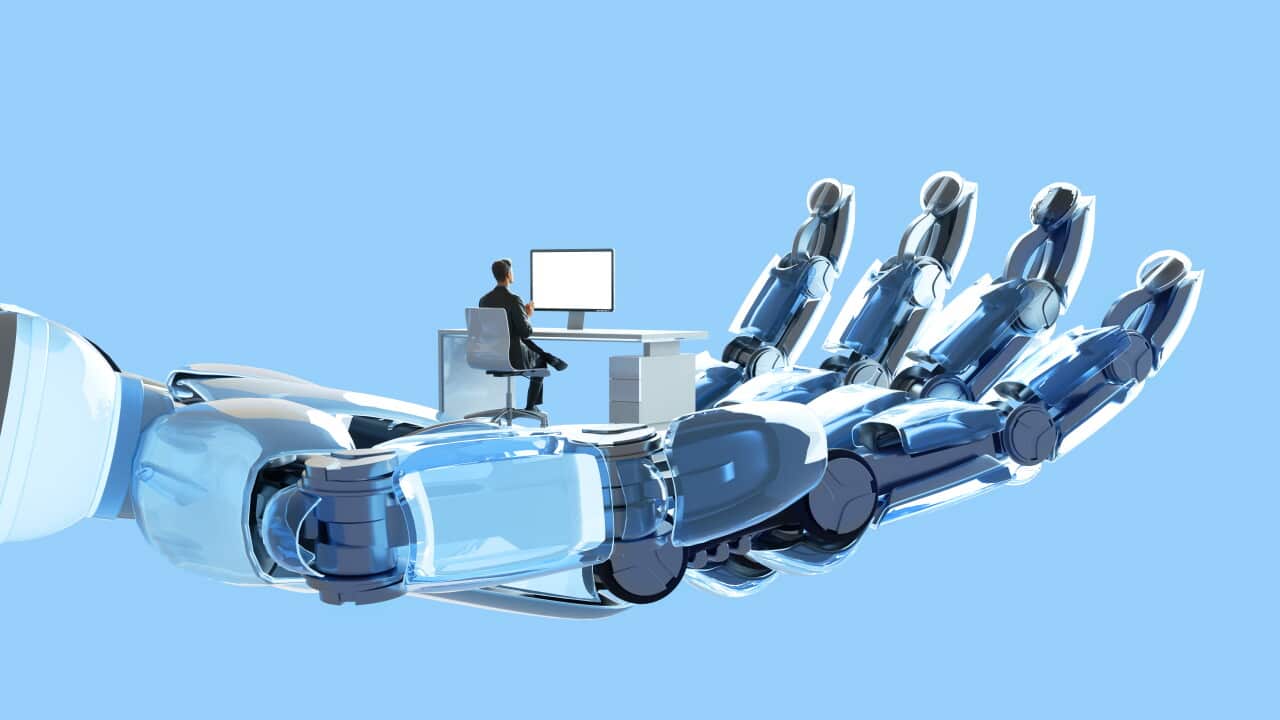

Evidence shows AI is changing jobs, rather than completely replacing them. But the impact on the Australian workforce is likely to be unequal.
Natalie had only recently returned to work after maternity leave when she lost her job in a restructure.
"It was a stomach-dropping, world-falling-out-from-under-you moment," she said.
She believes artificial intelligence played a role in the restructure, and told SBS Examines there's more focus on what the technology means for businesses, rather than the impact on workers.
We talk about AI very much from a company perspective: What it allows companies to do, and the growth opportunities it creates. What's missing is what this actually means for individuals.
Associate Professor Penny Williams, a future-of-work researcher at the Queensland University of Technology, says the impact of AI on workers is still being understood.
"AI is definitely changing work, but there isn't much evidence yet that it is wholesale replacing jobs," she told SBS Examines.
"But we are seeing quite a lot of evidence of changes to how tasks are done, how workflows occur, and people's levels of productivity."
Assoc Prof Williams said the government, businesses and workers all have a role to play in keeping humans at the centre of the transition.
This episode of SBS Examines hears from people whose jobs have been impacted by AI, and asks how this technology is changing work.