
Half of us believe that most people can’t be trusted. At the same time, 47 per cent of Australians often feel very lonely. Could learning to disagree well help foster connection?
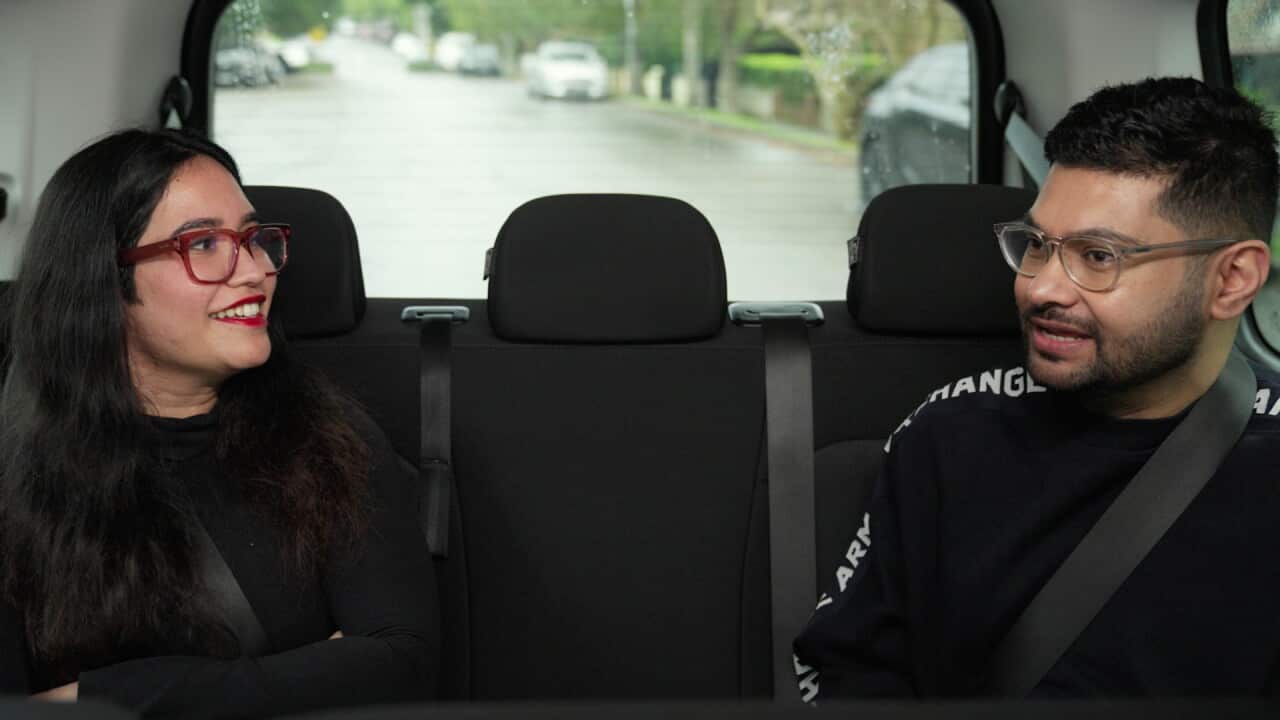
Talking to SBS Examines, Dr Daniel Heller — a historian from Monash University — said social polarisation is leaving many people feeling increasingly lonely.
"When the most extreme voices dominate, we often feel like we can't even share views to people that are closest to us," he said.
Along with cognitive scientist and psychology educator Dr Farid Zaid, Heller started the Brave Conversations Project.
We are trying to create bridges to restore connection, not in spite of disagreement, but in fact, precisely because of it and through disagreement.Dr Daniel Heller, Monash University
With the tagline "disagree better, build together", the project helps students and educators navigate tensions in the classroom.
Zaid said the project came about as the pair noticed their students needed help navigating difficult conversations.
They have very little capacity to entertain perspectives and worldviews that aren't their own.Dr Farid Zaid, cognitive scientist and psychology educator, Monash university
"Part of the reason for that, I think, is just — our culture shies away from disagreement and from tension and difficulty."
In this episode, SBS Examines asks — do we know how to disagree respectfully? And what are the benefits of having difficult conversations, even if we can't reach a consensus?