Watch FIFA World Cup 2026™ LIVE, FREE and EXCLUSIVE

How has the refugee experience changed?

Untitled design.png

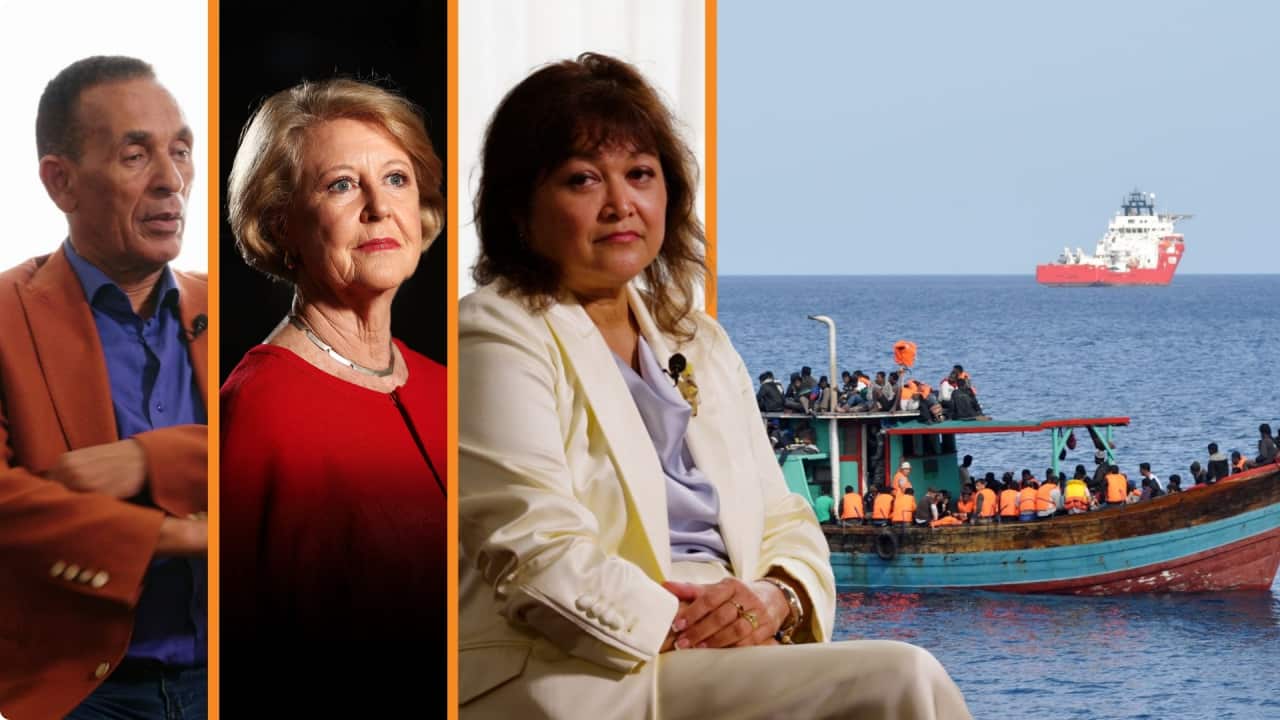
(L-R) Berhan Ahmed, Gillian Triggs and Christine Castley told SBS Examines Australia's relationship to refugees has changed over time. Credit: SBS, Getty Images

Australia has welcomed over one million refugees. But changes to the economy, government policies, and the settlement process have made things more difficult for refugees settling today.


Berhan Ahmed came to Australia from Sudan as a refugee back in the 1980s. He told SBS Examines his settlement process was rather smooth, despite experiencing racism in his new home.

When he arrived, he quickly found work in a factory.

"Australia, at the time I came, was a manufacturing economy ... they need our muscles, they don’t need our mind ... so in that space it was easy to do that," he said.

Now, he believes refugees are set up to fail — thanks to the decline in Australia's manufacturing industries, making the pathway to work much more challenging for those who don’t have a formal education or speak fluent English.

"It is changing, and we are assuming the refugee has also changed, but no – they're the same," said Ahmed.

"I see people going through that ... the system has not been upgraded."

In this episode, we explore Australia's changing relationship to refugees.
spk_0

SBS acknowledges the traditional owners of country throughout Australia.

spk_1

From SBS Examines, I'm Olivia Di Iorio. Australia has welcomed just over a million refugees since 2001, forced to flee their countries to escape conflict, violence, or persecution and unable to return, they've found a new home here. In this episode, we explore how the refugee experience has changed over time.

spk_2

So we are a schizophrenic country in the sense that we have had a remarkable record of welcome for refugees, but it's extremely difficult to get that status of refugees. That's

spk_1

Gillian Triggs, someone who is incredibly familiar with processes, having served as the Assistant High Commissioner for Refugees at the United Nations. She says Australia's relationship with refugees is complicated. We

spk_2

are one of the best in the world. We're a gold standard for settlement of

spk_2

refugees. That's outstanding, and we've had a long history of doing that. But the difficulty is that you must be recognised as a refugee with a relevant visa in order to come here. Once that's achieved, then you get a wonderful resettlement process and engagement with the Australian community.

spk_1

Triggs says it's incredibly difficult to actually receive refugee

spk_2

status. We also have the dark side of the coin, which is denying access to asylum refugee status, and sending people who've arrived as unlawful

spk_2

arrivals to Nauru, in the past, also to Papua New Guinea, others going from Christmas Island to Nauru, and denied all the legal rights of a refugee under the refugee convention.

spk_1

That's known as offshore processing, a policy which human rights organisations have consistently criticised. Offshore processing as we know it has been in place since 2001, when the government introduced the Pacific Solution, sending boats to Nauru and Papua New Guinea, preventing arrivals

spk_1

to the mainland of Australia. This lasted until 2006, but was then reintroduced in 2012 and is still in place today as Operation Sovereign Borders. These policies have made it harder for asylum seekers to gain a refugee visa, and the experience of settling has changed too. Take Berhan Ahmed for example, CEO of community organisation Africause and chairperson of refugee initiative African Think Tank Incorporation.

spk_1

From Sudan, he became a refugee at the age of 14. He completed his studies in Egypt on a scholarship and was then offered settlement in Canada, America, or Australia. He arrived in Melbourne in the 1980s and told SBS Examines that despite his

spk_1

challenges like not speaking English very well, he was able to find work. Starting out in a factory like many other migrants during that time, he didn't need to know English to secure a

spk_3

job. Australia at the time I came was a manufacturing economy.

spk_3

Any stupid person can go to any factory and make money. They need our muscles. They don't need our mind. Keep your brain at home and just come and do the work was the style. So like most of the Italians, the Greeks, or whatever they've done in that space

spk_3

it was easy to do that. My journey was somehow smooth in the start, even though there were so many challenges of racism, but not that racism can stop me because I get the opportunity to work.

spk_1

He says that now refugees are set up to fail.

spk_1

Especially those who don't have a formal education or speak fluent English.

spk_3

We're putting them in a system where our system is now service and knowledge economy.

spk_1

Ahmed told SBS Examines that there is a lack of human connection when it comes to settling in Australia today.

spk_1

Particularly when it comes to the day to day use of technology in service providers.

spk_3

Like now just call a phone, Centrelink, press 1, press 2, press 3, press 4, this one. In the good old days there was none, they come and help you. So my time was something to that effect. But now it is changing, and I change. We're assuming the refugee also changed. No, they're the same refugee, and I've been saying this for a long time now.

spk_3

Humanitarian finishes at the airport. They bring in the country on humanitarian ground. From the airport, you walk on your own way. You don't know what's the culture, what's the system, what's the way. So I see people going through that. So in a sense, the system has not been upgraded.

spk_4

Clients would say to us, you know, you can create connection and inclusion, you can connect me to people, by introducing me to them, or you can create inclusion by including me in events and things, but I really need to feel in my heart that I belong. So that becomes the conundrum.

spk_1

Christine Castley is the Chair

spk_1

of the Australian Multicultural Council and says that measures need to be taken to ensure belonging becomes part of the settlement process. Where we've

spk_4

landed often, I think in my thinking is around creating moments that matter. There's moments where you actually feel like this is a country that welcomes you.

spk_4

This is a country that meets you where you are, rather than expecting you to be at a particular place. And in real terms, that means it's a country that, for example, understands that there are people who speak many languages rather than just the one language.

spk_1

Castley was part of the Multicultural Framework Review, which had 29 recommendations for how the nation can move forward in multiculturalism.

spk_1

These include things like having more inclusive translator and interpreter services and ensuring cultural capability within government departments. It's these changes that can engage communities to belong in Australia, particularly since it can feel fragile, such as when the impact of global conflicts makes its way to our shores.

spk_4

The rugs pulled from under my feet very, very quickly, so

spk_4

the question then becomes around how do we as a country, as a community, as individuals actually think about how we have that those that that enduring connection with people where we don't seek to kind of revert to tribal and difference and and othering of others, um, to actually be much more connected, resilient, to ultimately create a really good version of social cohesion.

spk_1

This episode of SBS Examines was produced and presented by Olivia Di Iorio. To find out more, visit sbs.com.au/sbsexamines.

END OF TRANSCRIPT

Share