
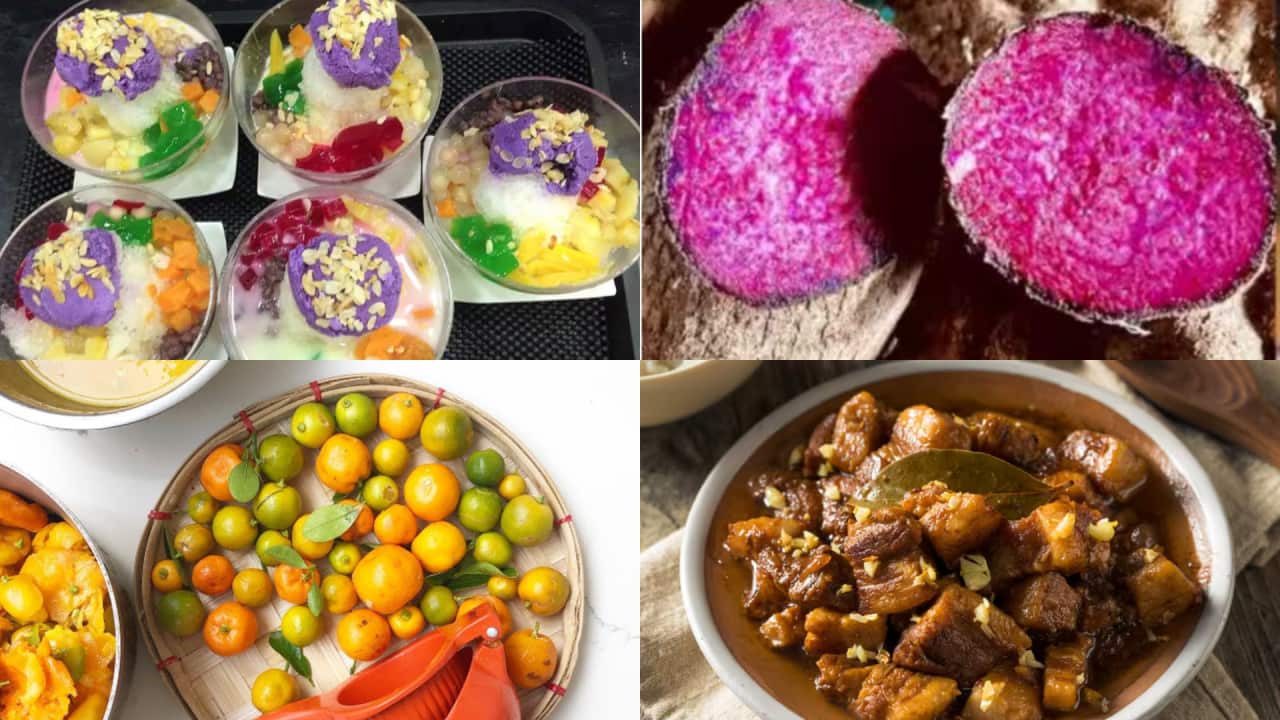

Food is one of the best ways to understand a country's history, values, and traditions. In the Philippines, every meal tells a story—from the ingredients our ancestors gathered from rivers and forests to recipes passed down through generations. Today, let's learn some Filipino food words while discovering how they connect to Filipino culture.
Key Points
- From adobo to sinigang to ube and halo-halo, learn Filipino words related to food, meals, ingredients, and cooking while discovering their meanings and cultural connections.
- Explore how traditional dishes and indigenous foods reflect Philippine history, regional diversity, and the relationship between Filipinos and the land.
- Discover how Filipino cuisine preserves family traditions, celebrates heritage, and creates connections among Filipinos and the wider community.
"Oob. You-be. U-bey."
These are just some of the mispronounciations we hear about the indigenous native product and popular Filipino purple yam.
Some people have chanced the now popular Philippines tuber. There's also a craze right now about ube flavour across the world.

In this episode of our Learn Filipino podcast, we'll learn some basic Filipino words to know when you want to try some favourite Filipino food.
In Filipino, food is "pagkain."
We'll learn about some of the most popular main dish (ulam) such as "Sinigang", "Adobo", "Tinola" and "Kinilaw".
You'll also discover some Indigenous Filipino foods that have nourished communities across the Philippines for centuries, including "ube", "kalamansi", "pili", "kamote", "gabi" and "malunggay".