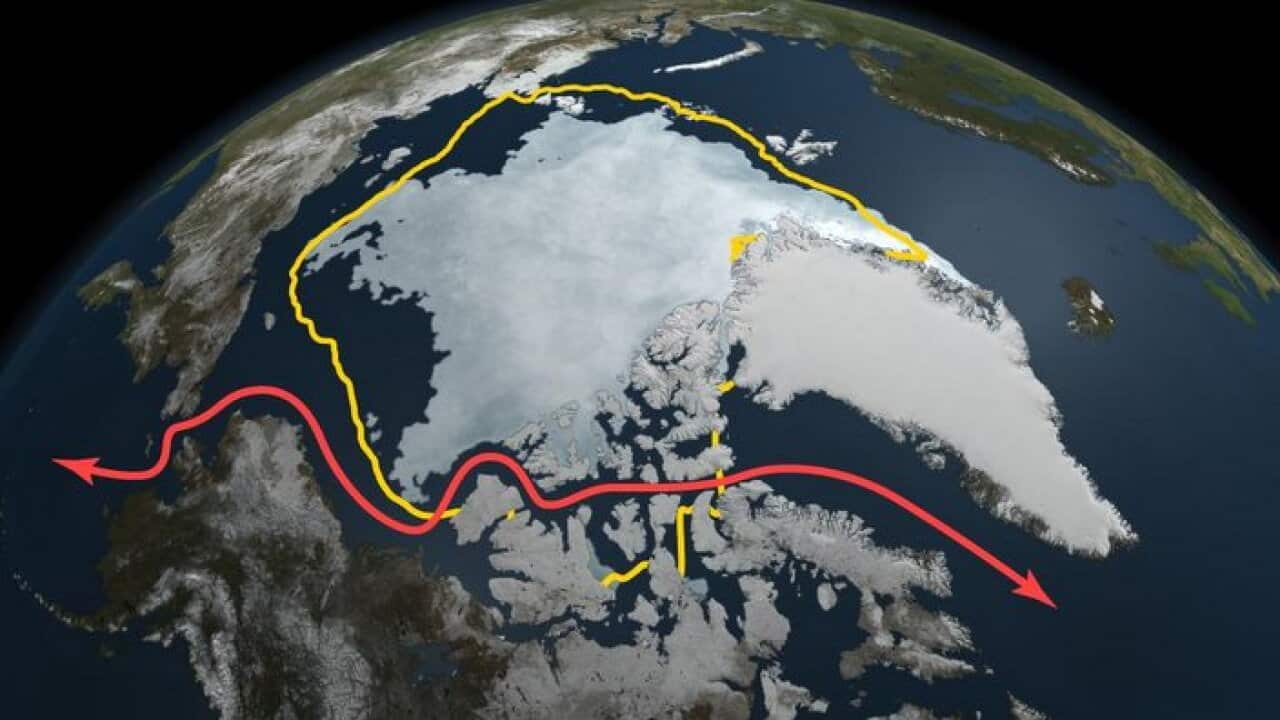
In this image provided by the National Snow and Ice Data Center and NASA, shows how low sea ice levels were in the Arctic this winter, alarming climate scientists. During the winter, Arctic sea ice grew to 5.57 million square miles (14.42 million square kilometers) at its peak, but that is the smallest amount of winter sea ice in 38 years of record keeping, beating the record set in 2015 and tied last year. Sea ice in March of this year was smaller than last year by an area about the size of the state of Maine.
The trend of shrinking ice around the North Pole in recent decades has been one of the starkest signs of climate change. The thaw is harming indigenous peoples’ hunting livelihoods on the ice and threatening wildlife such as polar bears. It also makes the region more accessible for shipping as well as oil and gas exploration.
And on the opposite side of the planet, on March 3 sea ice around Antarctica hit its lowest extent ever recorded by satellites at the end of summer in the Southern Hemisphere, a surprising turn of events after decades of moderate sea ice expansion.
This link leads to the NASA site with lots more images, graphs and animations:
https://www.nasa.gov/feature/goddard/2017/sea-ice-extent-sinks-to-record-lows-at-both-poles



