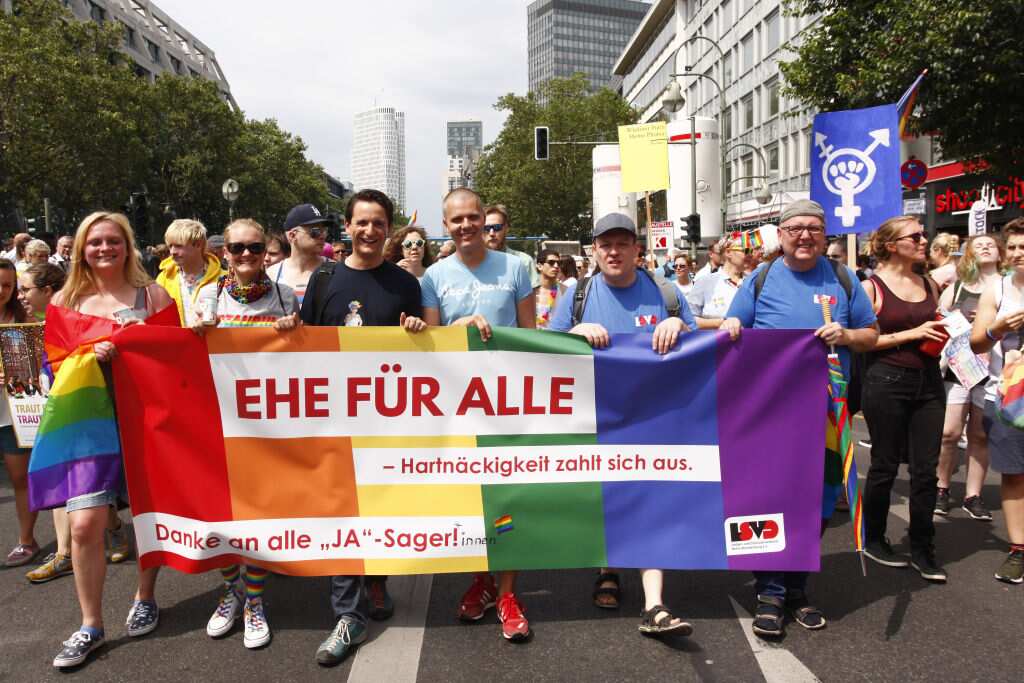


Germany saw the first gay couples getting married less than a fortnight ago after the government had legalised same-sex marriage last June. As Australia prepares for the outcome of the postal vote, SBS German spoke to proponents and adversaries of marriage equality from within the German community and across Australia.
History was created on October 1st: On what looked like a usual Sunday, Berlin’s Schöneberg district town hall hosted the first-ever marriage of a same-sex couple in Germany.
After being together for almost 40 years, Karl Kreile and Bodo Mende, both long-time campaigners for marriage equality, tied the knot. On the same day, the new law came into effect. Dozens of couples have since followed their example.
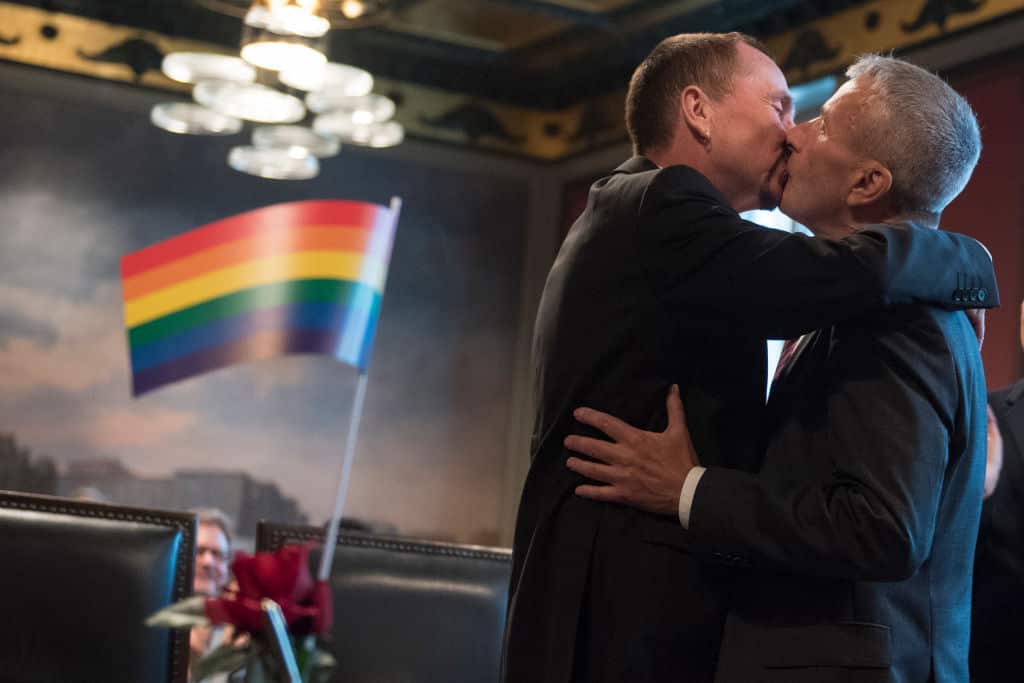
The legislation of same-sex marriage was initiated by German Chancellor Angela Merkel, a long-time opponent, whose surprise move in June this year allowed her fellow party members to take up the issue as a "question of conscience."
It brought Germany into line with many other European countries including France, Britain, and Spain.
Up to 80 per cent of the German population expresses their support for marriage equality. But unlike Australia, their opinion was not taken into consideration.
SBS German spoke to proponents and adversaries in both Australia and Germany, just days after the official introduction of same-sex marriage in Germany, and while Australia gets prepared for the outcome of the ongoing postal vote.
"This is of unbelievable importance for us," says Berlin-based journalist Nils Reucker, who had spent some time in Melbourne in recent years. "It's the end of a two-class society."
Being openly gay himself, Reucker also believes "it took too long from my perspective."
Similar to other countries, Germany experienced a lengthy political debate around the issue.
Both tolerance and acceptance are fairly high amongst Germans.
However, journalist Nils Reucker hopes for more, especially by older members of the society. "Germans are quite open people," he tells SBS German.
"Coming from a small and rather conservative town, coming out was not an easy thing to do.
"But people were surprisingly relaxed, with nothing but positive reactions.
"However, some of my friends experienced different things. It's still a long way to go."
Religious reasons are the most common ones amongst those who don't support marriage equality.
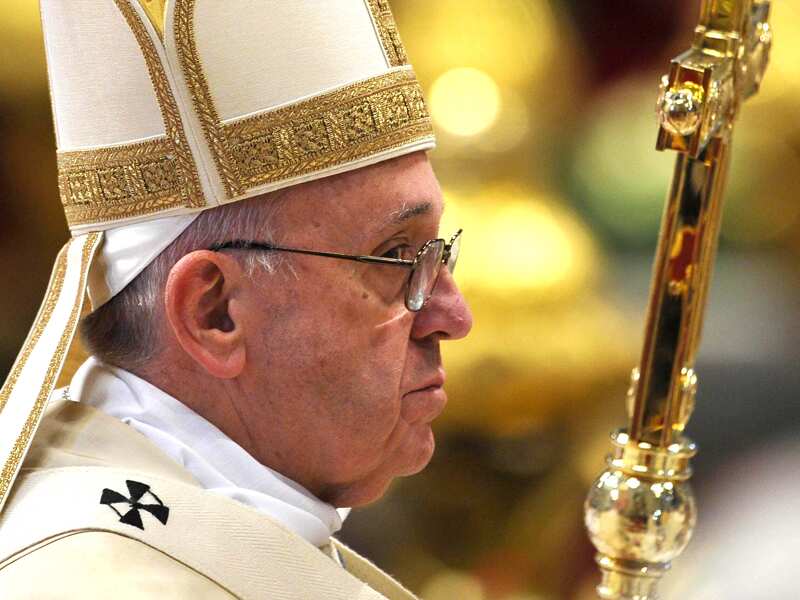
Helmut Hirtenlehner from Germany's neighbouring country Austria calls the introduction of the law in Germany "a mistake."
"Marriage is traditionally reserved for men and women," says Hirtenlehner. "Legalising same-sex marriage is not consistent with God's will."
"In my eyes, the image of the family is being adulterated."
Mr Hirtenlehner takes it one step further, "Homosexuality doesn't come from God. It's something Satan brought into this world," he tells SBS German.
In both Australia and Germany, the church and marriage equality don't seem to go well hand in hand.
That is something that is being disproven by Sascha Dornhardt from the German Lutheran Church in Melbourne. The 28-year-old German native serves as their deacon with a focus on young community members.
"Love is love," says Dornhardt. "I do not need to care between who it happens. I connect my theological belief with my personal opinion, which is, I strongly support marriage equality. I don't see a conflict here."
According to Sascha Dornhardt, homosexuality is generally not in the church's interest, however, "the clear Christian message is one of love. God supports love and so do I, in any form of honest relationships."
"God supports love and so do I" (Sascha Dornhardt, Lutheran Church Melbourne)
Dr. Hans Reichhart, head of the "Young Union" in Bavaria, a joint youth organisation of the two conservative political parties, CDU and CSU, advocates against marriage equality for other reasons.
"I am not pleased with the standardising of the term marriage. Germany has had civil partnerships for same-sex couples for a while. I don't see a necessity for using the term marriage for all forms."
Nevertheless, Mr. Reichhart supports legal equality. "We should put gay couples on an equal footing. When it comes to adopting rights, tax law, and many other areas. I simply wish to have the term marriage being used for heterosexual couples only."
The first gay couple adopted a child in Germany last week.
The legislation of same-sex marriage in Germany grants gay and lesbian couples full marital rights, including child adoption. Nine days after it became legal, the first child was adopted by a gay couple.
Michael and Kai Korok from Berlin have been foster parents to a boy since he was born and now became his legal guardians.
"Children benefit from the new law in my eyes," says Sascha Dornhardt from the Lutheran Church in Melbourne.
"Nowadays, a child with homosexual parents gets in contact with both men and women in many ways, within their family, through school, the media etc."