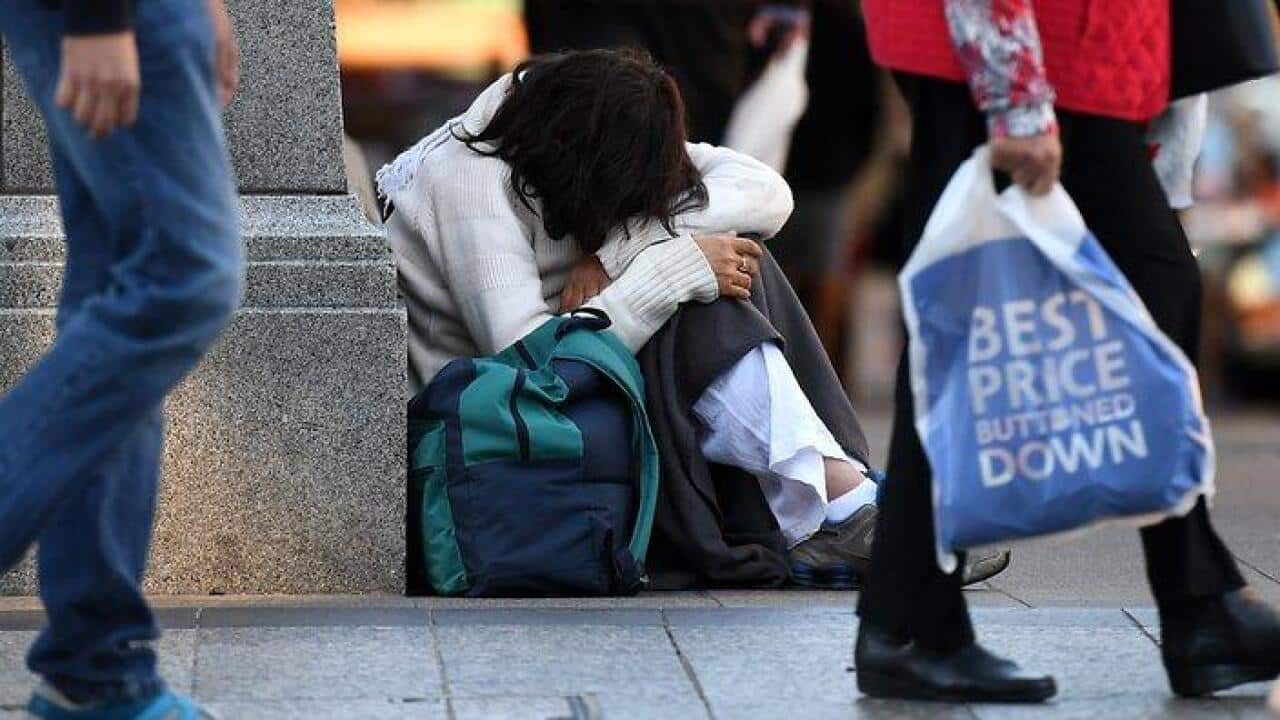

According to a report from the Australian Institute of Health and Welfare (AIHW) the number of homeless in Australia keeps rising.
The study finds that almost 290,000 people needed help from specialist homeless services agencies in 2017-18.
From those who asked for help, 61 per cent were women, and from them, almost three in 10 were under 18 years of age.
Mathew James, deputy CEO of the Australian Institute of Health and Welfare, says family violence and mental health issues are the most important contributing factors that force people to ask homelessness services for help.
"There's a range of reasons but the biggest single main reason for people using homeless services is family and domestic violence and a vast bulk of people using homeless services for that reason are female. There is a big difference between the reasons for those who actually present at homeless services being homeless, versus those who present as at risk."
A different kind of surfing
One of the main topics of the report is ‘Couch Surfing’. Couch surfers are people who lack stable housing and instead live with friends and relatives for a time.
According to Mathew James many 'couch-surfers' tend to be young.
"In 2016-17, 35 per cent of couch surfers were aged 15 to 24, which is a considerably higher share than the population in general using homeless services in that same year, which was 21 per cent. If I look at just as a proportion of all people who present at homeless agencies who are homeless, couch-surfers comprise about 37 per cent of that group: the biggest single group of people presenting at homeless agencies who are actually homeless."
Homelessness Australia Chair Jenny Smith, pints out the issue can have a major impact on young people and women, who might fall victims of abuse.
"It can be a very vulnerable situation for a young person to be couch-surfing. Perhaps, initially, safely with friends but in not too much time increasingly risky situations. We see young people and women put in a situation where they are making a choice between sleeping rough or tacitly exchanging sexual favours for that accommodation."
The housing crisis in Northern Territory
In Australia, the Northern Territory has the highest number of people in need of housing support.
NT Shelter Executive Officer Peter McMillan notes that Northern Territory has 12 times the rate of homelessness than the rest of the country yet the funding it receives from the government is not enough.
"We only receive funding based on a basis of population which is 1.3 per cent of the total national funding, which is completely out of whack with the level of funding that's needed to meet the demands of services. And sadly we are seeing around 50 per cent of all requests for specialist homelessness services not being met due to inadequate resources for specialist service providers and we need to get that addressed."
The effects are especially harsh on the Northern Territory’s Aboriginal population, who are forced to live in cramped spaces, due to lack of suitable housing.