

Australian and New Zealand soldiers defended the free world at Thermopylae in 1941, thousands of years after the Battle of Thermopylae in 480 BC, one of the most significant battles of the ancient world.
What do the Spartans and the ANZACs have in common? According to experts at the Shrine of Remembrance, there are many similarities.
That is why this year, on the occasion of the 85th anniversary of the 1941 Greek Campaign, the Shrine is hosting the exhibition “Spartans and ANZACs.”
The exhibition was the brainchild of the Association of the 2/2 Field Regiment of the 6th Division (6th Division AIF), according to curator Neil Sharkey who spoke to SBS Greek about the exhibition. It is worth noting that the ANZAC Corps was formed for the second and final time in Greece in 1941, as Australians and New Zealanders found themselves, once again, fighting side by side on European soil.
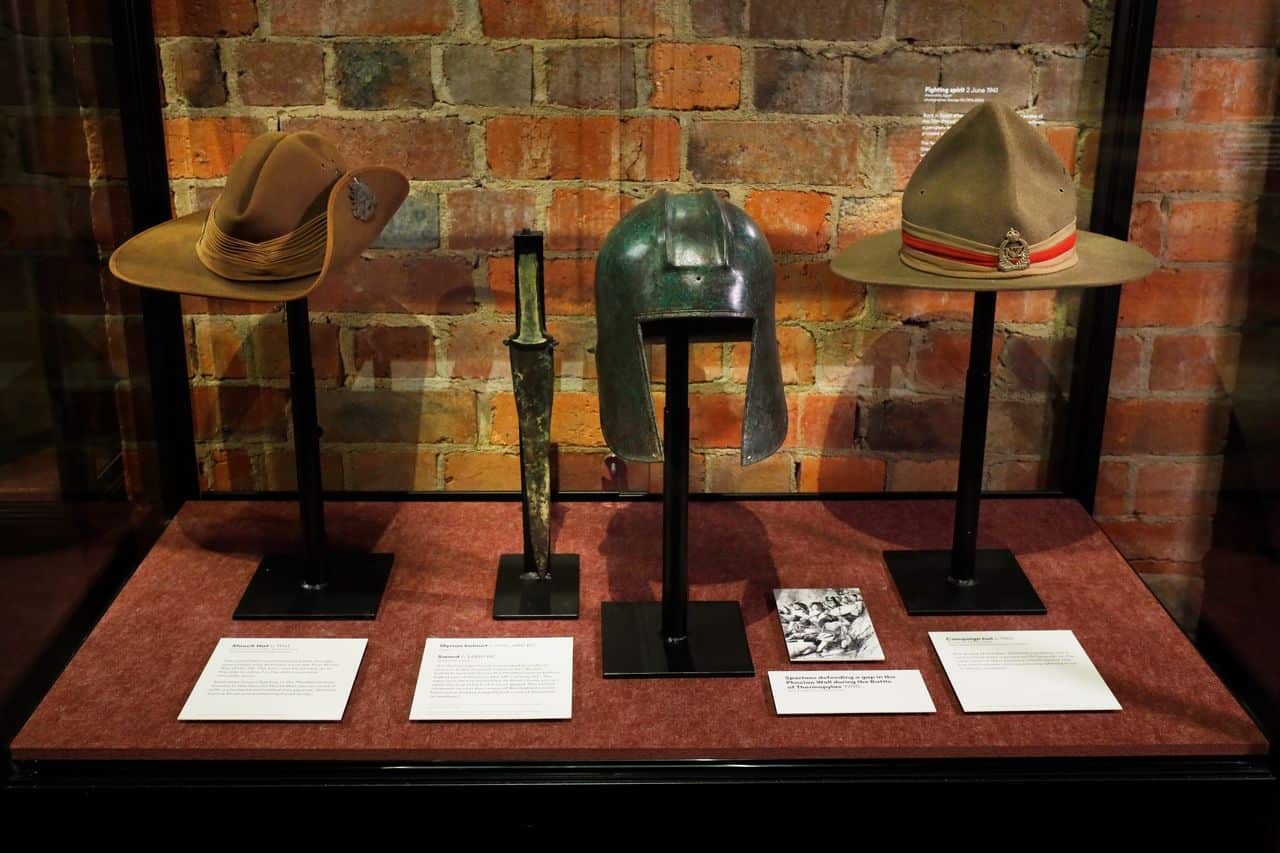
Ancient helmets, armour, and amphorae coexist harmoniously alongside parts of the two machine guns that defended Thermopylae against Nazi forces, war diaries, and ANZAC military uniforms, among other items, in the exhibition Spartans & ANZACs..
Particularly awe-inspiring is the combination of an ancient Greek warrior’s helmet flanked by the hats of an Australian soldier and a New Zealand soldier from World War II.
Mr. Sharkey approached the two historical moments with exceptional artistic sensibility, a deep understanding of the significance of the battles fought at Thermopylae, and with sensitivity and respect both for the sacrifice of ancient and modern defenders and for the visitor seeking the meaning behind the events.
The exhibition echoes Vassa Solomou -Xanthaki's interview to SBS Greek in 2020 regarding her memories from the battle at Tempe (also known as the battle of Pinios Gorge). In that interview she said that the ANZAC defenders of 1941 were remembered by the locals as "another Thermopylae, they knew they couldn't win but stayed and fought defending all free peoples".
Listen to Neil Sharkey’s interview by clicking on the icon next to the main image.
Related content