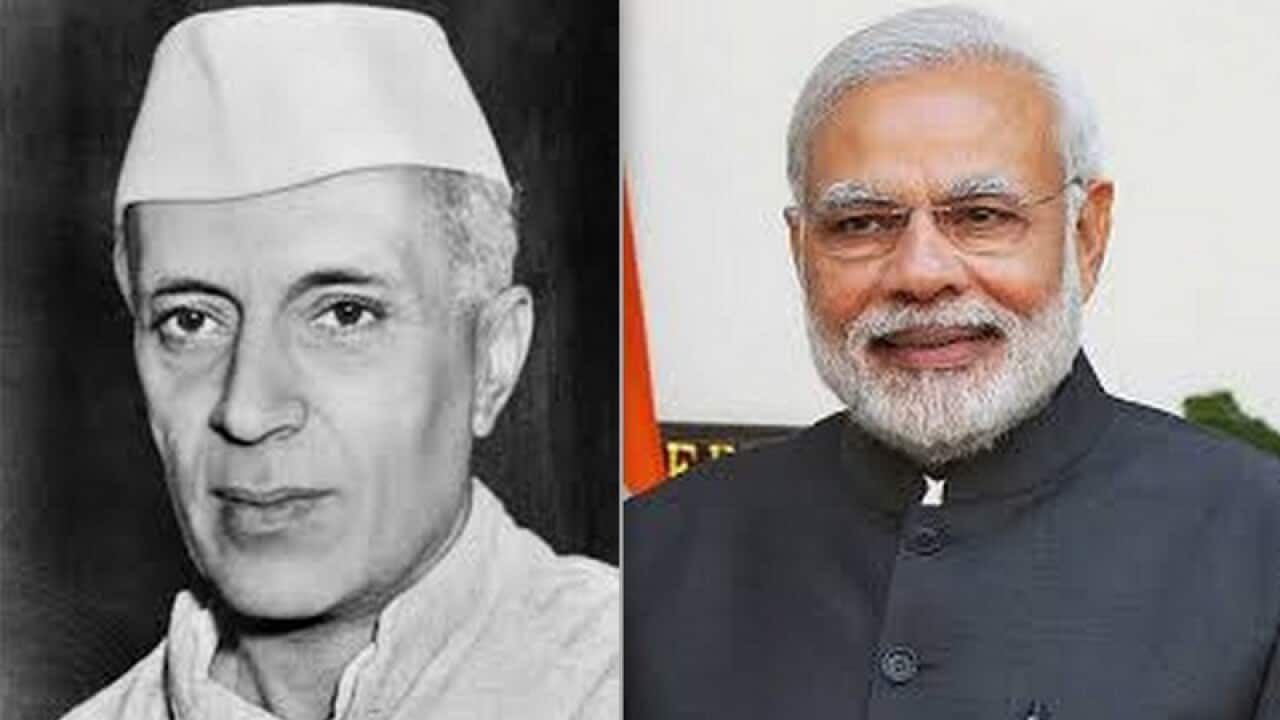
Indian exit polls have predicted a clear general election victory for India's ruling Bharatiya Janata Party (BJP) led by Prime Minister Narendra Modi.
India's seven-phase general election billed as the world's biggest democratic exercise began on April 11 and ended on Sunday. Votes will be counted on Thursday, May 23rd and results are likely the same day.
A political party needs 272 seats to command a majority in the 545-member lower house of the Indian parliament.
As pollsters embark on the massive exercise of counting millions of votes on Thursday, here’s a look at how India has voted after gaining Independence.
1951
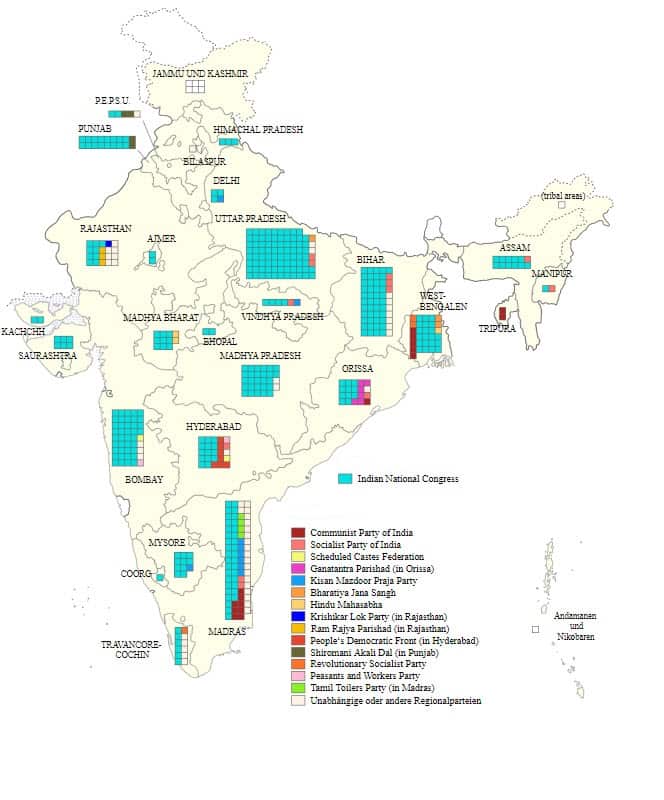
The first Indian general election was held in 1951–52, from 25 October 1951 to 21 February 1952, after India became independent in August 1947.
The Indian National Congress (INC) won the elections with a landslide victory, winning 364 of the 489 seats and Jawaharlal Nehru became the first democratically elected Prime Minister of the country.
1971
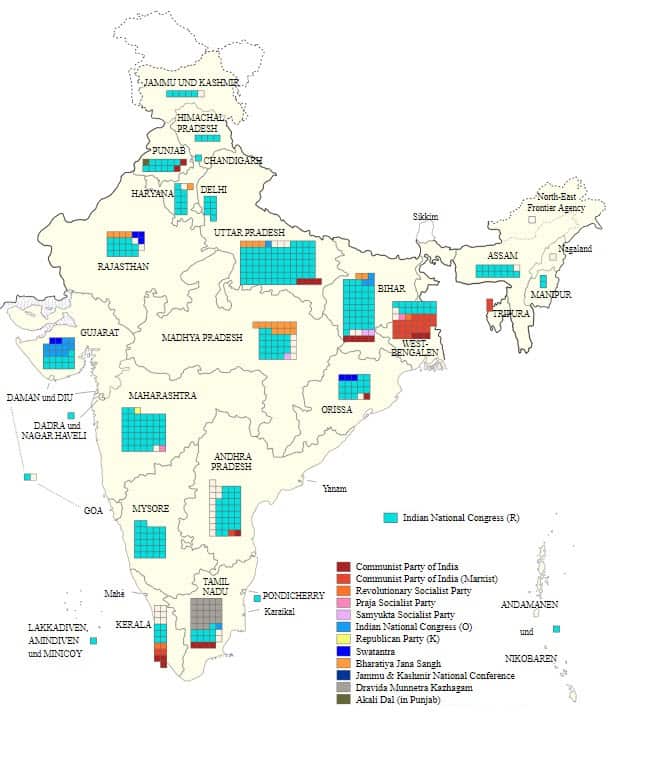
By 1971, the INC was divided into two parties after internal divisions within the Indian National Congress between Indira Gandhi and the party establishment, especially Morarji Desai, led to Indira’s expulsion from the party.
Most of the Congress MPs and grassroots support joined Gandhi's Indian National Congress (R) faction and 31 MPs who opposed Gandhi became the Indian National Congress (Organization) party.
Under the leadership of Indira Gandhi, the Indian National Congress (R) led a campaign which focused on reducing poverty and won a landslide victory.
1991
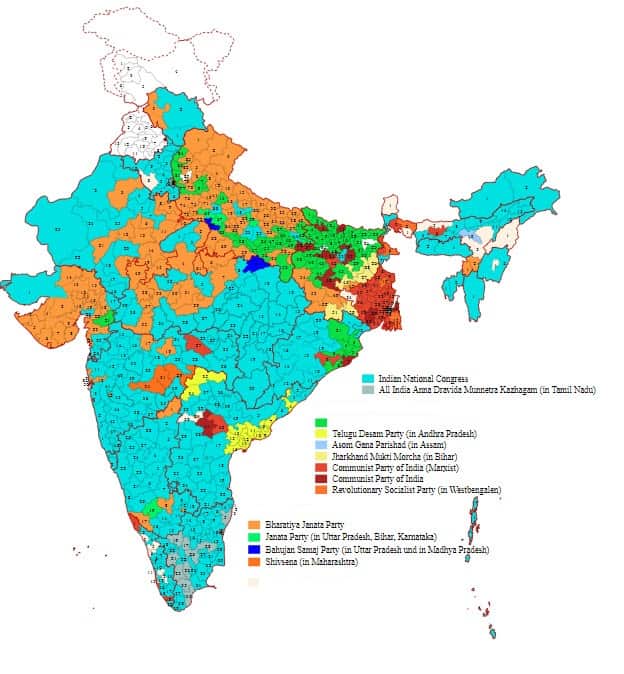
The 1991 Indian general election was held because the previous Lok Sabha had been dissolved just 16 months after government formation.
The result of the election was that no party could get a majority, so a minority government (Indian National Congress with the help of left parties) was formed, resulting in a stable government for the next 5 years, under the new Prime Minister P.V. Narasimha Rao.
1998 and 1999
General elections were held in India in 1998, after the government elected in 1996 collapsed after Indian National Congress (INC) left the United Front government led by I.K. Gujral, when they refused to drop the regional Dravida Munnetra Kazhagam (DMK) party from the government after the DMK was linked by an investigative panel to Sri Lankan separatists blamed for the killing of former Prime Minister and Congress leader, Rajiv Gandhi.
The outcome of the new elections was also indecisive, with no party or alliance able to create a strong majority. Although the Bharatiya Janata Party's Atal Bihari Vajpayee regained his position of Prime Minister getting support from 286 members out of 545, the government collapsed on 17 April 1999 when the All India Anna Dravida Munnetra Kazhagam (AIADMK), with its 18 seats, withdrew their support.
Fresh elections were held in 1999. The results were decisively in favour of the BJP and the NDA, with the formal NDA picking up 269 seats, and a further 29 seats taken by the Telugu Desam Party (TDP), which gave support to the BJP-led government.
For the first time, a united front of political parties managed to win a majority and form a National government that lasted a full term of five years, ending years of political instability.
2009
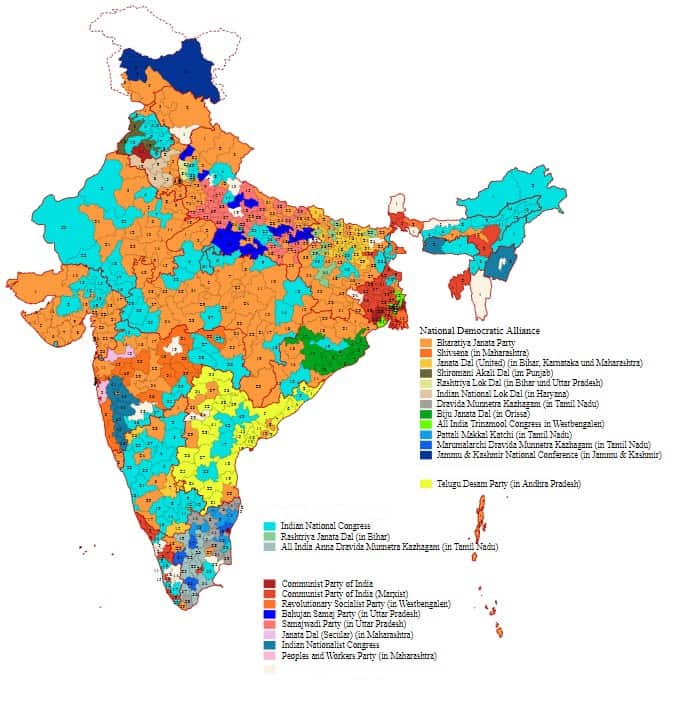
The United Progressive Alliance (UPA) led by the Indian National Congress was re-elected after 2004 winning 322 out of 543 seats. The UPA formed the government and Dr Manmohan Singh continued as India’s Prime Minister for the second term.
2014
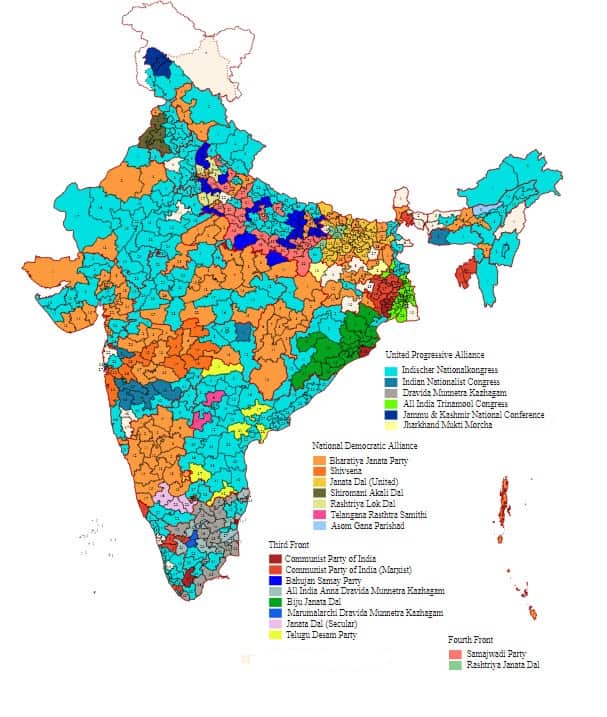
The National Democratic Alliance (NDA) led by Bharatiya Janta Party (BJP) won a sweeping victory, taking 336 seats of the 543 seats. It was the first time since 1984 that a party had won enough seats to govern without the support of other parties.
It also marked Congress party's worst defeat in a general election, with the United Progressive Alliance, led by the Indian National Congress, winning merely 59 seats.
Gujarat Chief Minister Narendra Modi who led the BJP to victory in the 2014 general election was sworn in as India’s 14th Prime Minister.
2019?
According to most exit polls released on May 19 2019, the BJP-led alliance and incumbent prime minister Narendra Modi appeared poised to win re-election. The counting will take place on Thursday, May 23rd.
Tune in to SBS Hindi at 5 pm on Thursday and on our Facebook page for live updates on the results of 2019 Indian elections.