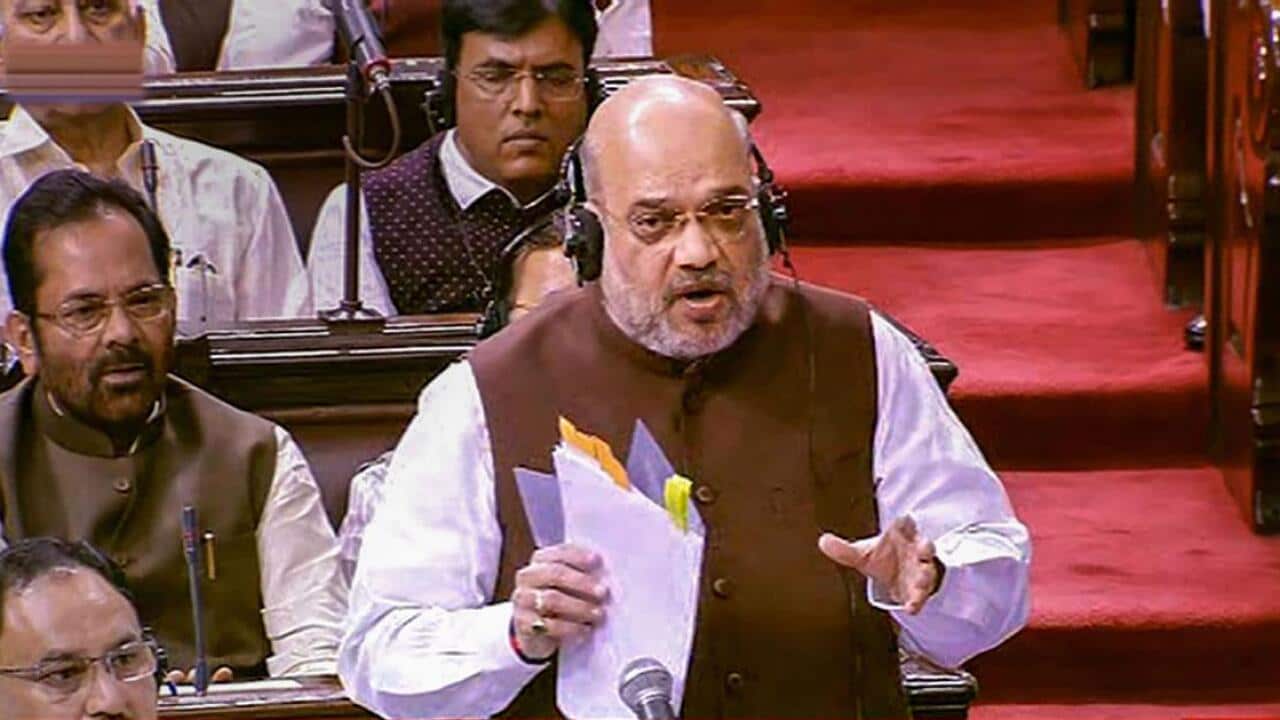
India’s Home Minister Amit Shah on Monday told the Indian Parliament that Article 370 of the constitution, which grants special status to Jammu and Kashmir, will be removed.
Making a historic announcement in the Rajya Sabha (Upper House), Shah said: "I am presenting the resolution to revoke Article 370 in Jammu and Kashmir except the first clause 370 (1).
“The entire constitution will be applicable to Jammu and Kashmir state,” Shah said, ending the state’s rights to make its own laws.
Minister Shah also announced the government’s decision to bifurcate the state into two Union territories – Jammu and Kashmir, which will have a legislature, and Ladakh, which will be without a legislature.
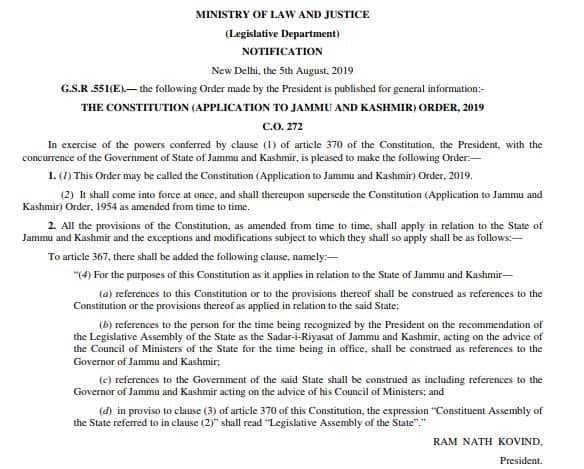
The law was passed after India’s President Ram Nath Kovind approved the government’s changes.
Watch Amit Shah speak in the Indian Parliament: (In Hindi)
What is Article 370?
The Indian-administered state has been the subject of dispute between nuclear powers India and Pakistan for decades.
Article 370 allowed the Indian state Jammu and Kashmir to have its own constitution, a separate flag, and independence over all matters except foreign affairs, defense and communications.
Article 35A of India's constitution permitted the local legislature in Kashmir to define permanent residents of the region. The article came into being in 1954 by a presidential order under the constitution's Article 370.
The article also provides special privileges to permanent residents which include state government jobs and the exclusive right to own property in the state.
With repealing of Article 370, these special privileges will no longer apply and Indian citizens will now be able to buy property or settle in the region, which many fear will lead to demographic transformation of the muslim-dominated region.
Kashmir in lockdown
The government's historic decision comes after a massive build-up of army troops in the Kashmir Valley and a night where senior political leaders in the region including former Chief Ministers Omar Abdullah and Mehbooba Mufti were placed under house arrest.
Internet and phone lines have been out of service in parts of Jammu and Kashmir.
Thousands of paramilitary troops have been sent to Kashmir after the government said it was canceling the Amarnath Yatra, an annual pilgrimage, and asked tourists and outsiders to leave the state, NDTV reported.
All educational institutions and offices are closed and groups have been banned from gathering in Kashmir and Jammu.
‘Darkest day in Indian democracy’
The announcement created a huge uproar in the Indian Parliament.
Congress leader and Leader of Opposition in Rajya Sabha Ghulam Nabi Azad condemned the government's proposal to revoke Article 370 and accused the ruling Bharatiya Janta Party (BJP) of murdering the Constitution.
Ghulam Nabi Azad said, "I strongly condemn the act of two-three MPs [PDP's Mir Fayaz and Nazir Ahmed Laway who attempted to tear Constitution]. We stand by the Constitution of India. Hum Hindustan ke samvidhaan ki raksha ke liye jaan ki baazi laga denge [We will do anything to protect the Constitution of India], but today BJP has murdered Constitution."
The former chief minister of the J&K state, Mehbooba Mufti, condemned the move, saying India was acting like an "occupational force" in the contested region.
Former Chief Minister Omar Abdullah called it a total betrayal of the trust.
Delhi Chief Minister and Aam Aadmi Party leader Arvind Kejriwal, however, came out in support of BJP government's decision.
India’s Prime Minister Narendra Modi is yet to comment.
Tune into SBS Hindi at 5 pm every day and follow us on Facebook and Twitter




