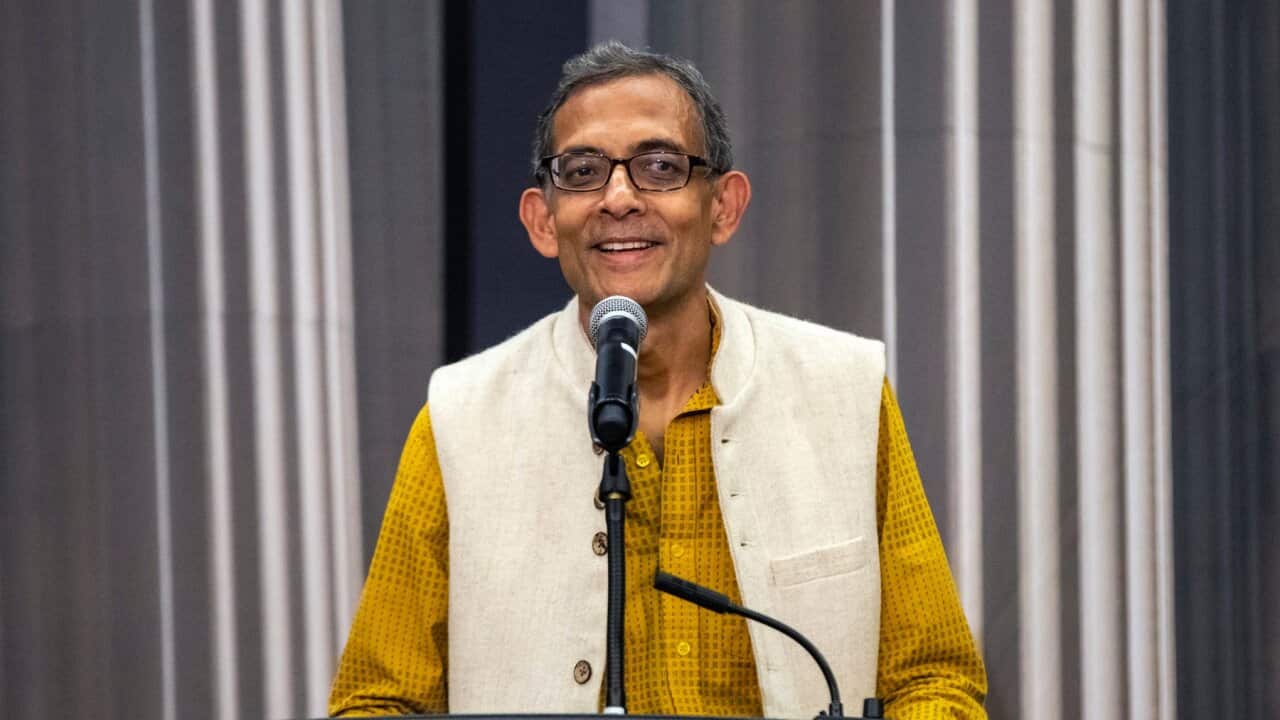
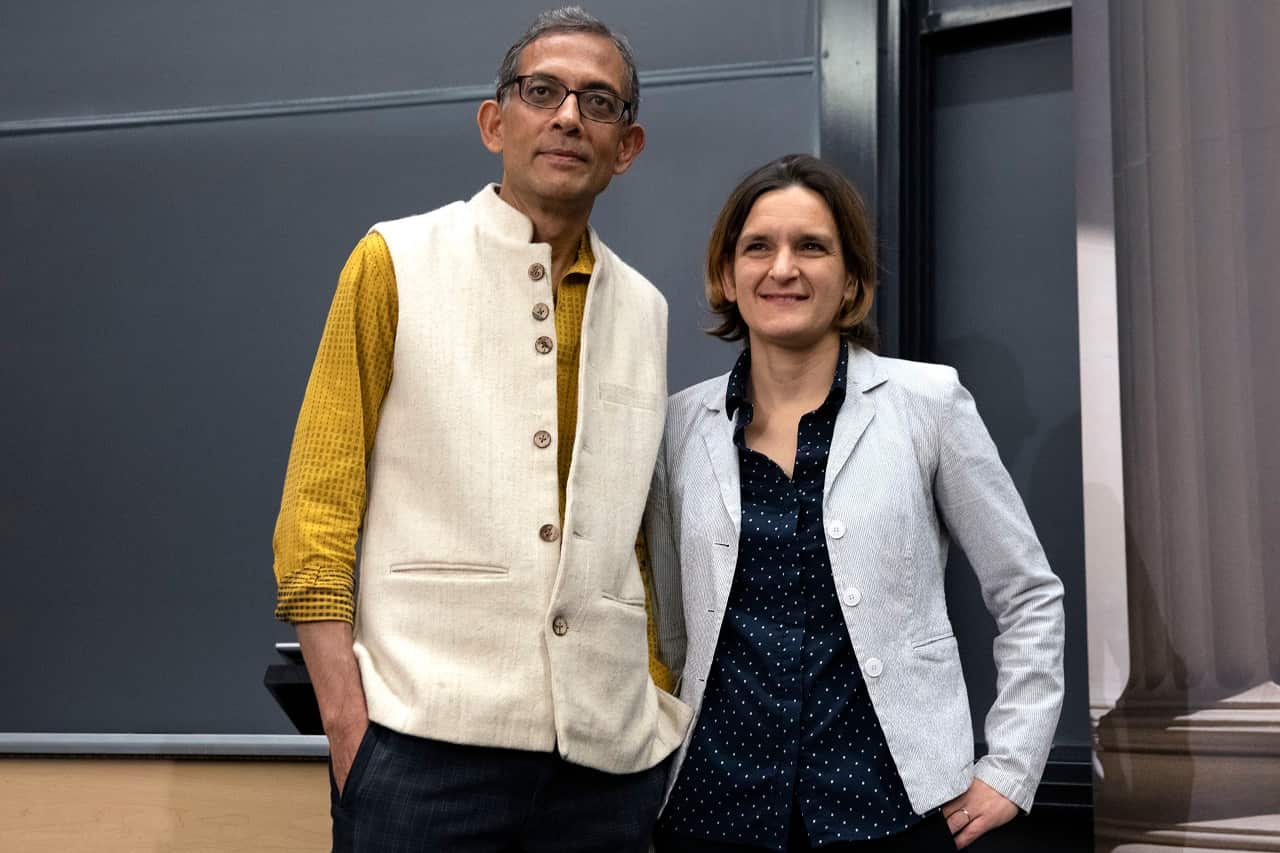
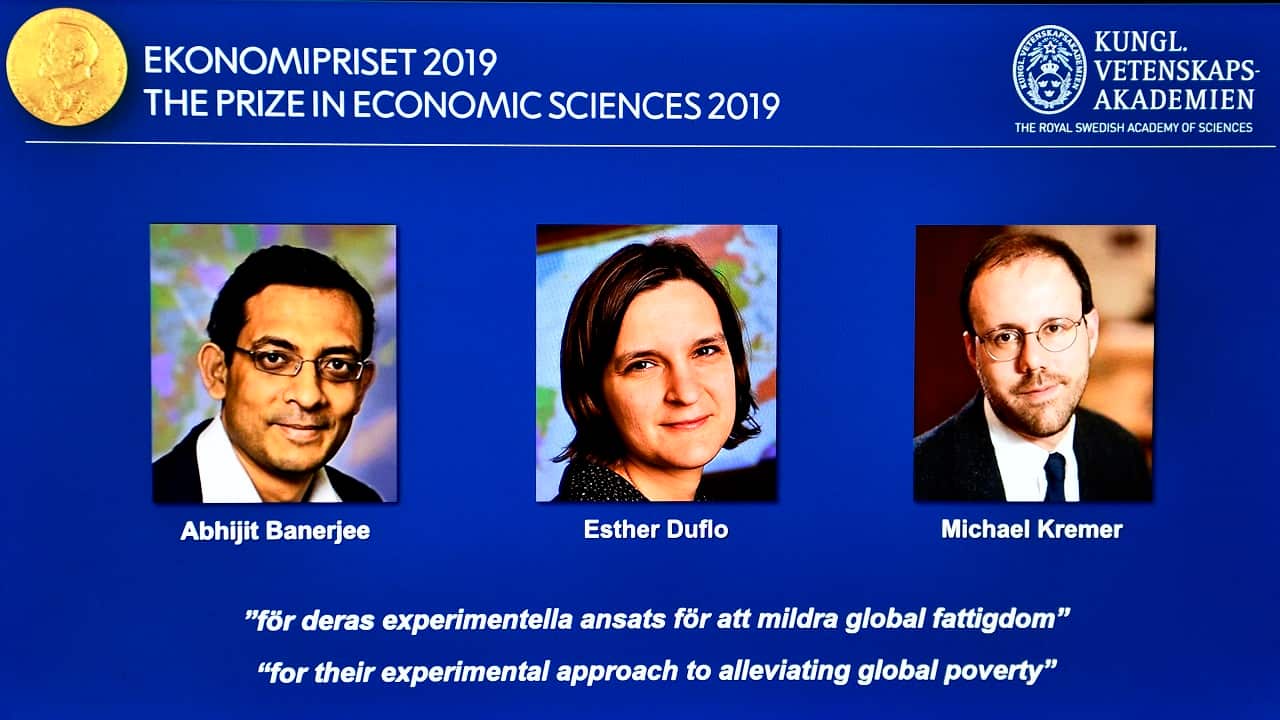
Abhijeet Banerjee has been awarded this year’s Nobel Prize along with his wife Esther Duflo and Michael Kremer.
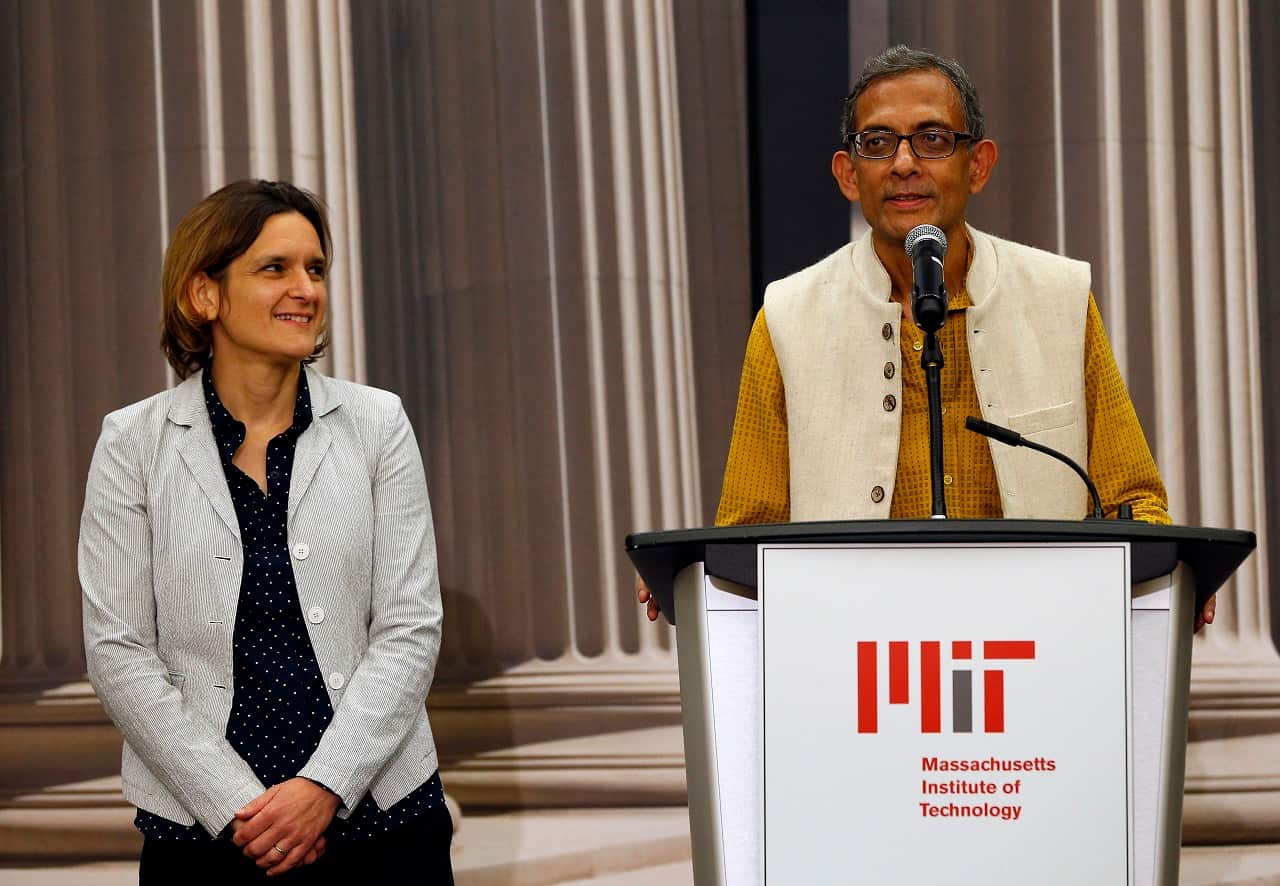
Professor Michael Kremer is from Havard University while Professor Esther Duflo and her husband Professor Abhijit Banerjee are teaching at MIT.
Professor Banerjee is the fifth person of Indian origin to receive this honour.
Dr Har Gobind Khurana (1968), S Chandrashekhar (1983), VS Naipaul (2001) and V Ramakrishnan (2009) were awarded the Noble prize in their respective fields of study.
Significance of the work
According to the experts, the winning trio’s work is a significant contribution to the field of development economics as it promotes an evidence-based policy design, rather than a development policy designed by elites, which may have unintended consequences.
Economist Dr Vinod Mishra of Monash University says within development economics, Abhijit Banerjee and his colleagues Esther Duflo and Michael Kremer (the other two noble laureates) pioneered the idea of using field experiments to study development issue such as poverty, health, educational outcomes.
“Field experiments or randomised control trials mean the experiments were conducted amongst the people who most affected by poverty. For instance, you pick a few schools in some Indian village and provide free textbooks to the students in half of the schools and do not offer free textbooks to the other half," he said.
"Then after a year, you see if the schools in which free textbooks were provided has fewer drop-out of students. The idea is by such an experiment; you can learn if the cost of textbooks is deterrent for poor people to avail government schooling for their kids.”
Education in India
Born in Mumbai in 1961, Abhijeet Banerjee was educated at Presidency College in Kolkata and Delhi’s prestigious Jawaharlal Nehru University (JNU). He received his PhD in 1988 from Harvard University. He specialises in development economics.
According to the Nobel Foundation, the motivation for the prize to the trio is “for their experimental approach to alleviating global poverty.”
Australian economist and Fellow of the Academy of the Social Sciences in Australia Professor Richard Holden lauded this award and the work of the three Nobel Laureates for its “huge practical significance in helping to understand what policies can help alleviate poverty.”
“Their work has had huge practical significance in helping to understand what policies can help alleviate poverty,” Professor Holden said.
“It’s also brought a new method to development economics and beyond.
“This approach allows us to understand the true causal effect of a policy intervention, which is what you want to know if you’re a policymaker.”
Many dignitaries from India and the world have congratulated Professor Banerjee. The former prime minister of India Dr Manmohan Singh said he is pleased that the committee chose to “honour pioneering innovations in development economics.”
“I am particularly pleased, as a student of economics, that the Committee chose to honour pioneering innovations in development economics that are very applicable and useful to policymaking in developing countries such as India,” Dr Singh said in a statement.
Professor Banerjee and his wife are the fifth couple to receive the Nobel Prize.
Only four other married couples have won the Nobel together in the prize’s history.
“It’s sort of been an entire family enterprise in the sense between J-PAL and the research and working at MIT.
There are lots of dimensions of the work that just becomes much more pleasant when you do it with your partner,” he said in an interview with NobelPrize.org.
Tune into SBS Hindi at 5 pm every day and follow us on Facebook and Twitter