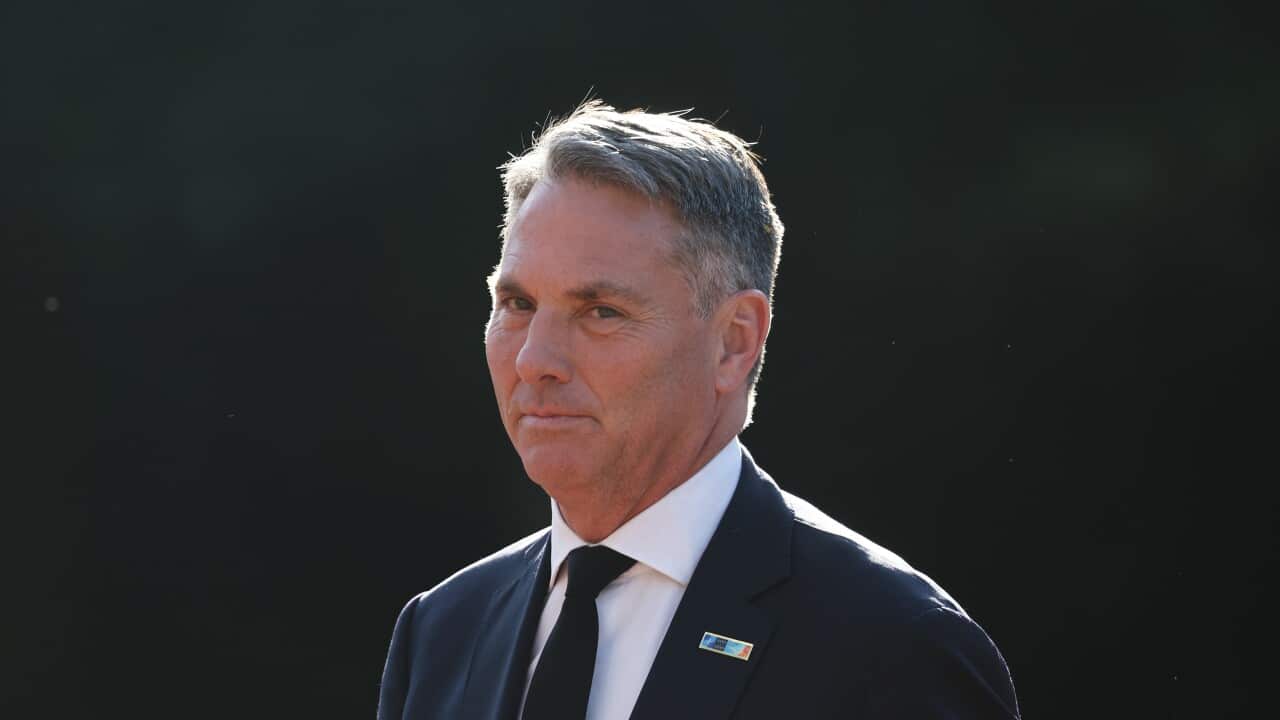
Australian Deputy Prime Minister Richard Marles arrives to Social Dinner of the NATO Summit, at Palace Huis ten Bosch in The Hague, Netherlands on June 24, 2025. Source: NurPhoto / Hindustan Times/Hindustan Times/Sipa USA/AAP
Australia has refused US calls to lift defence spending to 3.5 per cent of GDP, holding firm on its target of 2.3 per cent by 2033–34. Yet at the NATO summit, it committed troops to Poland, backed Ukraine, and signed new cooperation deals. With global tensions rising and mounting pressure from both allies and domestic opposition, this episode explores how Australia is managing defence priorities—and what it means for the national budget and taxpayers.
Australia has refused US calls to lift defence spending to 3.5 per cent of GDP, holding firm on its target of 2.3 per cent by 2033–34. Yet at the NATO summit, it committed troops to Poland, backed Ukraine, and signed new cooperation deals. With global tensions rising and mounting pressure from both allies and domestic opposition, this episode explores how Australia is managing defence priorities—and what it means for the national budget and taxpayers.