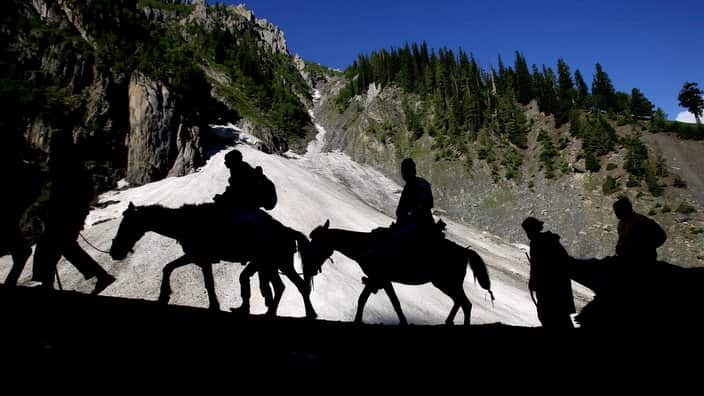


The Amarnath pilgrimage has begun, and even as more than 500,000 pilgrims and tourists visit Jammu Kashmir during this season, it creates an environmental hazard. In order to reduce pollution from animal faeces, the government has decided to make mules and ponies carrying pilgrims to wear a diaper. SBS Hindi spoke with Dr Azra Kamili Director of the Centre of Research for Development in Jammu and Kashmir.
The pilgrimage to Amarnath begins on 28th June and will go on until August. Almost 500,000 pilgrims visit the shrine located 4,000 km above sea level. Besides pilgrims, a number of tourists also visit the area apart from the locals, labourers and others. This leads to massive pollution.
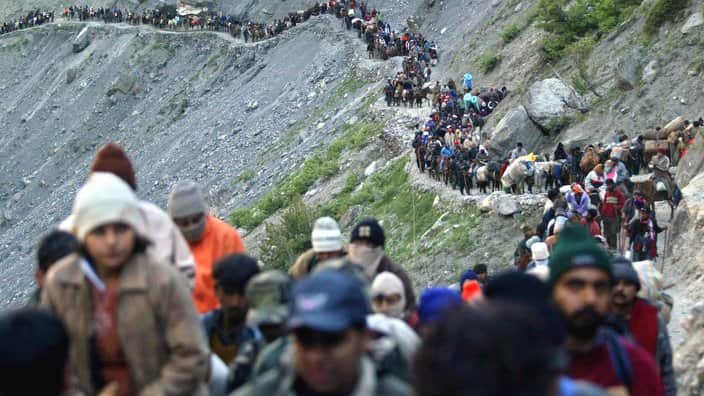
To reduce the pollution a meeting chaired by Jammu and Kashmir minister for Forest Environment and Ecology a decision was made to make ponies and mules carrying pilgrims to wear diapers.
This is a unique decision by the government and is going to be used on a trial basis. Mules and ponies can release 1 to 1.5 kgs of droppings every two hours. Chief Executive Officer of Sonmarg Development Authority Shabir Ahmad Raina said 500 animal diapers have been ordered. These will be bags which have the capacity to hold at least 10 kgs of faecal balls.
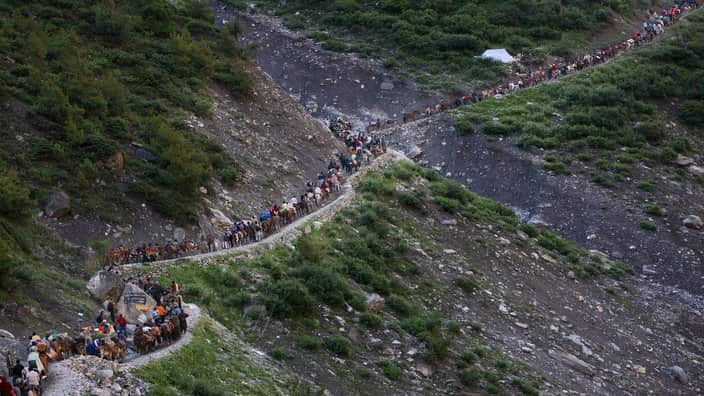
SBS Hindi spoke to Dr Azra Kamili who is the Director for the Centre of Research For Development and also Director of the Department of Environmental Science in Jammu Kashmir. Dr Kamili said, “The shrine board has recommended 7,500 pilgrims per day which brings it to a total of almost 500,000 visitors during peak season, which is a very heavy load. During this period the sewage generation is about 2,85000 litres per day and the solid waste generated is 5.66 tons. The contamination gives rise to health issues.”
Dr Kamili says, “It’s a good idea as it will help in keeping the place clean, animal defecation does pollute the environment and litters every place and creates a problem for those climbing up. However, these diapers should be cost-effective and the other issue is about the reaction of the animals being made to wear diapers. The animals may not take to them and they too could get infected. Since this is an experiment on a trial basis I guess these issues will get resolved. What is very important is the proper disposal of these diapers, otherwise, they will lead to further pollution.”