

Sadhana, a 49-year-old woman of Indian origin, is the co-founder of LGBTQI support group Trikone Australia. On Mardi Gras this year, we bring you her story of coming out to her family in 1990s India.
Highlights
- Sadhana is the co-founder of the South Asian LGBTQI group Trikone Australia
- She came out to her family in the India of 1990s
- She feels examples of successful homosexual relationships will increase social acceptance
Sadhana was born and brought up in a Sindhi family in the north Indian city of Lucknow. She was 18 when she came out to her parents as a lesbian in the 1990s, a time when the term 'lesbian' was not even heard of in most parts of India.
Today, she feels proud about being a co-founder of Trikone Australia, a support group for the country's South Asian LGBTQI communty.
“It was like any ordinary Indian family, my parents kept asking me what I wanted to do. Those were the days when one married early. I was asked too, if I wanted to marry. When I could no longer avoid the subject, I came out to my mother," she reveals.
She says she was lucky to have a set of parents who accepted her the way she was.
“I couldn’t really tell my father. He’d taken sick by the time I came out and then passed on. My mother was as supportive as she could be. My parents had brought me up in a liberal setup where my choices were completely respected, a rare feat in the 1990s," says Sadhana.
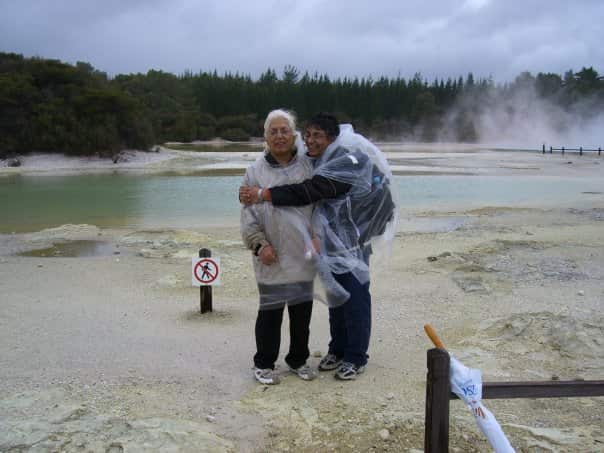
Sadhana went to Delhi to pursue higher studies. She was the first person in the family to leave Lucknow for education. A scholarship brought her to Australia in 1997. She began working in a firm that required her to make frequent trips to San Francisco.
“It was in San Francisco, that I first came to know about Trikone. It was a revelation as I saw another openly gay Sindhi person for the first time in my life at their gathering," she says.
Recalling her pleasant surprise, Sadhana says, "for someone who wasn’t used to another brown gay person in the same room, here I was, in a gathering that was largely Indian, and had another Sindhi too!”
Sadhana returned to Australia, wanting a local Trikone chapter. A chance meeting at a play led to the foundation of Trikone Australia.
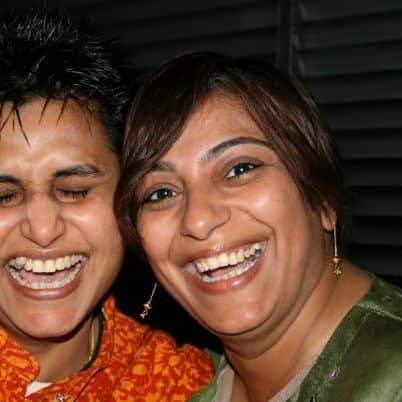
Sadhana believes that everything happens for a reason.
“I remember being 19 or so, when a relative took me to our family's spiritual guru, Baba ji. In India, these spiritual gurus are the people you go to when you do not have answers to your life. You can talk to them about anything and everything," she says.
It was that ime in her life when confusion and acceptance were sparring in her mind.
“The Baba ji said he had nothing to tell me. He told me whatever I was doing was against religion, that he could in no manner support it,” she recollects.
She was hurt but stood her ground.
“I told the Baba ji that I didn’t need validation from him, but I was left thinking what happens to those who did not have a supportive family like mine or were not as exposed to other societies," wonders Sadhana.
This feeling of empathy has since stayed with her. This is why when young students come to her through Trikone, she always has a patient ear for them.
“Most of them are still figuring themselves out. I can’t even remember how many of them thought that they would never be able to tell their families, and now they are happily married to their partners. It feels right at the end of the day," Sadhana says.
Sadhana recalls how she brought her mom to Sydney and introduced her to her friends. She feels if families receive positive reinforcement to accept gay couples and are shown examples of successful LGBTQIA+ relationships, it can go a long way in normalising same-sex relationships.
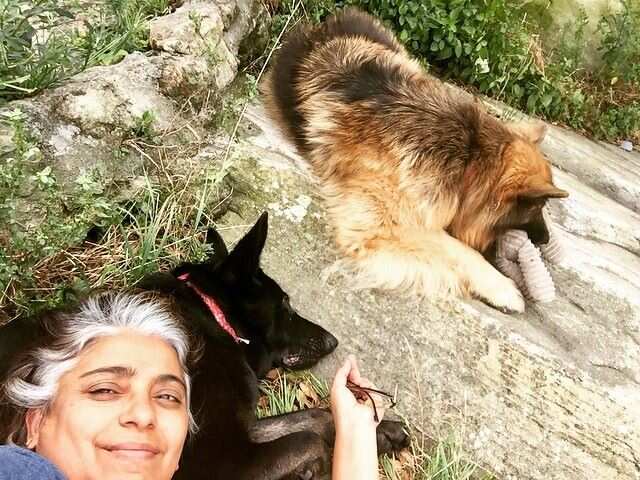
“They (families) have their cultural biases. They need to be dealt with patience. Some might be a lost case, because they don’t want to see reason. But in my experience, most of them change their perspective," says Sadhana, who now lives in Sydney with her partner and two dogs.
Listen to the podcast in Hindi by clicking on the audio icon in the picture at the top.
Tune into SBS Hindi at 5 pm every day and follow us on Facebook and Twitter