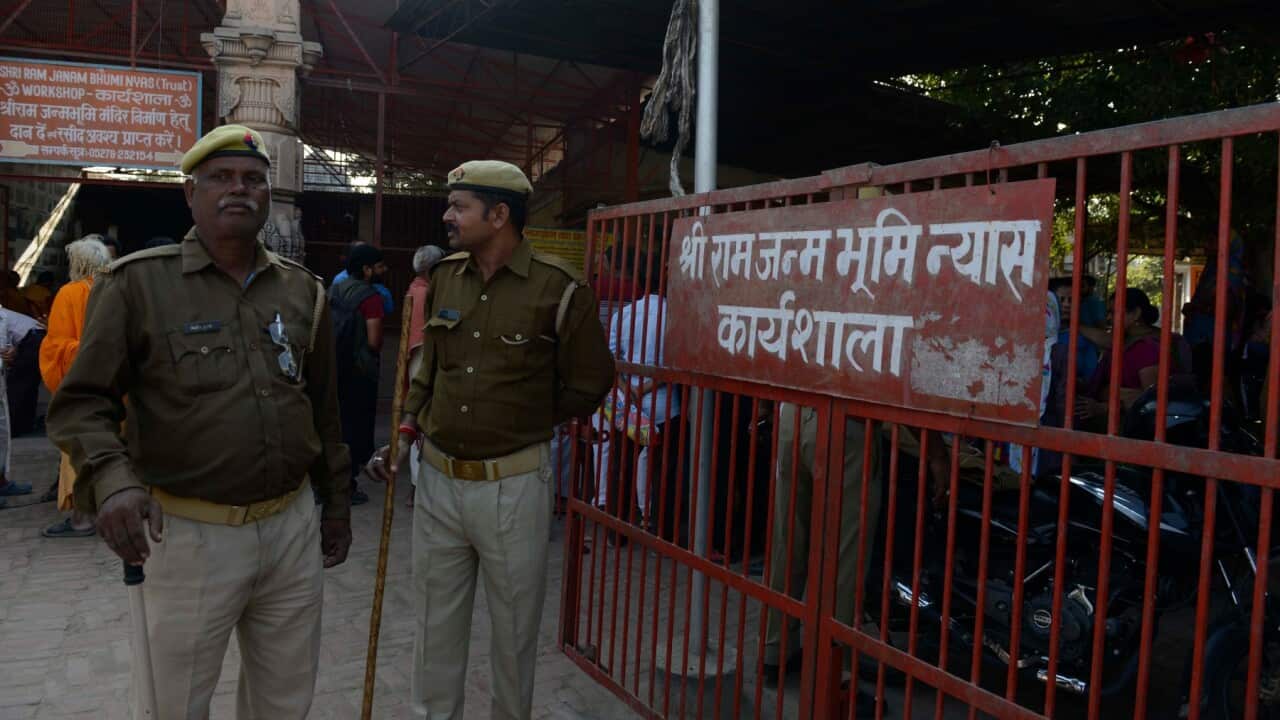

After India's Supreme Court ruled the disputed holy site of Ayodhya in northern India should be given to Hindus who want a temple, preparations are underway in India for the temple's groundbreaking ceremony.
The event, scheduled on August 5, 2020, will be attended by over 200 high-profile guests, including India's Prime Minister Narendra Modi and his cabinet colleagues.
Highlights:
- The groundbreaking ceremony of Ram temple will be held in Ayodhya on August 5
- India's Prime Minister Narendra Modi to inaugurate construction work
- The ceremony will be telecast live on Doordarshan, India's public broadcaster.
Members of the Sri Ram Janmabhoomi Teerth Kshetra, the Trust set-up to oversee the construction of the Ram Temple at Ayodhya said the groundbreaking ceremony date was chosen by Prime Minister Modi.
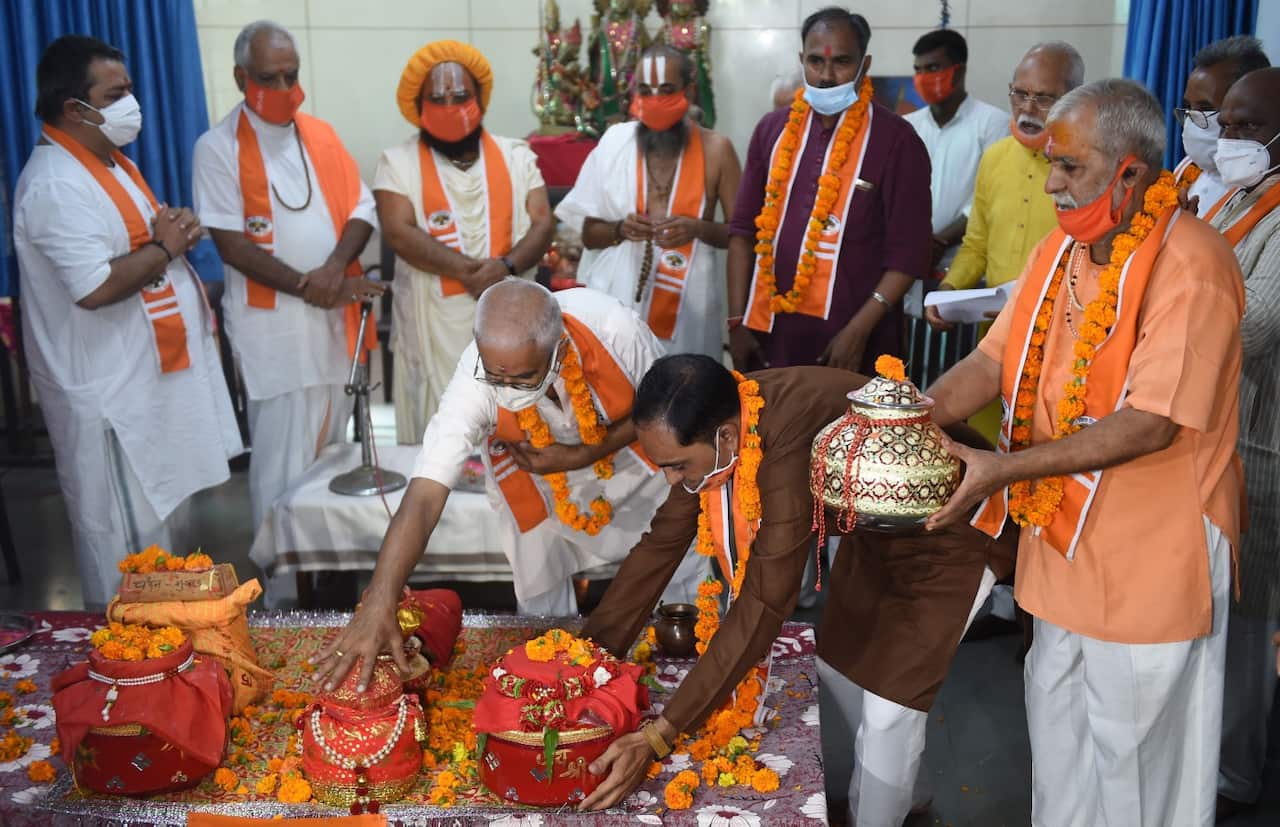
Dr Anil Mishra, a member of Shri Ram Janmabhoomi Teerth Kshetra Trust, said, "Shri Ram Janma Bhoomi Teerth Kshetra Trust held a meeting in Ayodhya and fixed two dates for Bhoomi Pujan. These dates were 3rd August and 5th August 2020.
"After this, an invitation was sent to Prime Minister Narendra Modi and a request was made to choose one of these dates."
Listen to the podcast:
Prime Minister Modi to inaugurate construction work
Dr Mishra said the ceremony will begin on Wednesday morning according to the Mahurata (auspicious time) and the Prime Minister will join the worship and inaugurate the construction work.
"We will begin with the prayers and the Prime Minister will join us for some time and inaugurate the work on the temple," Mr Mishra said.
He said the temple will be bigger than the first approved structure. It is said that the temple's model was built in 1989 by Ahmedabad architect Chandrakant Bhai Sompura.
It is estimated that the temple will be built in 3 years.
Uttar Pradesh Chief Minister Yogi Adityanath said the new temple will put Ayodhya on the world map.
"It is time. We have to get Ayodhya its place in the map of the world," the CM said.
Mr Mishra said the trust has appealed people not to visit the site on the day.
"On this occasion, Yogi Adityanath has appealed to people not to come to the venue, taking care of cleanliness around them as well as being careful about corona infection."
"Instead you can watch it live on tv. The program of Bhoomi Pujan will be telecast live by Doordarshan [nation's public broadcaster]," he said.
The decision has been met with opposition from the Communist Party of India (CPI) who has objected to the telecast of this event on Doordarshan.
In a letter to the Ministry of Information and Broadcasting, the CPI said that for a long time, the Ram Janmabhoomi dispute has been the cause of tension between the two communities in the country.
The event should not be broadcast on the national public broadcaster, keeping in mind the secular image and national unity of the country, the CPI said.
All India Majlis-e-Ittehadul Muslimeen (AIMIM) President and Member of Parliament, Asaduddin Owaisi said Narendra Modi attending the event as Prime Minister will be a violation of the constitutional oath of Prime Minister.
"The Prime Minister should tell in what capacity he is joining the Ram temple Bhoomi Pujan program," Mr Owaisi told the Indian media.
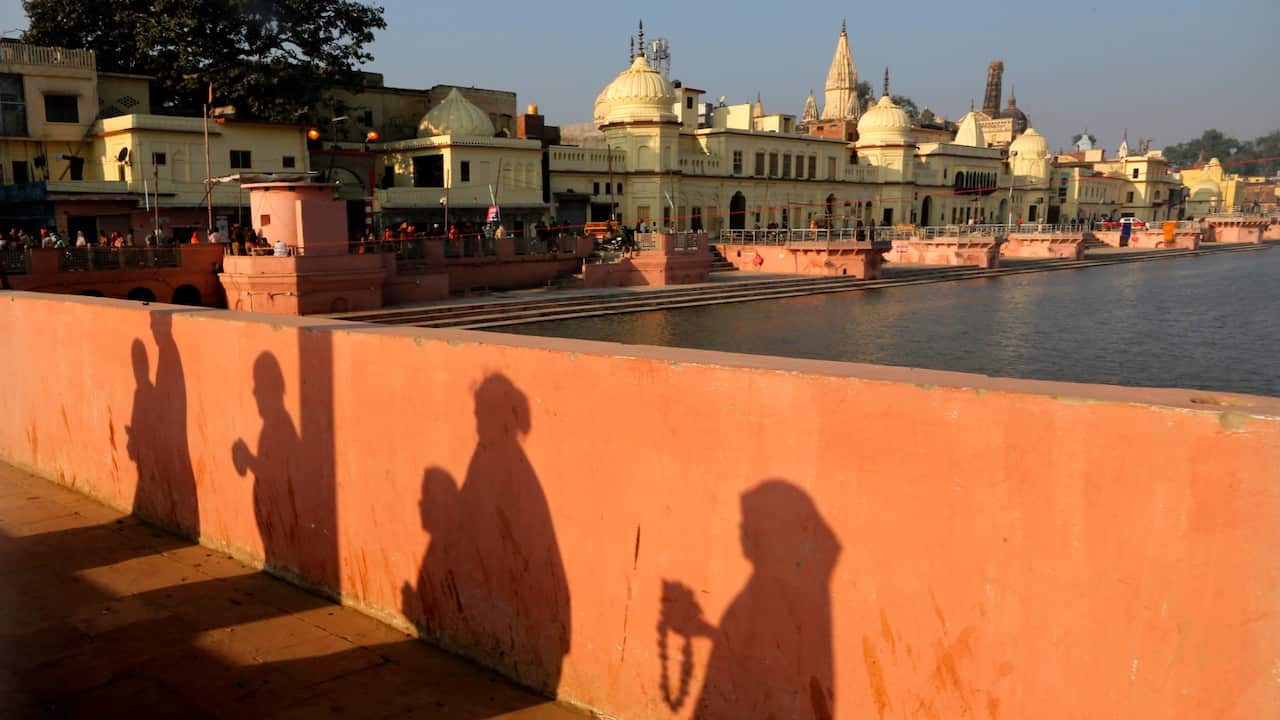
Background:
India is home to world's largest Hindu population and many Hindus believe the site is the birthplace of one of their most revered deities, Lord Ram.
The site, which is located in Uttar Pradesh, India's most populated state, was bitterly contested by Hindus and Muslims for decades.
At the centre of the dispute was the demolition of the 16th century Babri Mosque which stood at the place till it was demolished in 1992.
In November 2019, India's Supreme Court ruled the site should be given to Hindus who want to build a temple there and said Muslims would get another plot of land to construct a mosque.
Tune into SBS Hindi at 5 pm every day and follow us on Facebook and Twitter