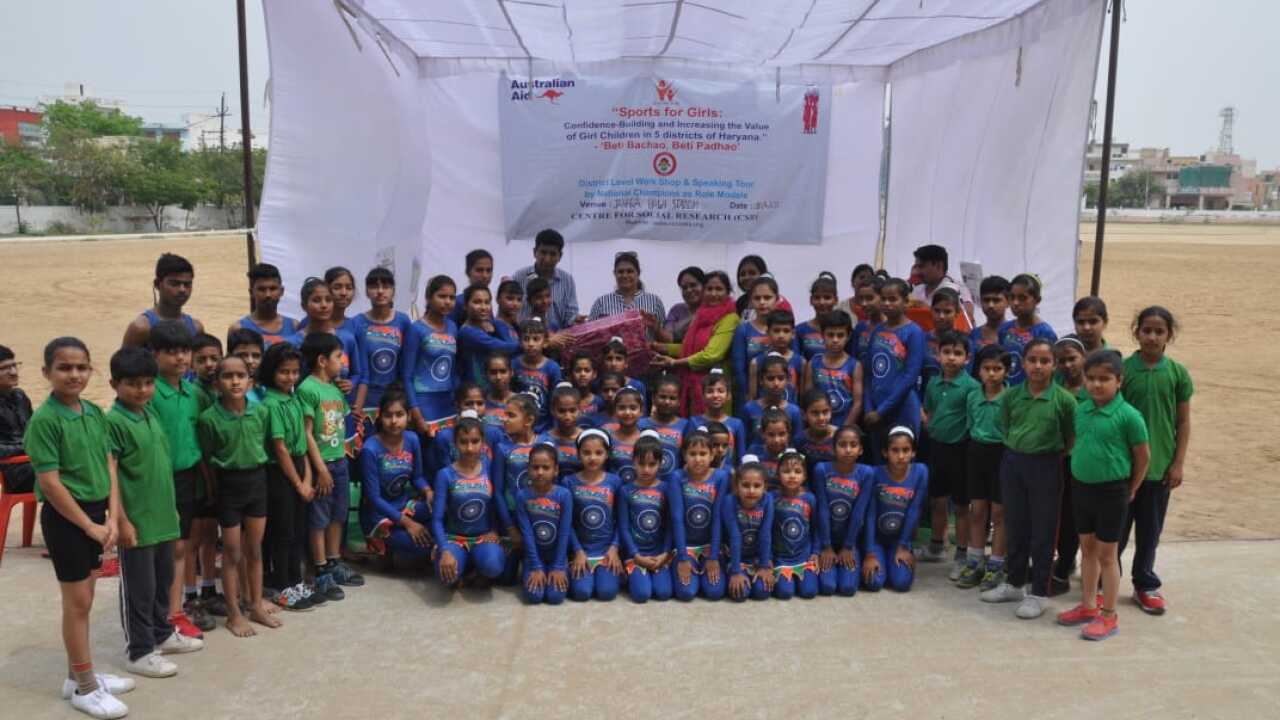

An NGO in India, with the help of the Australian High Commission in Delhi, ran a one year project called ‘Sports for Girls’ in Haryana. The project addressed discrimination against girls and aimed to use sports for their holistic personality development and economic empowerment.
Haryana has the worst sex ratio in India among the states. Yet some of India's most successful current female players are from Haryana including former world No.1 Badminton player Saina Nehwal and the Phogat sisters (Geeta, Babita, Priyanka, Ritu, Vinesh, and Sangita), who were the inspiration behind the film 'Dangal' and have won several national and international medals in wrestling. Geeta, Babita, and Vinesh Phoagat have won the Gold medal at the Commonwealth Games.
Taking a cue from this, Centre for Social Research (CSR) in India, which is an NGO, started a one year project titled “Sports for Girls: Confidence-Building and Increasing the Value of girl Children". This campaign began in five districts (Ambala, Kurukshetra, Jhajjar, Gurugram, and Mahendragarh) in Haryana under the ‘Beti Padhao Beti Bachao’ campaign. These districts have some of the worst sex-ratios in the state. This campaign was supported by the Australian High Commission in New Delhi.
The team's motto was “Khel kud banae sashkt betiya. Betiya banae sashkt desh” ( 'Sports will empower our daughters, Daughters will empower the nation')
Through ‘Sports for Girls’, the volunteers at CSR aimed to address discrimination against girls in accessing education and use sports for holistic development of their personalities and economic empowerment.
Dr. Manasi Mishra, the Head of Research Division at CSR and the project head for ‘Sports for Girls’ has extensively worked in Haryana. Dr. Mishra emphasizes the importance of sports in shaping the personalities of girls and their overall development with human values and team spirit.
She told SBS Hindi,
"When we were implementing the 'Beti Padhao Beti Bachao' campaign in Haryana, the question that was coming up was, what after that? Parents and stakeholders were not being able to join us that’s why we thought of this campaign. Haryana is one state where girls are getting medals in CWG (Commonwealth Games) and Olympic games and that is being appreciated. So we thought about girl empowerment in that context. Sports can get acceptability, including economic acceptability, for the girl child, in her family, and in society. That is how we came up with 'sports for girls' so that we can empower girls through sports. We organized sports at district and sub-district levels and got scholarships for the girls"
"We identified the sports that had higher adaptability in the districts and we moved forward in those games. We connected with Sports Authority of India" she says,
"In Kurukshetra, we have the Shahabad hockey academy for girls. Players from this academy are selected for the national team. So we got these girls playing there. In Jhajhhar we identified Gymnastics, in Ambala we identified gymnastics and handball, in Gurugram gymnastics and volleyball. So we identified these sports and encouraged the girls."
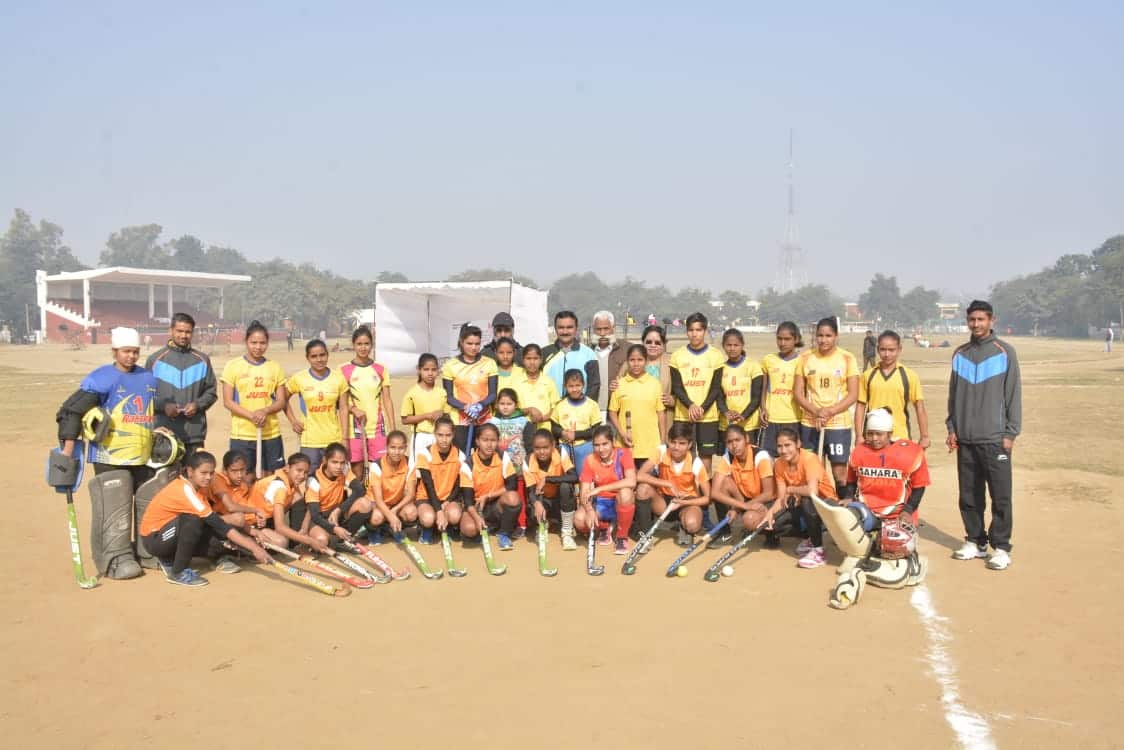
Research Assistant Poushali Kundu, who worked on the ground for this project tells us,
"We started this project with the help of the Australian High Commission. This is an important aspect for the girls of Haryana as you know how well girls from Harayan are doing at the CWG. Initially, I felt, why sports? but then I went to Haryana and saw and met those girls and saw the potential they have, the ability that they have, that even at a sub-district level they are playing so well, they have immense talent. So if we can encourage that talent a little bit from our side at the ground level they will go very far."
Sindhu Bala is a Gymnastics coach in Jhajjar district. She has been teaching gymnastics in Jhajjar for the past 25 years. She tells us that when she started no one in Jhajhhar knew what gymnastics was,
"This was a very backward area when I came and people called gymnastics Janmashtami. Then initially I got two-three kids to the stadium and told them I will teach you a game and these are the benefits, if you go and play at the state level, you could win a prize. That is how I motivated them. Initially, we did not have any equipment either so I would teach them on the grass. Then when 15-20 kids went for competitions and won prizes that’s when the craze started growing. Now even inside villages, people know about gymnastics in Jhajjar district."
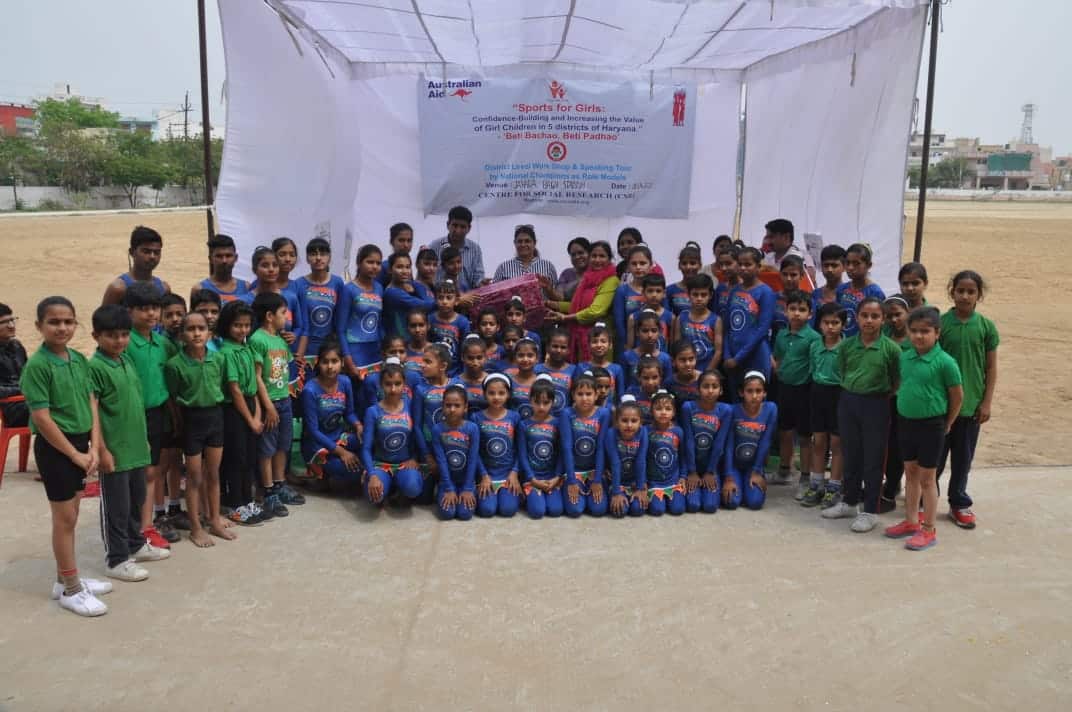
Varsha is currently studying in 8th class. She started learning gymnastics when she was six years old, now she is 14.
"I am a national gymnastic player. I have learned gymnastic from Sindhu Bala mam and she is a very good teacher. It is only because of her I have reached where I have reached. My parents are very happy. I want to become a very good gymnastic player going forward so that I can make my teacher and my family proud. That is my dream."
Minakshi Saini is a volleyball coach in Gurugram.
"The poor girls who study in government schools, they can't reach the stadium so I go to them and give them training. It's important for girls to come into sports so that they are not dependent on anyone. They can go ahead in this field. The village where I am giving training, girls are married off at a very young age and they are not given proper diet, there is discrimination between boys and girls. The girls have been motivated. Earlier I had 32 girls in my center now I have around 125 girls taking training. This programme has motivated the girls and created awareness among parents and they are sending their kids unhesitatingly."
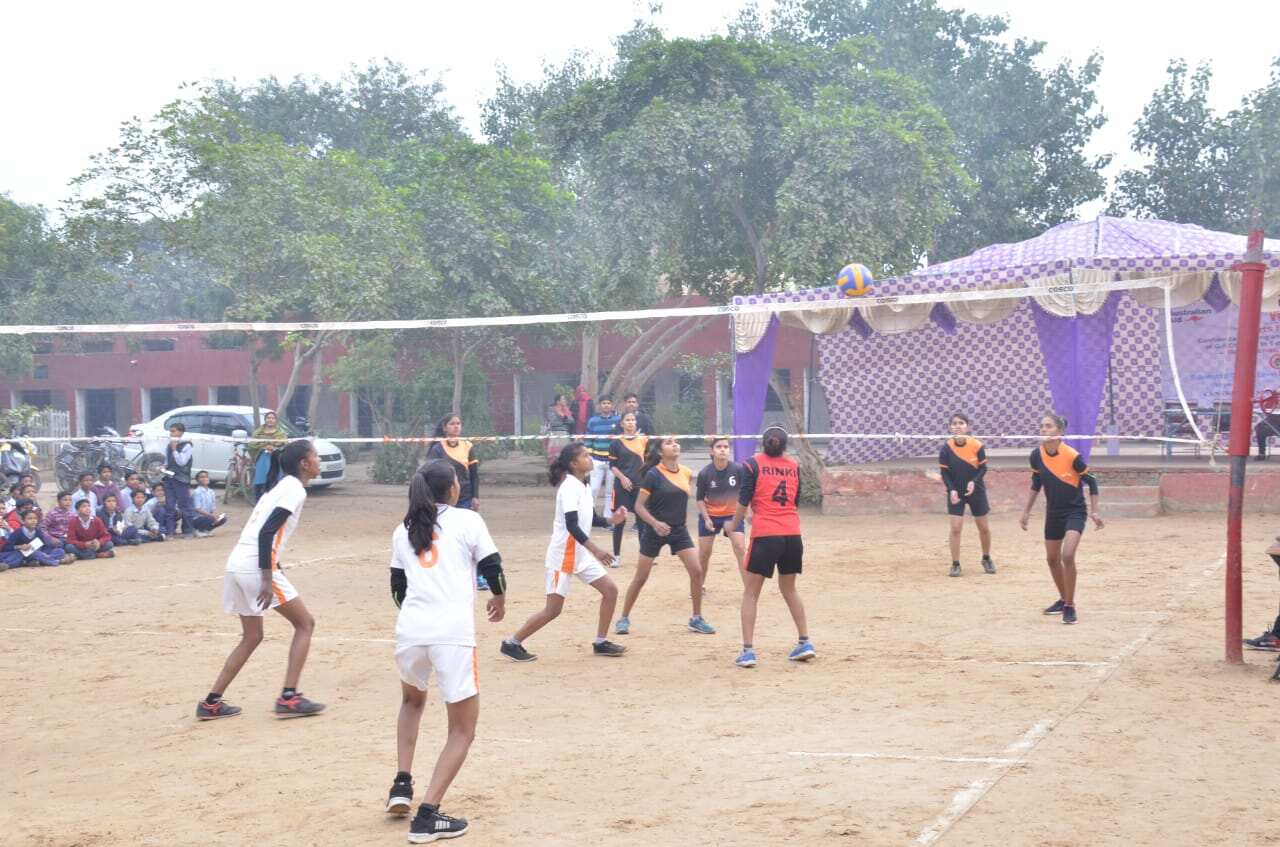
Minakshi herself came from a poor family,
"My motivation is that in the same way that my parents did hard labour and got me educated, I want to assist other poor girls to go forward and change the mindset of parents."
Her student Renuka also studies in 8th class,
"I come from a very poor family, initially no one supported me to play in the family but Meenakshi mam supported us a lot to play. She got the kit stitched, got us shoes, ball, and food. She did a lot for us. Now all my family members are very happy and support me to play."
Priya is another volleyball player who comes from a poor family
"I didn’t get that much support at home but Meenakshi mam came when I was in 7th class. She told us how I can go forward playing volleyball. She gave us courage. One time when we won and came, from then on my family started supporting me, that you can also do something and move forward. They started believing in us. We have come first or second in competitions so we feel very good. I started when I was in 7th but now I am in 10th standard. It's very good to play volleyball. I hope I can continue playing volleyball and I hope that I can be in a good position and give a good life to my family."
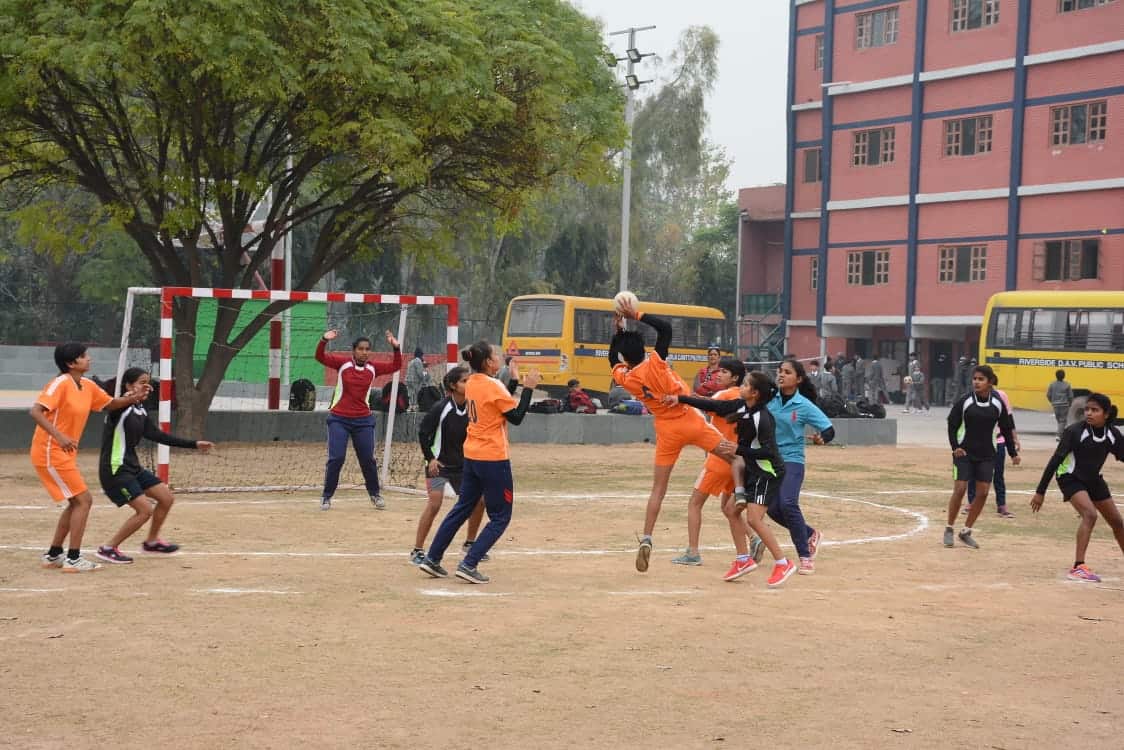
'Sports for Girls' was a one year project from June 2017 to May 2018. It was broadly divided into three phases. The first phase was to understand the ground reality of female sports players of Haryana. Then an enrolment drive was conducted to identify the number of girls enrolled in district and sub-district level in athletics programs. The second phase involved conducting one sub-district and district-level match in each of the five selected districts. Hundred athletes from weak socio-economic backgrounds from the five districts were then given a small scholarship amount of Rs 2000 each. The last phase of the project included a District level Workshop and Speaking Tour by ‘Role Models’ whereby successful female athletes from Haryana, who had become international players, were invited to motivate the participants.