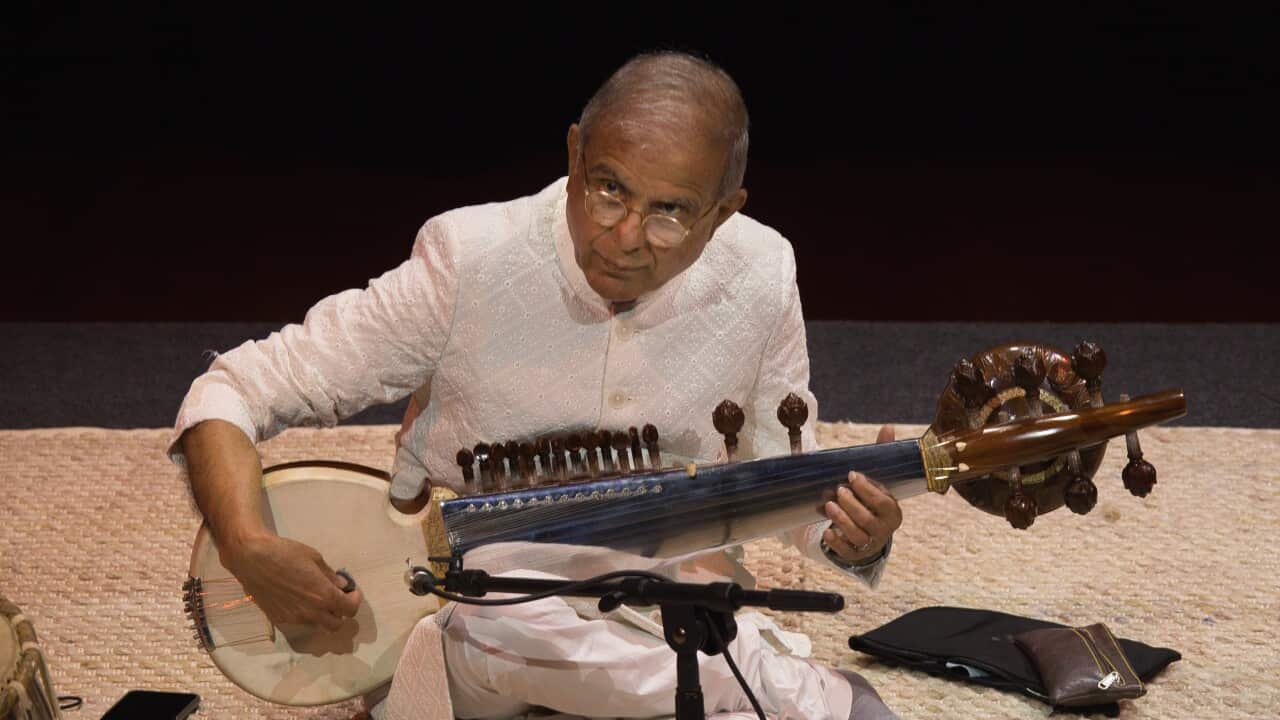

Renowned sarod maestro Ustad Irfan Khan is the eighth-generation and last descendant of India’s Lucknow–Shahjahanpur Gharana. In this podcast, he shares insights into the distinctive style and rich legacy of his Gharana within Indian classical music. Listen in as he traces the lineage of Ustad Niamatullah Khan—the founder of the Gharana—and his connection to the descendants of the legendary Tansen, while also exploring the evolution of the Afghan rabab into the modern sarod.
The Lucknow–Shahjahanpur Gharana traces its roots to the Sainiya Gharana, with its ancestors having migrated to India from Afghanistan.
Speaking with SBS Hindi, Ustad Irfan Khan explained that this gharana traces its roots to the Bangash tribe of Afghanistan.
The three members of this tribe migrated to India around two centuries ago and settled in Shahjahanpur and Lucknow (Uttar Pradesh).
The wedding between the families led to the amalgamation of two distinct traditions and lineages, hence the joint gharana.
Khan's great-grandfather, Niamatullah Khan, used to play the sarod in the court of Nawab Wajid Ali Shah.
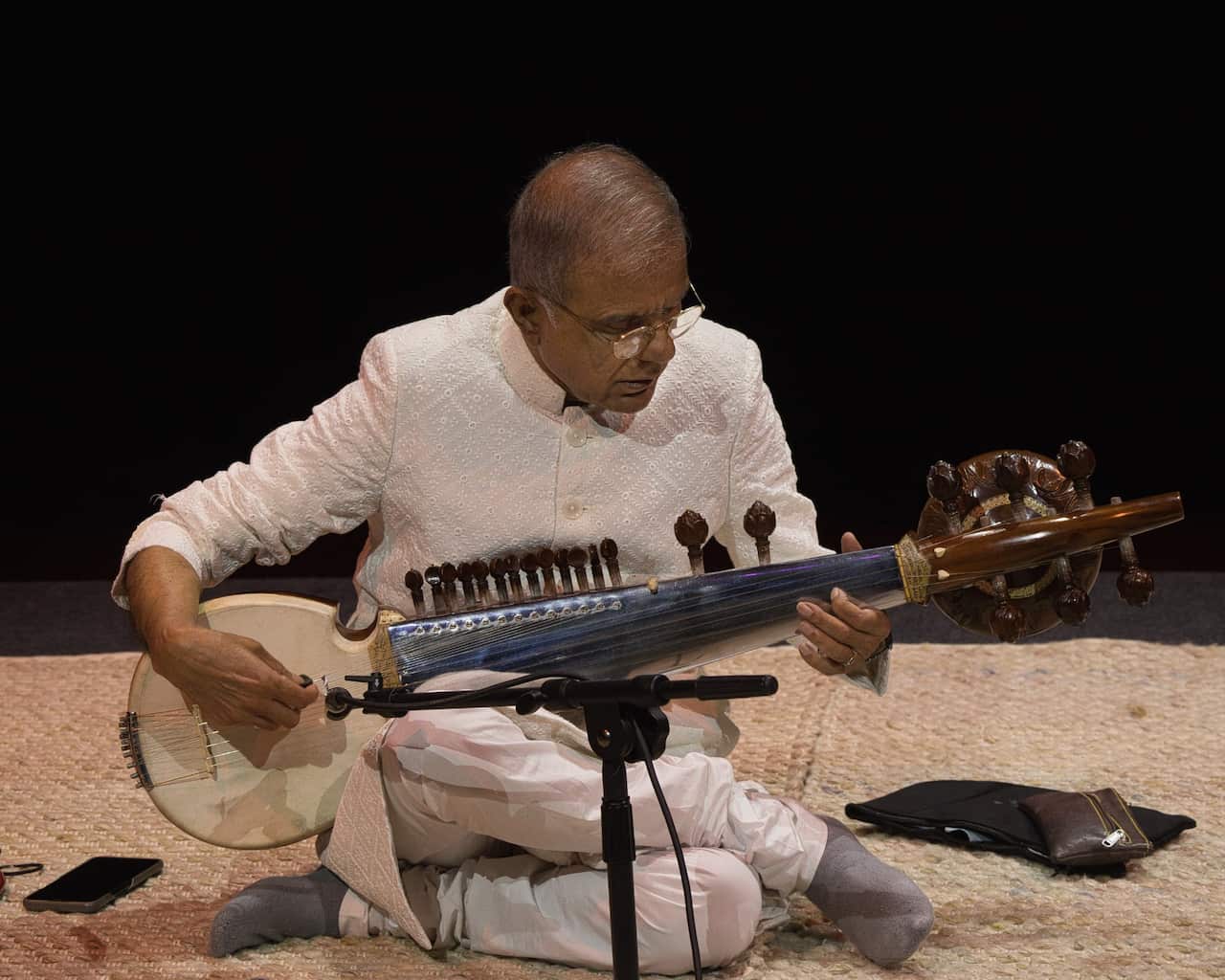
Born in Lucknow in 1954, Irfan Muhammad Khan settled in the eastern city of Kolkata at a young age.
He learned the sarod and sitar from his father, Umar Khan (1916–1982), and his uncle, Ilyas Khan (1924–1989).
Later, he focused entirely on the sarod.
He has served as a teacher and is an Emeritus Professor at the Afghan National Institute of Music in Kabul.
Ustad Irfan Khan said, "I don’t have a direct heir. My disciples, both in India and abroad, are the torchbearers.
"They will carry forward the legacy of this Gharana, and I have full confidence in their abilities."
Ustad Irfan Khan shared that, using digital technology, he and his disciple in the US have been able to preserve and transcribe the family’s unique gats of ragas, covering a tradition that spans over 150 years.
Find our podcasts here at SBS Hindi Podcast Collection. You can also tune in to SBS Hindi at 5 pm on SBS South Asian on digital radio, on channel 305 on your television, via the SBS Audio app or stream from our website.