
In the mountainous regions of North Eastern India, the curtain of darkness falls early over the hills; the fog can descend suddenly and often rivers run erratically.
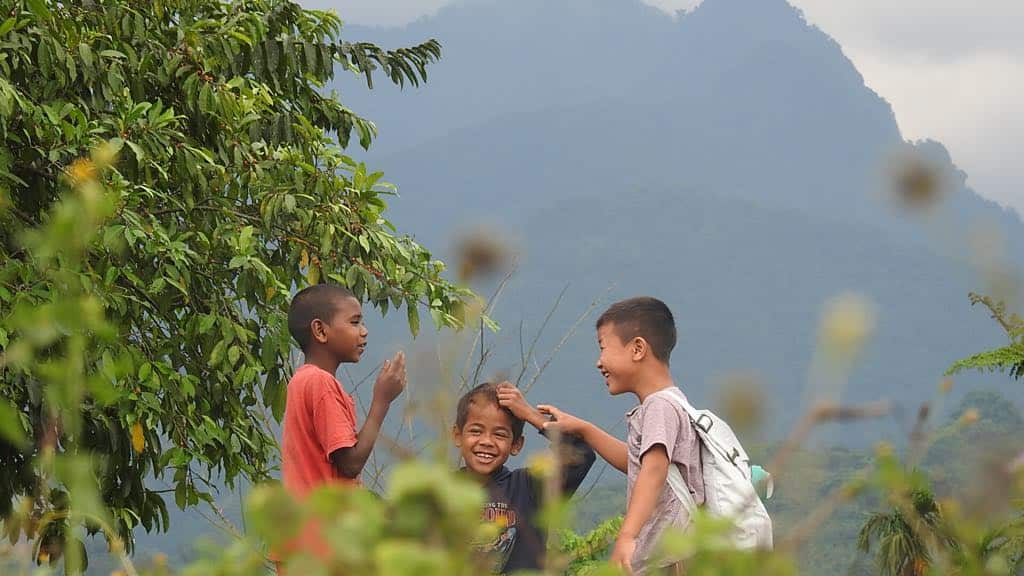
It’s tough for school children to walk home over the hilly terrain.
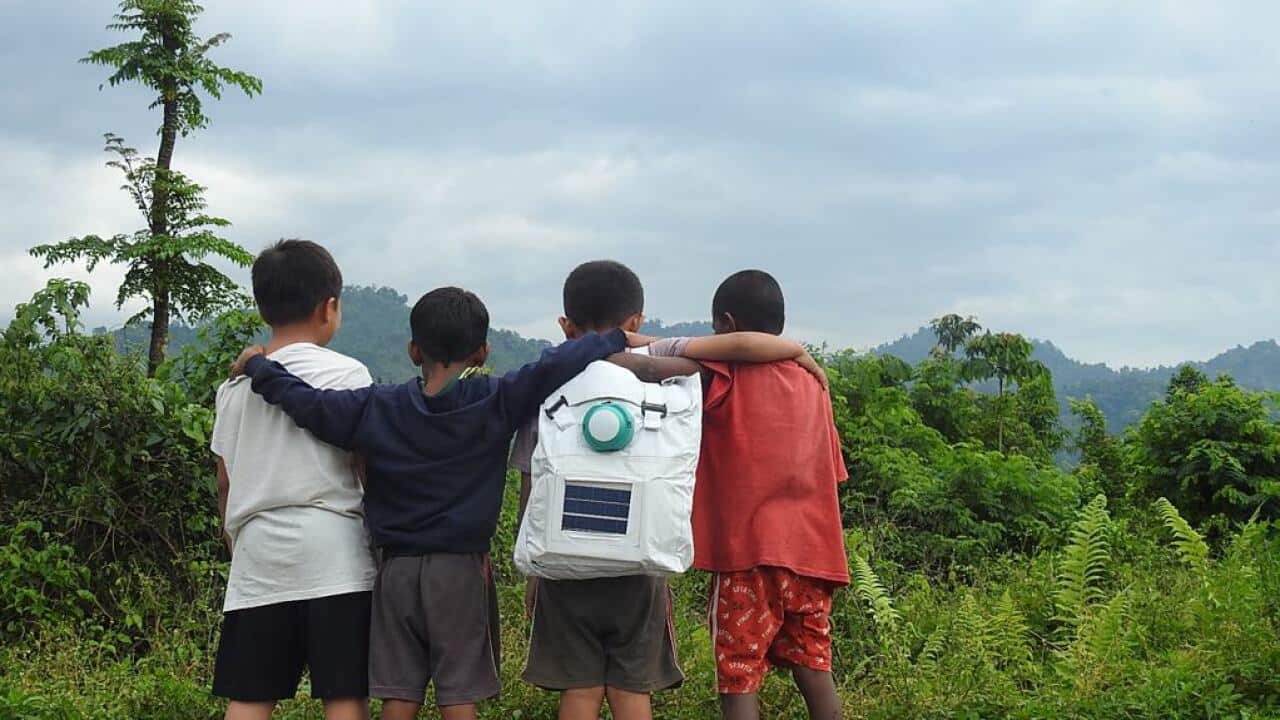
This is what inspired Charu Monga, Assistant Professor of IT from the Indian Institute of Technology (IIT) in Guwahati in the north-eastern state of Assam, to design a school bag with a solar panel to help kids navigate safely in the hills.
Ms Monga who is from the remote areas of North East India says, "It's unimaginable how the little children walk a distance of five kilometres on rough terrain to reach school.
"At times, it is bitterly cold, at other times it is foggy and the rivers there change their direction and width. This poses a danger for kids.
"This is the main reason why I felt a need to light the path for these children," she told SBS Hindi.

These personalised solar school bags, designed by Ms Monga and her team, have been named Jugnu.
She says it is a very personalised solar bag which not only lights the path as the child walks home but also adds a bit of fun to their life.
"We stayed in the villages and studied the issues and finally came up with a solar bag," says Charu.
The technique is very simple. The bag has solar panels and a light which is detachable. When the kids go to school in the morning the Jugnu school backpack gets solar charged.
When they return home, they can put on the light as it starts getting dark. Being detachable the light can also be used at home when they want to study.
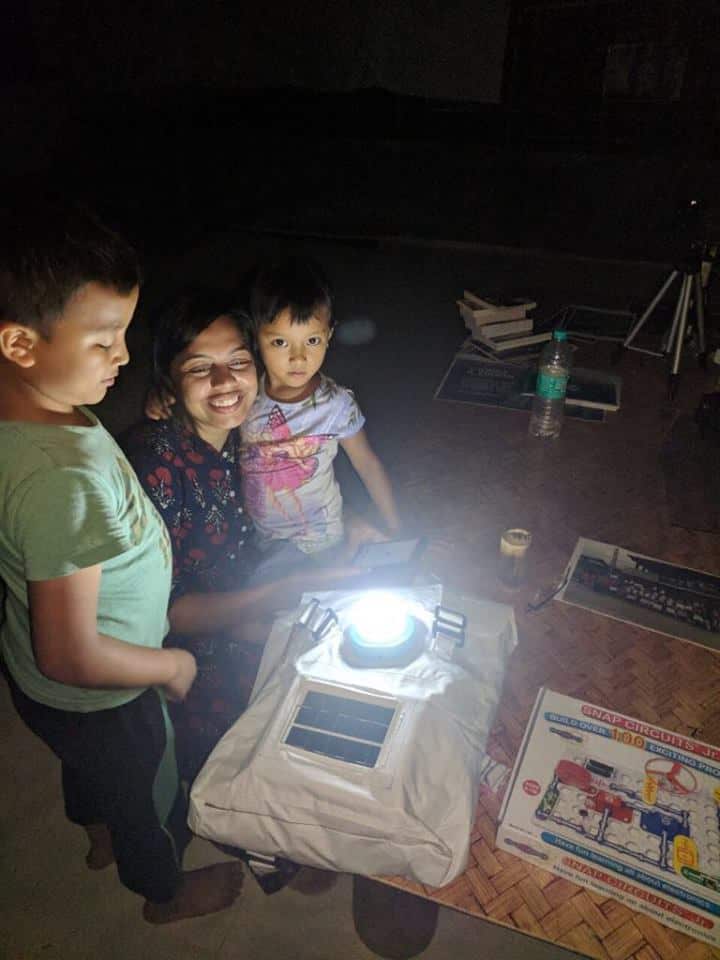
"The bag is personalised according to the needs of a child," she says. "It can be hung front ways to light the path or strapped at the back as the children follow each other in a line, or it can be slung sideways as well.
"The children were thrilled with the bags and wanted to call it Jugnu (glow worm) so we settled for that name."
While literacy rates, according to India's 2011 Census, have grown to 73% nationally, there are big discrepancies between urban and rural areas.
Acocrding to India's SociSocio-Economic Caste Census 2011, 36 per cent of India's rural population of 884 million are illiterate.
Of the 64 per cent literate rural Indians, a more than 1 in 5 have not completed primary school, and only 5.4 per cent of rural India has completed high school - with 3.4 per cent having graduated from college.
According to the Indian Census of 2011 – 99 million children in total have dropped out of school,