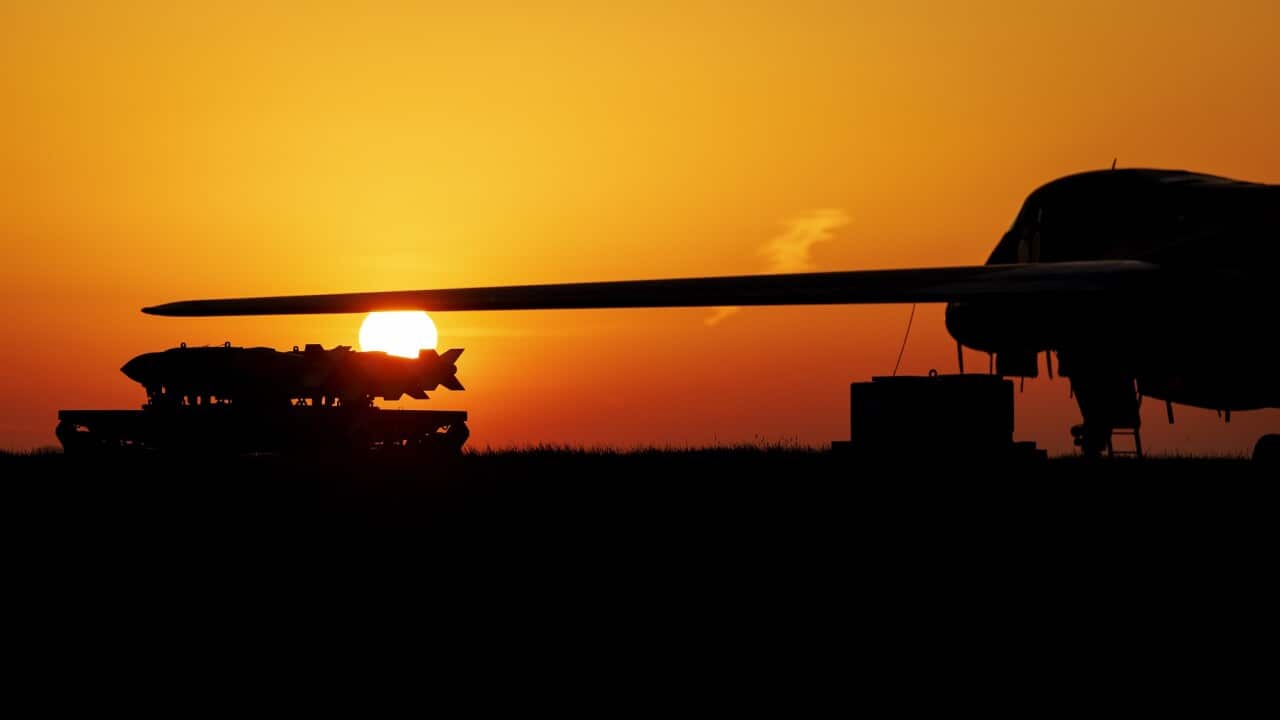
US Air Force JDAM precision-guided munition and a Rockwell B-1 Lancer heavy bomber sit on the tarmac as the sun rises above RAF Fairford airbase in Gloucestershire, Britain, 08 April 2026. The US and Iran agreed to a two-week conditional ceasefire with the condition of temporary reopening of the Strait of Hormuz, announced by US President Donald Trump. EPA/TOLGA AKMEN Source: EPA / Credits: TOLGA AKMEN/EPA
Just hours after the world welcomed news of a two-week ceasefire between the US and Iran, an agreement expected to keep the Strait of Hormuz open to a significant share of global oil shipments, the fragile truce now appears to be under serious strain. Iran has warned it will target any vessels attempting to pass through the vital shipping route, blaming overnight Israeli strikes on Lebanon. The US, however, maintains those attacks were not covered under the ceasefire agreement. So where does this leave the situation, and what exactly have Iran and the US agreed to?
Just hours after the world welcomed news of a two-week ceasefire between the US and Iran, an agreement expected to keep the Strait of Hormuz open to a significant share of global oil shipments, the fragile truce now appears to be under serious strain. Iran has warned it will target any vessels attempting to pass through the vital shipping route, blaming overnight Israeli strikes on Lebanon. The US, however, maintains those attacks were not covered under the ceasefire agreement. So where does this leave the situation, and what exactly have Iran and the US agreed to?