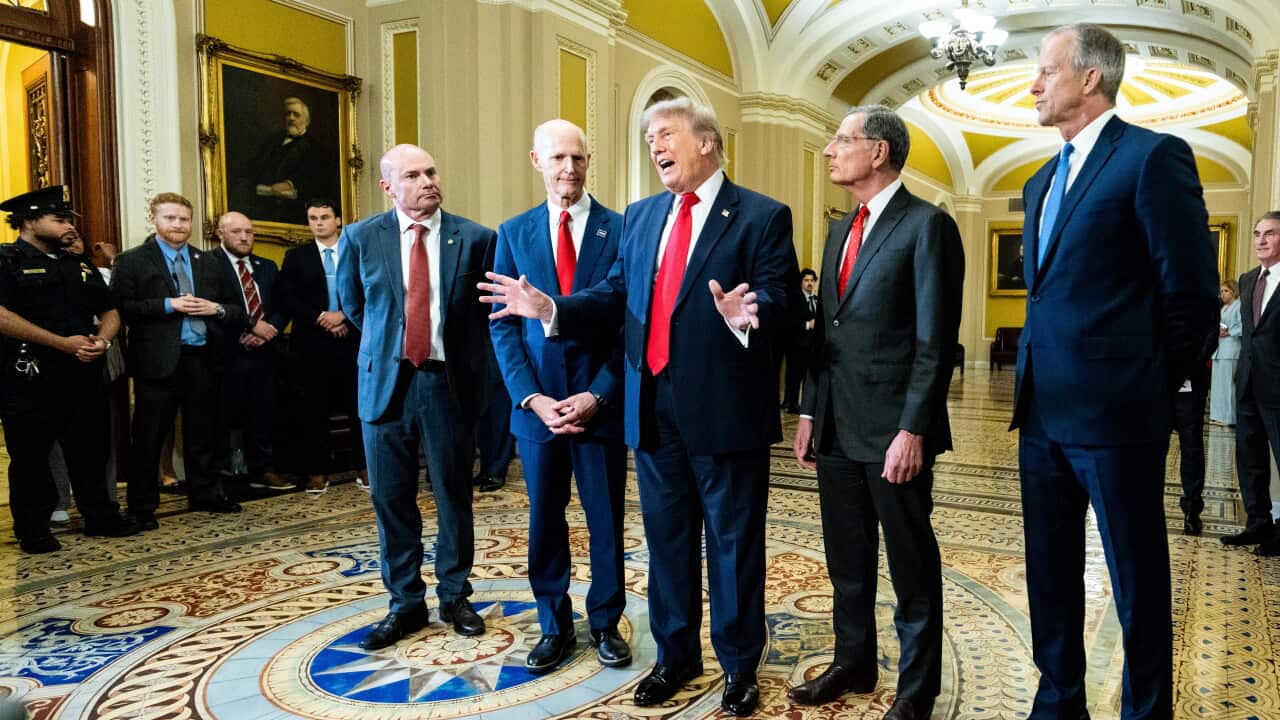
President Donald Trump, along with U.S. Senators Mike Lee (R-UT), Rick Scott (R-FL), John Barrasso (R-WY) and Senate Majority Leader John Thune (R-SD), talking to reporters at the U.S. Capitol in Washington, D.C. (Photo by Michael Brochstein/Sipa USA) Source: SIPA USA / Michael Brochstein/Michael Brochstein/Sipa USA
The US Senate has passed the War Powers Bill by a 50–48 vote, requiring the President to obtain Congressional approval before any further military action against Iran. The bill, seen as a push to strengthen Congressional oversight, comes amid ongoing tensions between the US and Iran over nuclear inspections and related security concerns. Although not legally binding in the same way as a full law, it signals growing political resistance to unilateral military action and reflects deeper divisions over the US foreign policy toward Iran.
The US Senate has passed the War Powers Bill by a 50–48 vote, requiring the President to obtain Congressional approval before any further military action against Iran. The bill, seen as a push to strengthen Congressional oversight, comes amid ongoing tensions between the US and Iran over nuclear inspections and related security concerns. Although not legally binding in the same way as a full law, it signals growing political resistance to unilateral military action and reflects deeper divisions over the US foreign policy toward Iran.