Javanese classical vocal, which is called Sindenan, is really quite unusual… You have melodies that you have to sing, but at the same time you can really bring your own flavour through the ornaments.Ria Soemardjo, Australian musician
Culture Corner: Australian-Indonesian Ria Soemardjo found identity through Javanese tradition 'sindenan'

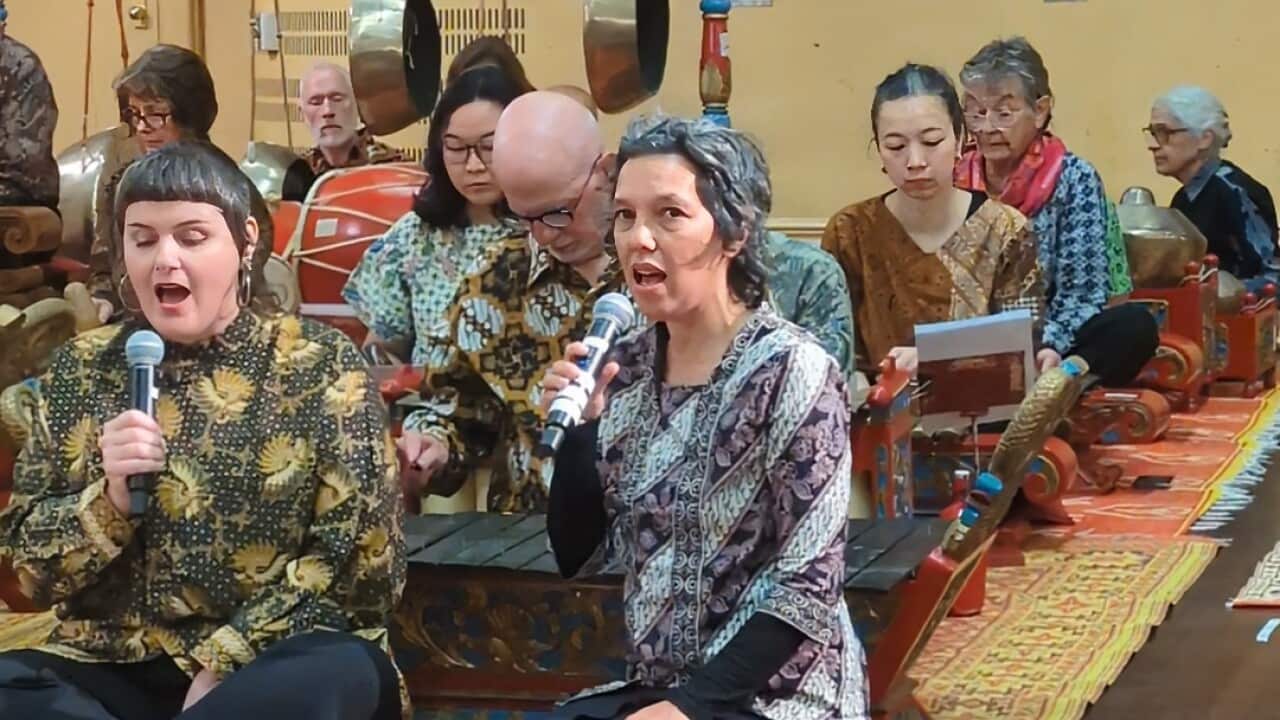
Ria Soemardjo (R) performs sindenan with a gamelan ensemble in Melbourne. Credit: SBS Indonesian/Anne Parisianne
For musician Ria Soemardjo, singing in the Javanese tradition is a way to connect with her father's culture whilst also providing a space for creative experimentation.
Tumbuh besar di Australia dengan latar belakang budaya campuran
Australia-Indonesia bisa menjadi perjalanan yang unik, terutama ketika
seseorang mencoba menjaga koneksi dengan akar budaya Indonesia. Bagi Ria Soemardjo,
musik tradisional Indonesia menjadi jembatan yang menghubungkannya dengan
budaya sang ayah. Ria adalah seorang musisi Australia yang juga pesinden.
Bagaimana perjalanan musikalnya dimulai? Apa yang membuat musik Jawa begitu spesial
bagi Ria? Dan apa pesannya untuk generasi muda Australia-Indonesia yang ingin
mengeksplorasi identitas budaya mereka? Berikut perbincangan saya dengan Ria. Awal
mula Ria menyukai dunia seni Indonesia tidak terlepas dari peran sang ayah.
Sewaktu kecil, ayahnya sering menyanyikan lagu-lagu Jawa dan memutar kaset gamelan.
Ayahnya kemudian mendorong Ria untuk belajar tari Jawa dan gamelan. Dan Ria
mengatakan ayahnya sangat bangga melihatnya terlibat dalam musik
tradisional dan mendalami budaya Indonesia.
I really love learning and playing music from around Indonesia and I also play and
create my own music as well for theatre and dance. So, I grew up in Melbourne and
my father was not a musician, but he would sing Javanese songs around the house and
play cassettes of gamelan music and he encouraged me to learn Javanese dance and
gamelan and we actually could learn that here in Melbourne with Pak Budiono. And so
from a young age I was learning Balinese dance and Javanese dance, and just around
the music, and it was really fun. My father was proud of me, you know, being
involved in traditional music and, you know, very encouraging of me to learn
-about his cultural background. -Ria mengatakan meskipun dia bernyanyi
dalam berbagai gaya musik dan menciptakan musiknya sendiri, bernyanyi dalam tuning
Jawa sangat spesial baginya. Karena bernyanyi dengan gamelan Jawa memiliki
perasaan yang sangat kuat seperti mengajak untuk melambat, menemukan ketenangan, dan
-meluangkan waktu. -Yeah, I like singing in a lot of different
styles of music. I sing my own music, but it's really special to sing in the
Javanese tunings. Yeah, it's really special. I've always really enjoyed that.
It's actually-- it's challenging, yeah? Because it can be unfamiliar to the ear,
but they have such a special feeling when you sing with the gamelan. Javanese
gamelan has a very powerful feeling for me and it's a really, like, "Okay, slow
down." [tertawa] And find some, you know... Take some time. Like, Balinese
gamelan is really fast, which is great, but Javanese is very reflective, and it's
very grounding and beautiful instruments. The sound of the gong and other
instruments is really beautiful for me. Yeah.
Ria mengatakan bahwa vokal klasik Jawa yang ia nyanyikan, yaitu Sindhenan, sangat
unik. Meskipun melodi untuk banyak lagu sudah ditetapkan, penyanyi tetap bisa
membawa ciri khas mereka sendiri ke dalam musik tersebut.
So, Javanese classical vocal, which is called Sindenan, is really quite unusual
the way it works, because it is for a lot of pieces, it is set. So you have melodies
that you have to sing, but at the same time you can really bring some personal
kind of style into it, particularly in the way that you use ornaments. So the trills
and things like that, you can really bring, like, your own flavour into that.
Ketika ditanya mengapa dia tertarik pada karya kolaboratif yang menggabungkan musik
dengan tari, teater, dan seni visual, Ria menjelaskan bahwa inspirasinya datang
dari budaya Jawa di mana musik, tari, dan visual, seperti wayang kulit selalu
terintegrasi. Ria sangat menyukai menciptakan karya seni yang menghadirkan
pengalaman utuh di mana penonton bisa mendengar suara dan melihat tarian dan ada
-alur cerita. -I really love performing and learning
traditional music, but I also... It's really exciting to create your own music
as well. And I love working with visual and with dancers to create a whole
experience, not just a music concert. And really that some of the inspiration for
that is often from my experience of gamelan and Javanese culture where music,
and dance, and the visual, like Wayang Kulit, the shadow puppets are integrated.
You know, you don't have music without dance or a story. It all goes together.
Yeah. And so I really love bringing that into contemporary work as well. And also a
sense of-- a sense of ritual. There's something very ceremonial about Javanese
gamelan that I really love. And I'm interested, well, how do we find that in
the contemporary music when we don't have maybe a religious, you know, practice? How
do we create a sense of ceremony, of ritual, of something very special
happening with audience and the performance?
Kemudian Ria mengatakan musik klasik Jawa berasal dari sejarah yang sangat panjang
dengan banyak upacara dan simbol. Sementara musik kontemporer lebih baru dan
membebaskan artis untuk berkreasi. Akan tetapi untuk seni kontemporer buatannya,
Ria ingin penonton bisa merenung dan merasakan sesuatu yang dalam seperti
ketika seseorang menyaksikan musik klasik Jawa.
When you perform music from
this Javanese classical music, it really comes from a very long history. There's so
many... there's so much kind of in the music that is about ceremony and the
symbols that is, uh,
yeah. The images that come from the music every- everything, you know, is developed
over a long period of time. Yeah. And so I also really like music that's new and
creative, but I also really want to have sometimes a sense of people being able to
reflect, you know, when they listen to music and feel something that is quite
deep and old, but you can also create that or can you also create that with
-contemporary music and dance? -Selain bernyanyi, Ria juga memainkan musik
-perkusi. -So, I really love to learn percussion
instruments, and so I also play instruments in the Balinese gamelan as
well. I don't sing with the Balinese gamelan and, you know, there's many
different instruments. So yeah, I really love the learning to play instruments as
-well as singing. -Saya sempat berjumpa Ria di acara
Gathering of the Gamelans di Melbourne. Ria sempat mengatakan bahwa acara tersebut
sangat menarik dan merupakan pencapaian besar karena biasanya grup-grup gamelan
yang berbeda di Melbourne tidak saling bertemu dan berada di ruangan yang sama
untuk berbagi musik dengan satu sama lain dan dengan pengunjung.
Today is really exciting. Having eleven groups is really, you know, it's such an
achievement for everyone to be in the same space together and playing music for each
other and the audience, because we don't-- you know, if you're learning
Balinese gamelan, you might not know that there's another group in Melbourne playing
Javanese, or you don't meet those players. And it's really special to be all
in the same room and sharing our music. And each gamelan style is so different.
There are similarities. Some of the instruments look the same, but each one
has a different feeling, and, you know, different language often. It's really
-exciting to discover something new. -Untuk diaspora muda yang ingin
mengeksplorasi warisan budaya Indonesia, Ria mengatakan menikmati atau memainkan
musik tradisional mungkin dapat memberikan pengertian tentang asal usul keluarga,
cara mereka menjalani kehidupan di Indonesia dan menjadi bagian dari
-komunitas. -So I am meeting a lot more people who have
a similar background to me. So my father's Javanese, my mother Australian.
And I do, you know, encourage them to actually experience more of traditional
music culture because it gives you a real sense of maybe where your family came
from, and some of their ideas, and the way they experience life even. Yeah, there's
so much you can learn just by... It doesn't matter if you're a really good,
you know, musician or player or dancer, but just to experience that and what it's
like to be part of a community. It's yeah, it's really fun and it's a great way to
-get to know a part of yourself. -Ke depannya Ria akan fokus mempelajari
musik baru dan sedang menciptakan komposisi baru dengan kelompok gamelannya.
So this was a really big event for us and
I was performing in three different ensembles [tertawa]. And so now it's we
can actually learn some new music again. And also come back to the pieces we played
that we didn't... You know, some of them we played today for the first time and
need to revise again. So there's always something to learn. So learning more
repertoire.
And I'm at the moment creating a new composition. And so with Gamelan Dananda
and so that's really exciting. So it's going to be with some of the softer
instruments and it's going to be inspired by the creek where in our area is...
Yeah, the natural kind of spaces where Gamelan Dananda is. There's some really
beautiful spaces around there in Darebin. So yeah.
Demikian tadi pendengar, rangkuman terkait musisi Ria Soemardjo yang dibawakan oleh
Anne Parisianne untuk SBS Indonesian.