The National Strategic Project (PSN) under President Prabowo Subianto's administration has now sparked a nationwide wave of protests. In Merauke, thousands of still-operating machines are accused of eroding forest and indigenous land, sparking a fierce clash between development ambitions and the rights of local communities.
Eleven Catholics in Merauke, who call themselves the Papuan Catholic Laymen Merauke, were arrested by security forces on January 25, 2026. They were secured for staging the act of resisting the National Strategic Project (PSN) in action in front of the Cathedral Church of St. Francis Xaferius, Merauke.
According to Jhonny Teddy Wakum, Director of LBH Papua Merauke, this conflict is not a new phenomenon. Tensions have been entrenched since the project began in 2024.
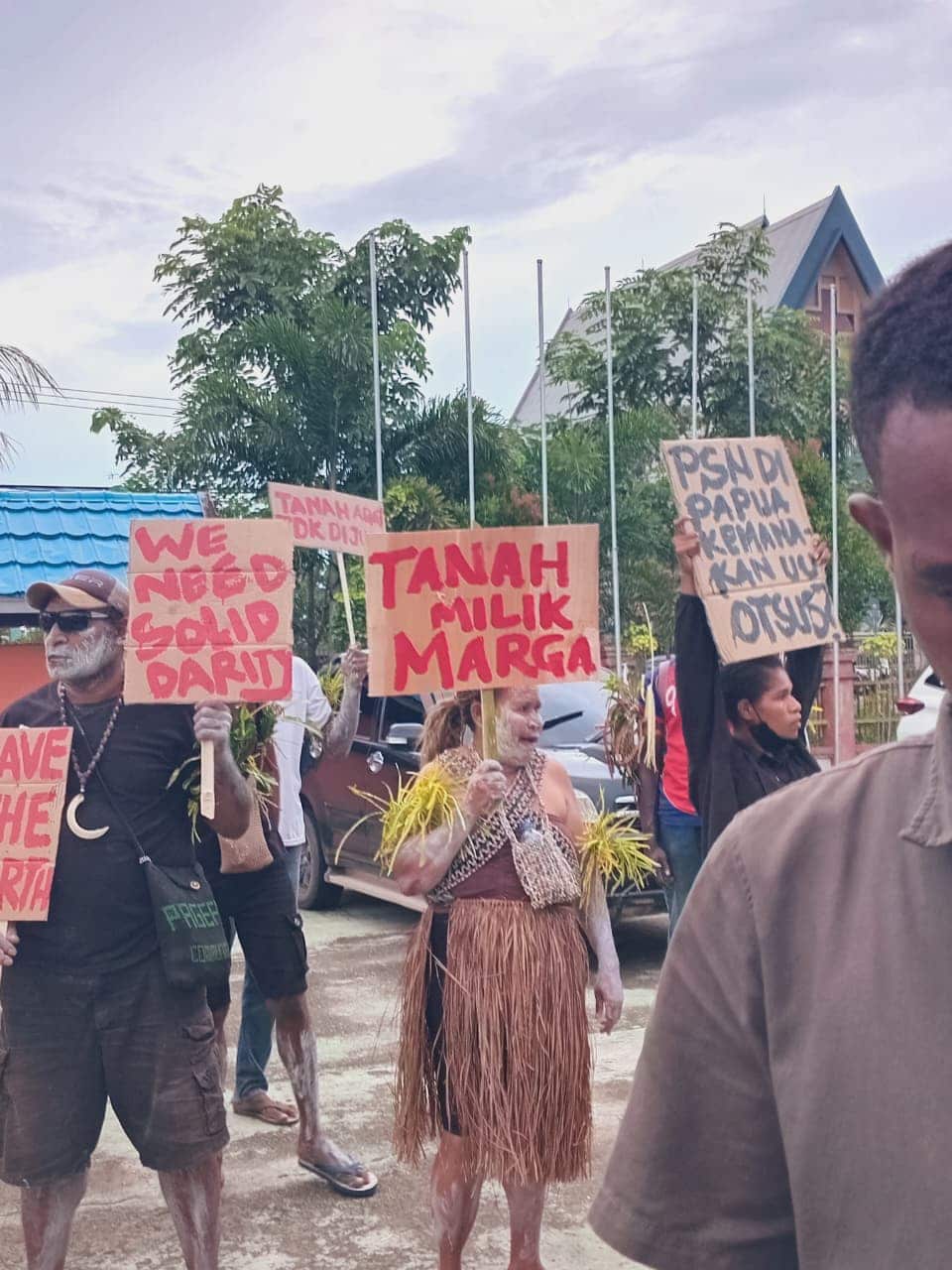
From the beginning, indigenous people felt the project was imposed in the absence of meaningful socialization.
Some of the main points that triggered the escalation of the conflict include:
- Clan Rejection: Indigenous landowning clans have agreed to refuse clearing of forests to be converted into paddy fields and plantations.
- Disappointment with Religious Institutions: While hoping for the church, Merauke Catholics felt betrayed after the Diocese issued a statement of support for PSN last month—a move deemed contrary to church law.
- Advocacy Deadlock: The Society has taken a formal path ranging from hearings with the Regent, Governor, to DPR/DPD and the Ministry of Human Rights. However, so far only Komnas HAM has given a real response through its official report.
Escalation of Protest and Social Fragmentation
This discontent now extends to various major cities in Papua such as Wamena, Jayapura, and Timika, as well as mass action in Merauke itself. On the other hand, the presence of the Ministry of Defense in the field—as the bodyguard of the President's direct command project—further confirmed the government's position.
Teddy Wakum also highlighted the political dilemmas that exist. The presence of Natalius Pigai as the Minister of Human Rights of Papua is considered not to bring significant changes for the affected citizens, because of his position as a minister who must be loyal to the President's policies. As a result, there is fragmentation at the grassroots level, although the flow of rejection remains the dominant voice.
=====================
Nurhadi Sucahyo
Listen to SBS Indonesian every Monday, Wednesday, Friday and Sunday at 3pm.
Follow us on Facebook and Instagram, and don't miss our podcasts.