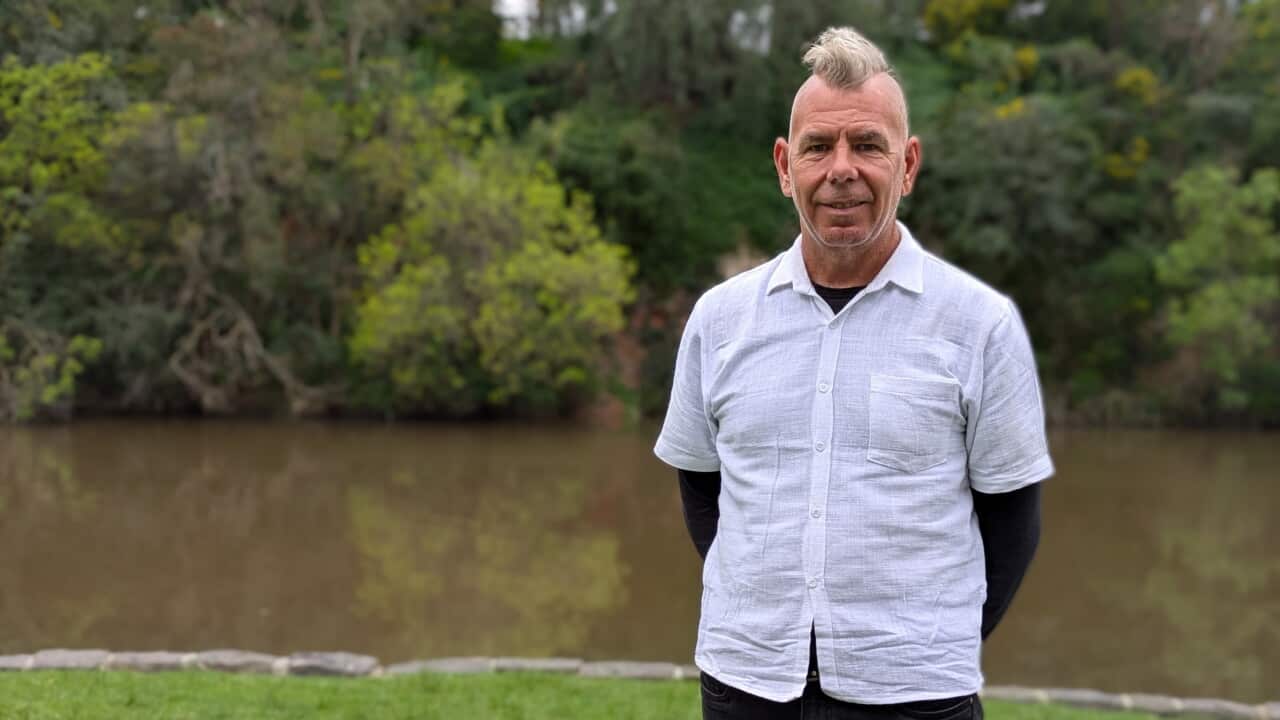

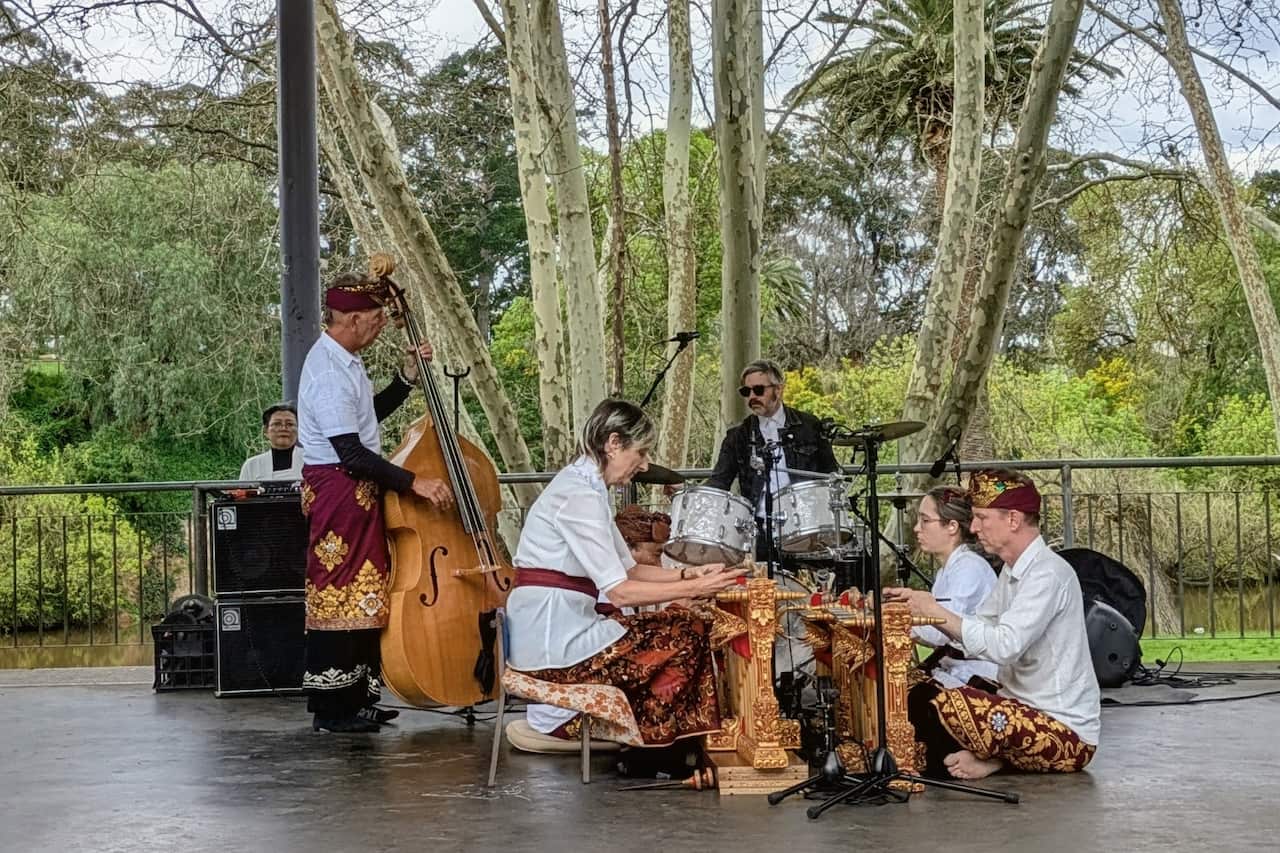
At 'Bali by the Lake' in Melbourne, musician Scott Owen performed with 'Ready New Gang', a fusion ensemble that brings together Balinese gamelan, drums and double bass.
The sounds of gamelan instruments echoed across Coburg Lake Reserve, Melbourne, on Sunday 7 September 2026, during Bali by the Lake, a day-long celebration of Balinese music, dance and culture.
Among the performers was Ready New Gang, a Melbourne ensemble that brings together an unusual combination of instruments: traditional Balinese gamelan, double bass and drums.
One of its members is Scott Owen, best known as the double bass player and founding member of Australian rock band The Living End. But in Ready New Gang, he has taken on a very different challenge.
The group draws inspiration from gender wayang, an intricate musical style traditionally associated with Balinese shadow puppet theatre. Musician Jeremy Dullard initiated the project, bringing together Balinese gamelan, double bass, and drums. Rather than reproducing it exactly, the ensemble reinterprets those sounds through a blend of Balinese and Western instruments.
"It's easily described as a fusion ensemble," Owen told SBS Indonesian.
The idea initially struck him as unusual, even "pretty crazy", Owen said, but that was part of the appeal.
"No matter how crazy something is, I think just give it a go," he said.
Making the double bass fit into a gamelan ensemble is not simply a matter of playing along. While the drums provide a rhythmic bridge between different musical traditions, Owen began by learning parts normally played on the gender, a bronze-keyed instrument used in Balinese gamelan, before adapting them for his instrument, he said.
Because the double bass has no frets, Owen said, he can also adjust its tuning to match scales that differ from those commonly used in Western music.
The collaboration, Owen said, reflects Melbourne's multicultural music scene, where musicians from different traditions regularly work together and experiment with new ideas. Taking the project back to the home of gamelan is one of the group's aims, he said. The musicians hope to one day perform in Bali and hear what Balinese audiences make of their interpretation of the music, Owen added.
Uniquely, despite playing gamelan, Owen doesn't speak Indonesian. While many people learn a language to better understand a culture, Owen chose to do so through music instead. As a musician, he said playing gamelan felt like a natural way to connect with Bali and its traditions.
Listen to the full interview on the SBS Indonesian podcast.