
8,178 students from Universitas Gadjah Mada (UGM) are currently taking part in a Community Service Program known as KKN. They've been spread across 298 locations in 32 provinces throughout Indonesia, in a program designed to show, in real terms, how universities play a direct role in community development.
One of the locations for this Student Community Service (KKN) program is Belu Regency in East Nusa Tenggara (NTT) province, which shares a direct border with Timor-Leste.
Indonesia and Timor-Leste indeed share a dark history. Consequently, the Universitas Gadjah Mada student KKN program in Belu, NTT, and Timor-Leste is driven by a spirit that includes rebuilding positive relations between the peoples of both nations.
Bonafasius Karel Laksamana Pratista, a Regional Development student at Universitas Gadjah Mada, serves as the student unit coordinator (*Kormanit*) for the KKN program in Belu, East Nusa Tenggara. In this region, the students are deployed across Dualaus Village in Kakuluk Mesak District, as well as Sadi Village and Tulakadi Village in East Tasifeto District. The program began on 20 June 2026, and is scheduled to conclude on 8 August 2026.
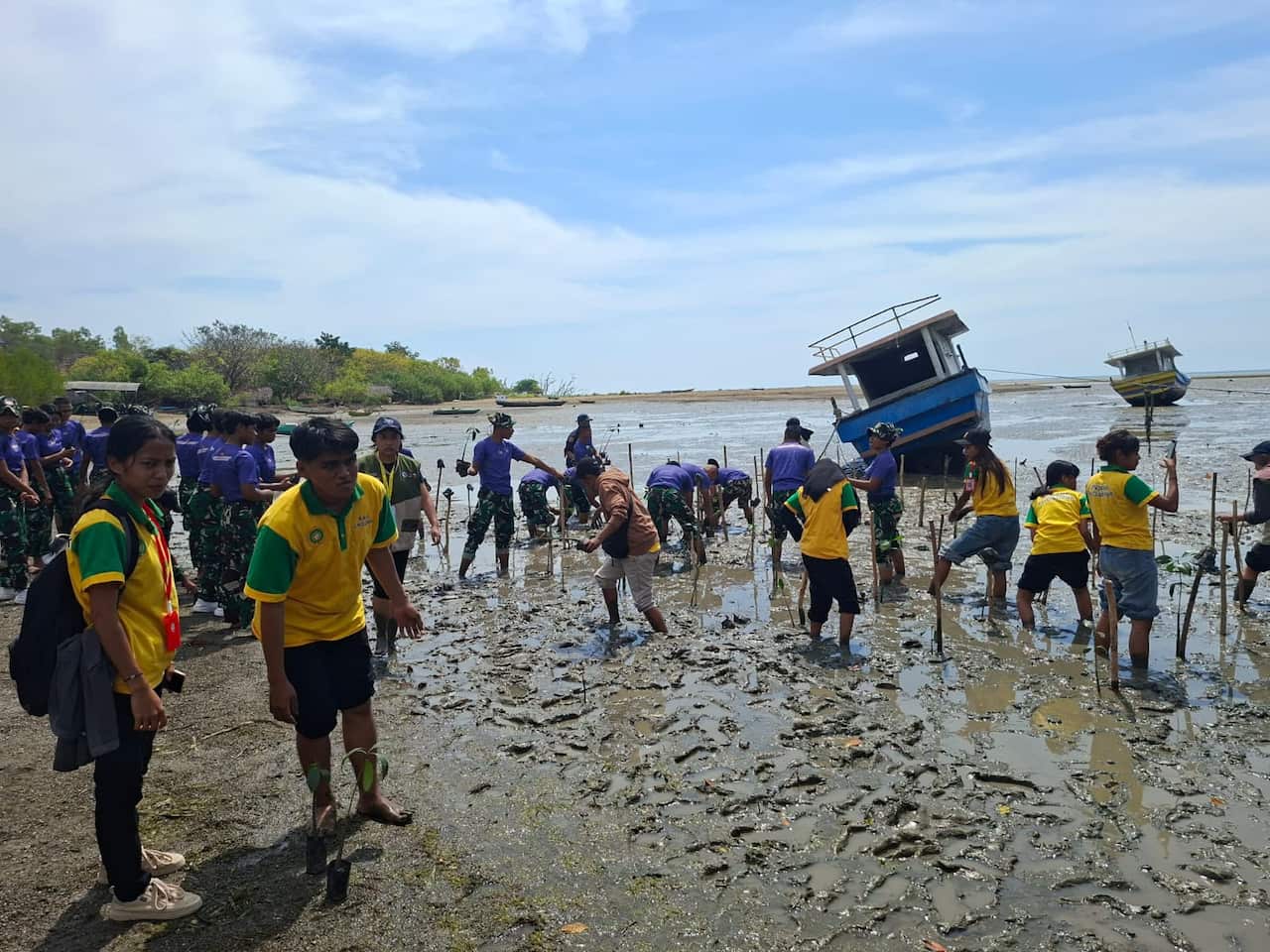
According to Karel, one of the motivations for holding the program away from the campus is to serve in 3T (Tertinggal, Terdepan,Terluar) regions—classified as underdeveloped, frontier and outermost—particularly in border areas.
In the three villages covered by the program, UGM students identified different local potentials. Dualaus village is home to a large statue of Our Lady, Protector of All Nations, which holds strong potential for religious tourism, in addition to fishing potential as a coastal village. Tulakadi village has strong potential in agriculture, particularly dryland farming. Currently, efforts are underway to develop a crystal guava orchard there.
Meanwhile, Sadi village stands out for its rich social and cultural character, thanks to its cultural heritage and traditions. This village is also where fossils of an ancient elephant species, known as stegodon, were discovered.
Beyond this potential, NTT is known as a province with a dry climate and one of the poorest in Indonesia. This condition presents its own challenge one that the students must also help address.
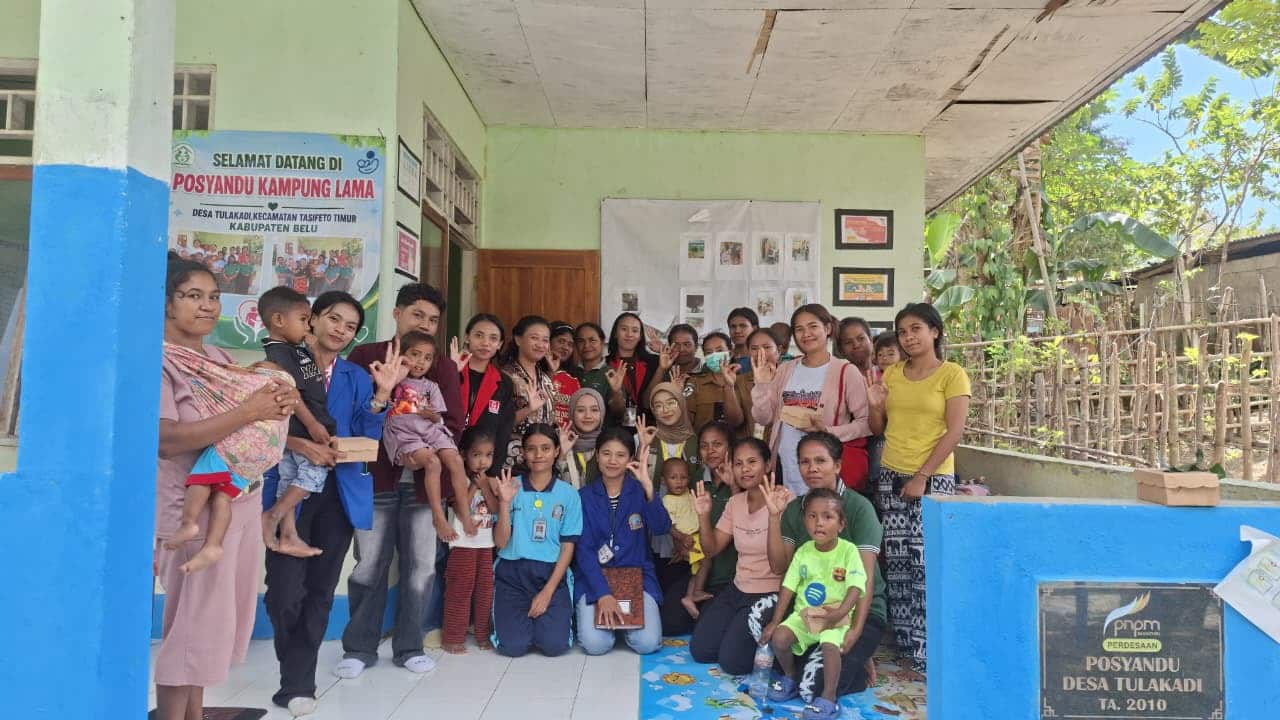
These are the kinds of challenges we're trying to address together. One way we're doing this is through our flagship program. We're working on creating a village masterplan a document we design to map out how a village should be developed in the future.Karel
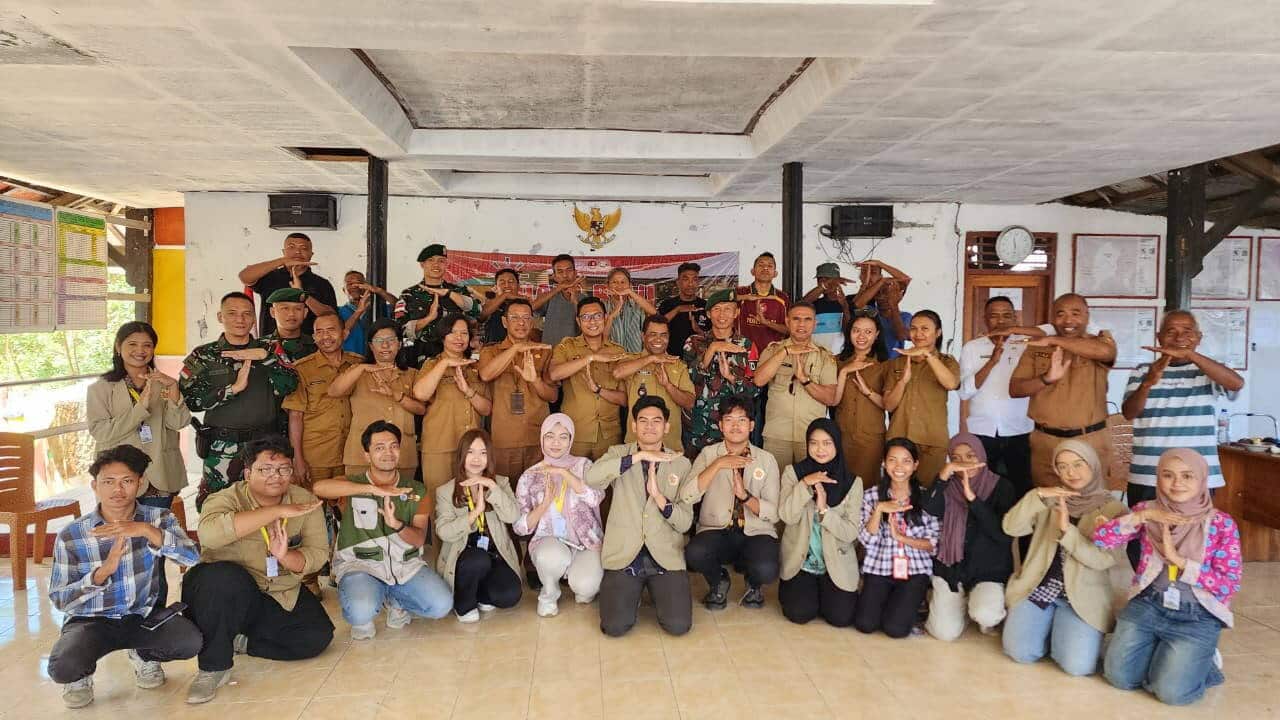
Collaboration was also built with universities in both NTT and Timor-Leste. From NTT, these include Universitas Nusa Cendana and Politeknik Ben Mboi, as well as Universitas Pertahanan, a military logistics vocational campus. Meanwhile, from Timor Leste, there's the Dili Institute of Technology.
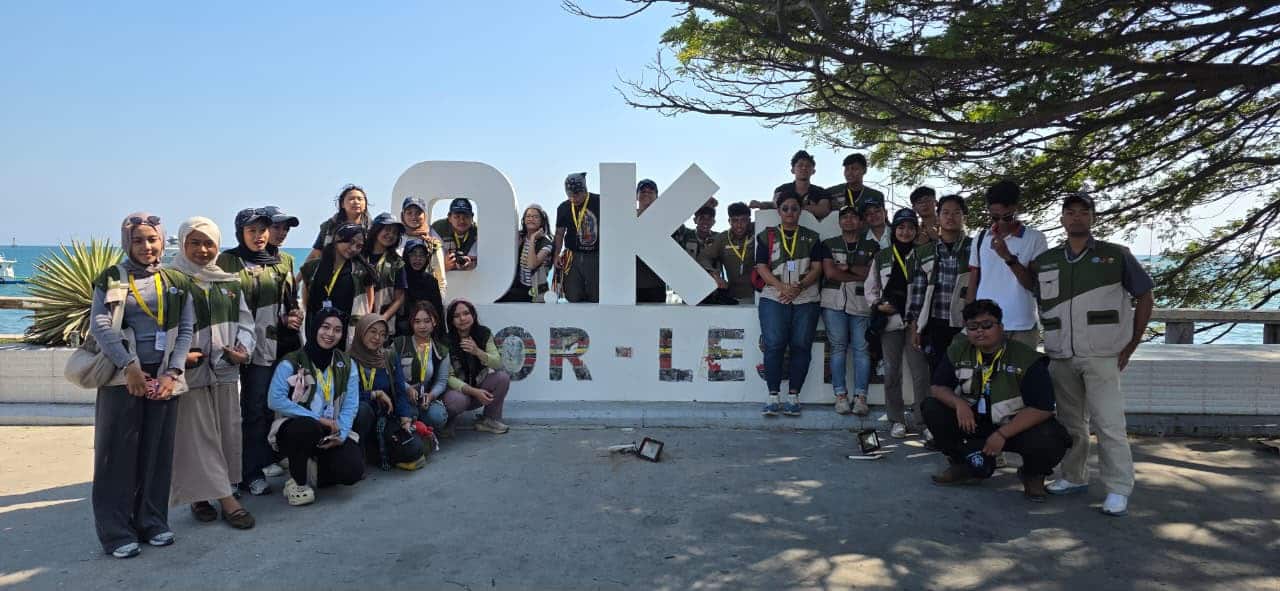
One of the students taking part in the KKN program at this location, Mahadri Arkan Abimanyu, focused on issues related to relations between the two countries, as he is a student in the International Relations program at UGM.
It would be strange to see the border as a potential source of conflict. In fact, the border binds the two nations together. If a river that serves as the national border can't be managed, it's the local communities who end up losing out.Abimanyu
UGM students come to Belu, NTT, and Timor-Leste not to build monumental projects that end quickly, but instead choose to build lasting systems. This involves transferring knowledge and developing community groups. The hope is that what these students have started can continue, even after they return home.