
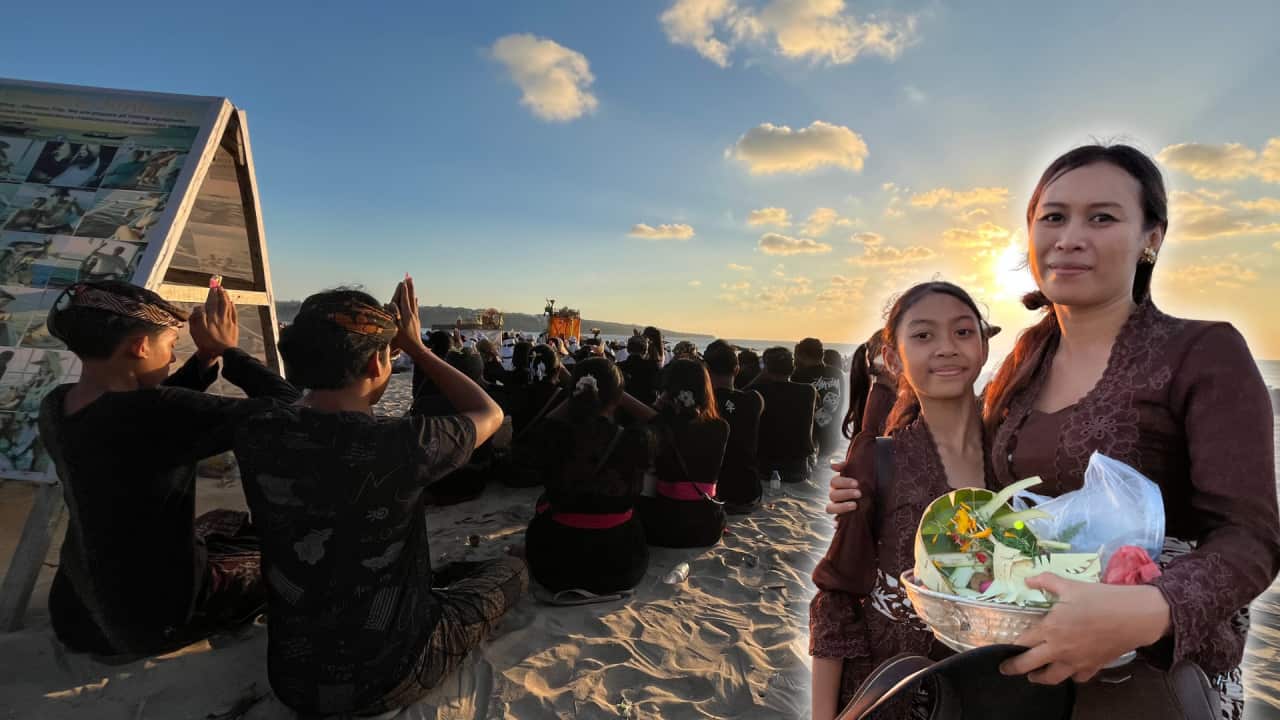

Mass Ngaben allows Balinese Hindu families to carry out traditional cremation ceremonies at a more affordable cost by sharing the process collectively with other families.
Ngaben is a funeral or cremation ceremony performed by Balinese Hindus in Bali, Indonesia. The primary goal of the Ngaben ceremony is to purify the soul (Atma) of the deceased before it returns to the Creator.
According to the Journal of Hindu Religious Research, Ngaben can be understood as an act of devotion by providing the deceased with funerary offerings for their journey.
However, the cost of holding an individual Ngaben is quite substantial. A private Ngaben ceremony can cost up to hundreds of millions of rupiah. This is because a single family must fully bear the costs of all accommodation, ceremonial offerings, and food for hundreds of guests.
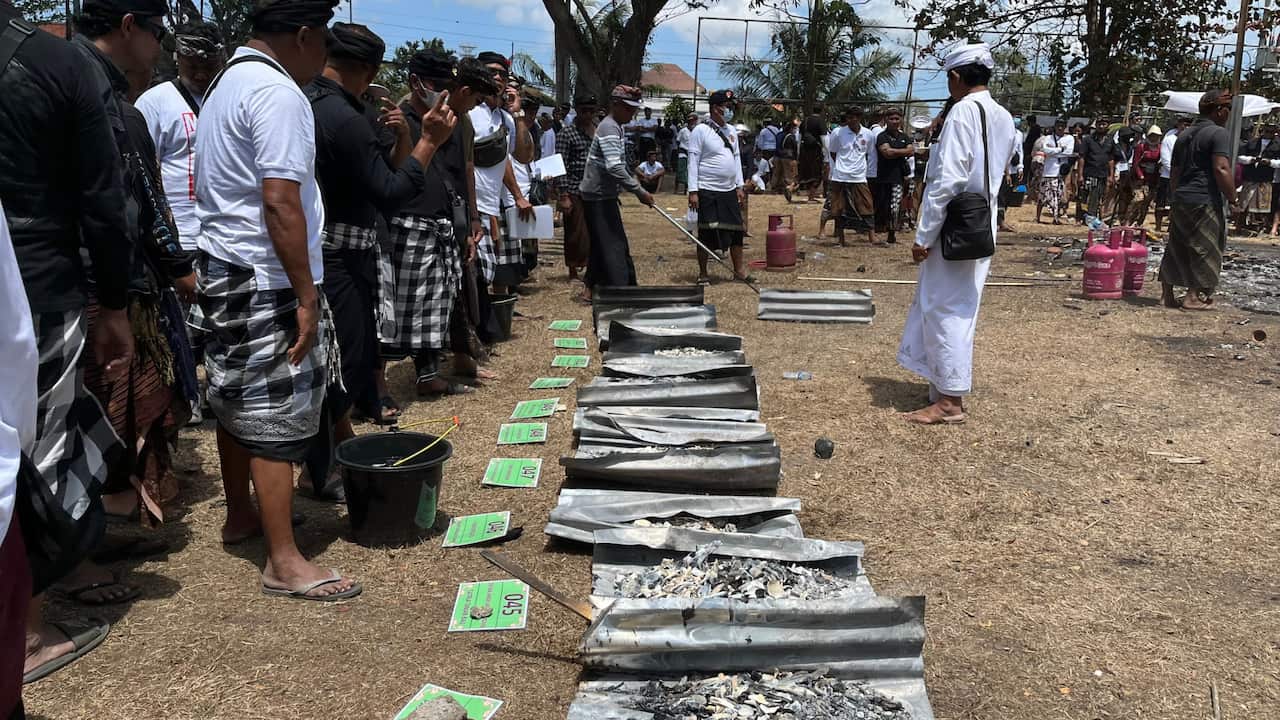
Due to these high costs, the tradition of mass Ngaben was initiated. This is a collective cremation ceremony held jointly by multiple families within a traditional village or Banjar, often supported by financial assistance from the local government.
Since it is only held every three to five years, the bodies of deceased residents are usually temporarily buried in the village cemetery, known as Setra. Families then wait until the scheduled date for the Mass Ngaben in their village. When the ceremony is about to begin, the skeletal remains of the deceased are exhumed to be cremated together.
Recently, a mass Ngaben was held in the Jimbaran Traditional Village, located in the South Kuta District, Badung Regency, Bali.

One of the residents, I Wayan Yudiana, performed the Ngaben ceremony for his late uncle and aunt who passed away a few months ago.
“Yesterday we exhumed their skeletal remains, and today they are being cremated, before their ashes are finally taken to the sea to be scattered,” Yudiana said.
Another resident, I Made Sanjaya, performed the Ngaben ritual for two fetuses miscarried during his wife’s pregnancy, his younger sibling, and several other family members.
“These are my two children, a boy and a girl. For Balinese Hindus, a miscarried fetus is already a complete soul and must be given a proper ceremony as well,” he said.
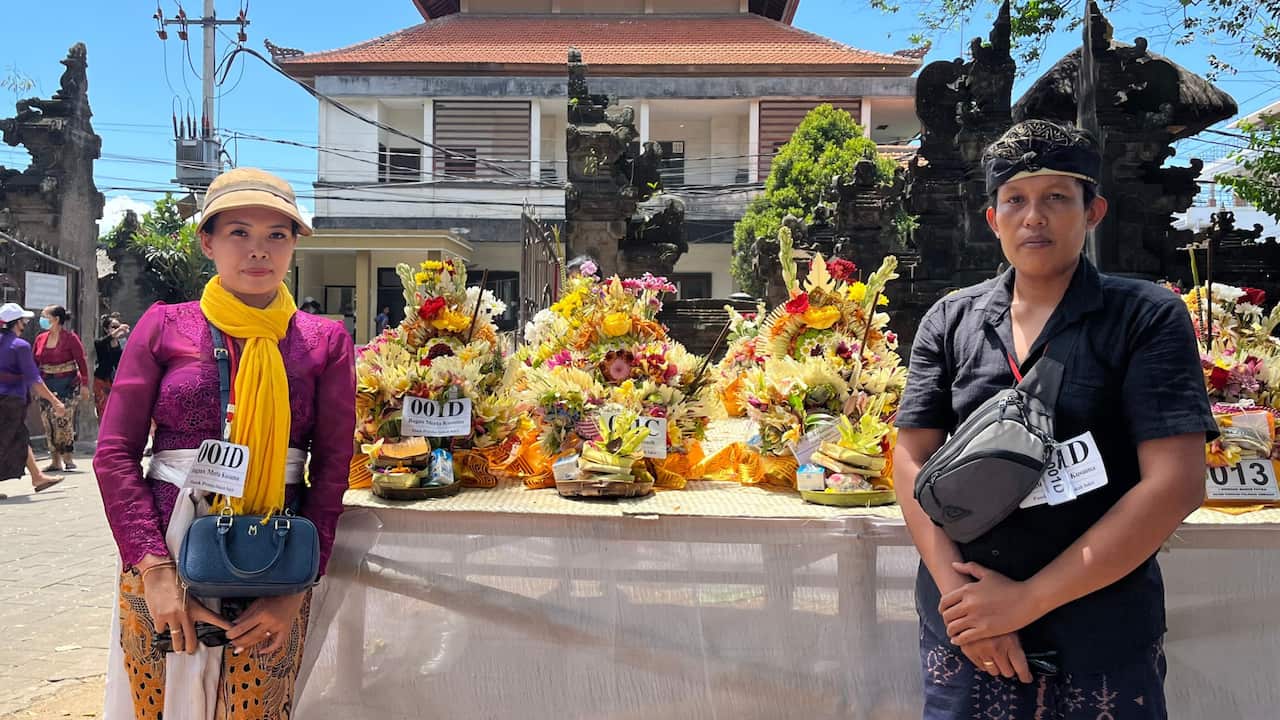
Meanwhile, on that day, Dewi Rasti completed the Ngaben ritual for her father-in-law and several other family members.
“My father-in-law passed away about eight months ago. Today we perform the ceremony for him, and his ashes will be taken to the sea to be scattered or washed away.”
Despite the underlying grief, Ngaben is often viewed as a "celebration" of releasing the soul to free it from worldly attachments, allowing it to move toward reincarnation and eternal bliss (Moksha).
“I have mixed feelings. There is sadness, but also happiness because I have finally been able to perform Ngaben for my children and the family members who have passed, so there is no longer a lingering heavy feeling,” said I Made Sanjaya.
Listen to the full podcast.