
An incident of violence broke out in Banda Aceh on 15 August during commemorations marking the anniversary of the Aceh peace agreement. Aceh Peace Day is observed every year on 15 August, marking the end of the armed conflict between the Indonesian government and the Free Aceh Movement (GAM) following the signing of the Helsinki memorandum of understanding in Finland in 2005.
The commemorations should have been a moment of gratitude for the peace that was achieved. Instead, the incident has reopened old wounds, particularly for the people of Aceh.
Azharul Husna, the coordinator of the Commission for the Disappeared and Victims of Violence (Kontras) in Aceh, said the trouble erupted during what was meant to be a mass prayer event to mark the anniversary. But the gathering became an outlet for a range of grievances held by the Acehnese community.
"There is frustration over welfare and the peace process not delivering what it promised. Poverty is rampant, victims of past human rights violations have been ignored, and the recent floods were not dealt with seriously. All of that boiled over," Azharul said.
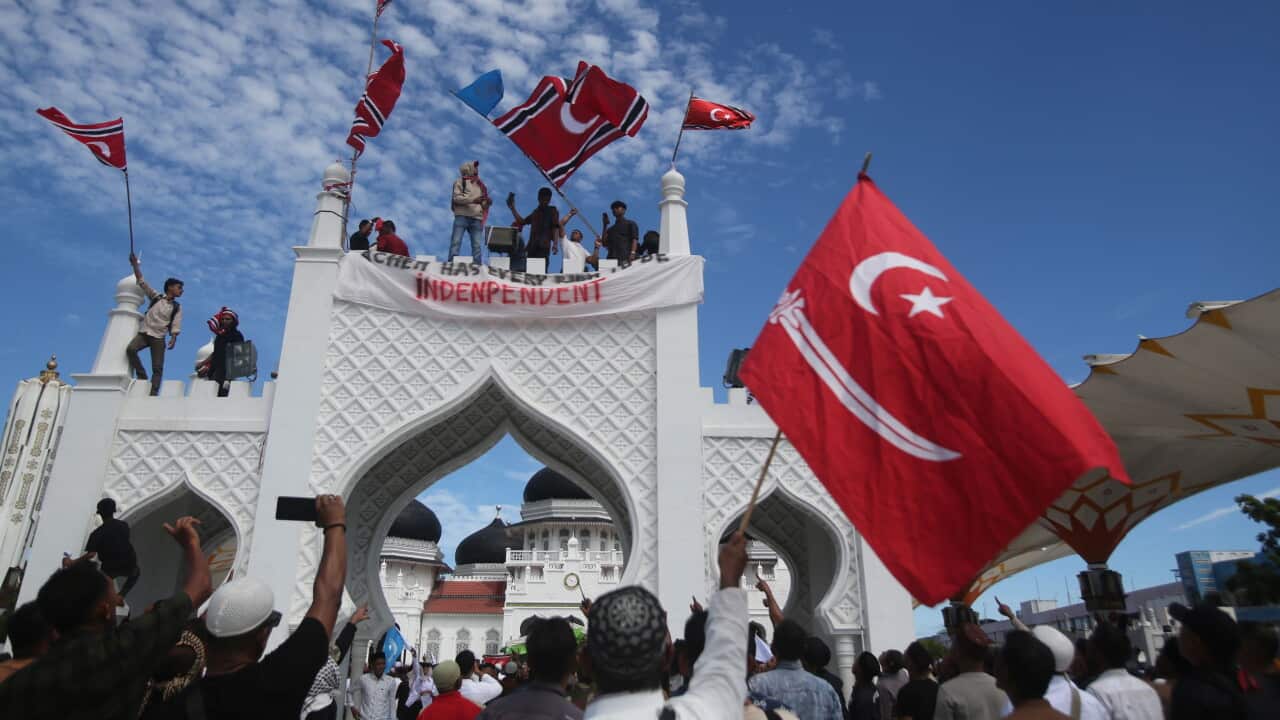
That frustration was expressed in various ways, including the raising of Free Aceh flags.
But Azharul said the incident did not happen in isolation. Before the prayer event, military personnel had already been deployed to various locations to conduct raids. He said the government's response to the gathering was disproportionate from the outset. The deployment of security forces was unnecessary, and their decision to fire warning shots into the air when unrest broke out only made things worse.
"That was a trigger," he said.
The mass prayer was just one of many events held to mark Aceh Peace Day. Kontras Aceh and several civil society organisations also held discussions and a white flag-raising ceremony in response to the slow handling of recent natural disasters.
The various Peace Day activities organised by the community, Azrahul said, should be seen as criticism, feedback and a public response to 21 years of peace in Aceh. The peace process, he said, remains far from achieving its goals, particularly on the issue of welfare.
When authorities respond to such public expressions with repressive measures, including warning shots, the situation only deteriorates. For a community still carrying the trauma of past violence, the sound of gunfire is deeply unsettling.
Azharul said the memory of violence among the Acehnese people has not been resolved. When human rights abuses occurred, a long list of obligations went unfulfilled.
"The rights of victims, whether the right to justice, the right to recovery or the right to truth, have all been delayed. The state has not provided reparations to victims and has not acknowledged the human rights violations that were committed," he said.
The state has also obstructed efforts to uncover the truth, leaving the trauma of victims unhealed. Because it has gone unaddressed, that trauma has become intergenerational, an unfinished chapter that continues to haunt communities, Azharul said.
Aceh's status as the poorest province in Sumatra and the slow response to major natural disasters have compounded the frustration.
The province's special autonomy status, the existence of local political parties and the fact that former GAM leaders now serve as regional heads and local politicians have not been enough to improve conditions. Azharul described the situation as hopelessly tangled.
He said if the government wants to begin repairing the situation, a first step would be to declare the hydrometeorological disaster that struck several months ago a national emergency. That would allow a coordinated central government response across the three affected provinces of Aceh, North Sumatra and West Sumatra. But so far, that decision has not been taken.
Beyond that, the central government must acknowledge the human rights violations committed in Aceh, accelerate the recovery process and deliver the rights owed to victims of past abuses. It must also urgently address the welfare crisis in the province.