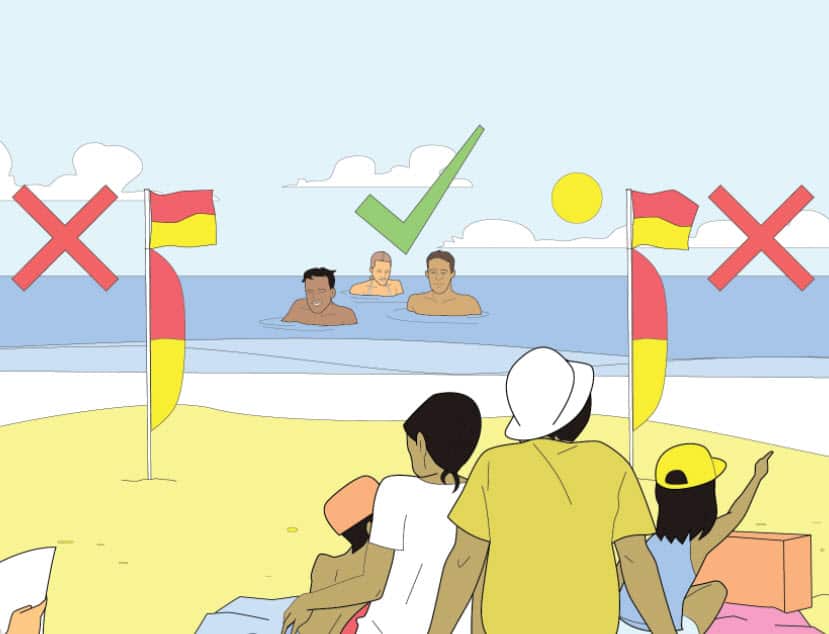
1. Swim between the red and yellow flags
When you see red and yellow flags on a beach, it indicates that there is currently a lifesaving service operating on that beach. The surf lifesavers or lifeguards have chosen a section of the beach that is best for swimming. Lifesavers or lifeguards will closely supervise the area between the red and yellow flags.
2. Read the safety signs
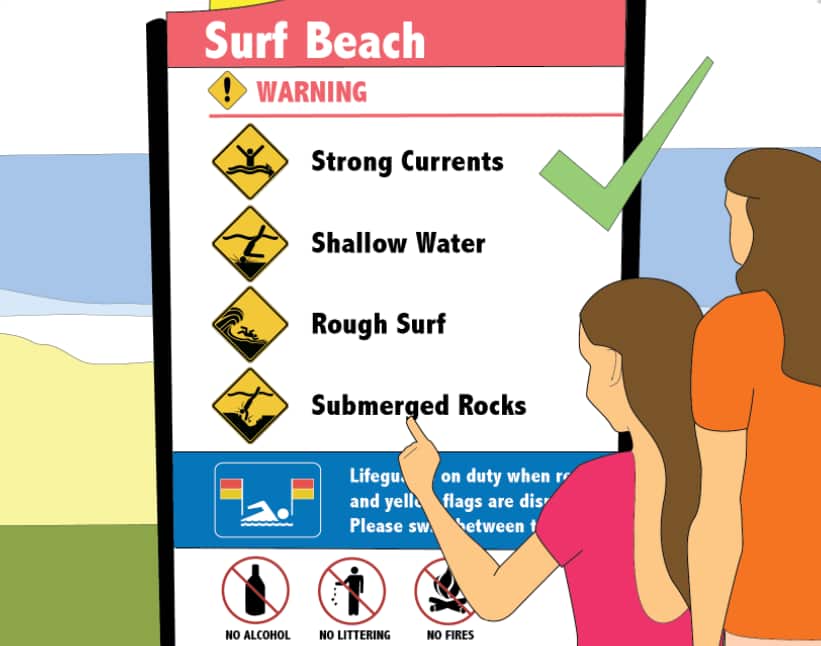
Before you go on to the beach take time to read the safety signs.It will ensure you are aware of any warnings or hazards on that beach. You can also find other information to make your day at the beach more enjoyable. On the beach, you might also find individual signs to highlight specific hazards.
3. Ask a surf lifesaver or lifeguard for safety advice
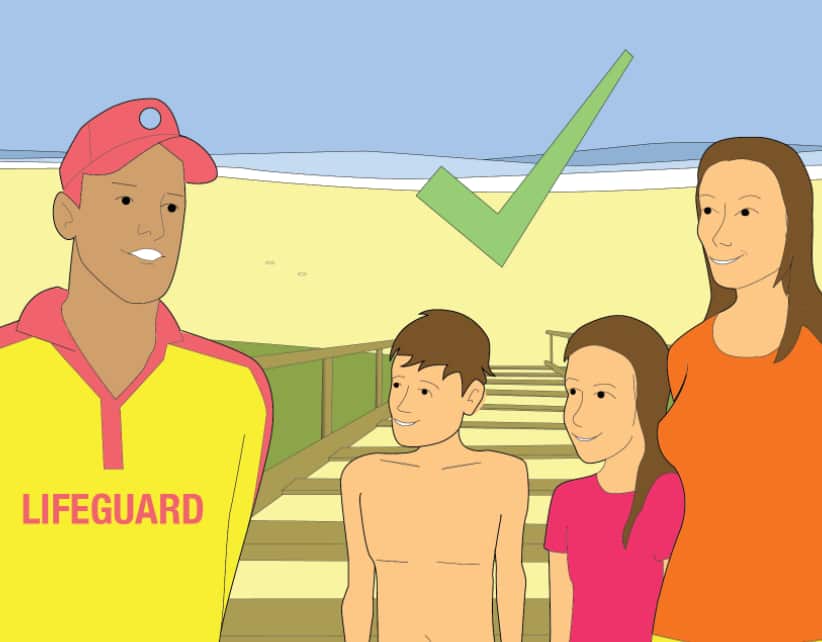
Surf lifesavers and lifeguards are highly trained and knowledgeable about beach safety and conditions. When you arrive at the beach, look for and identify the lifesavers or lifeguards. Feel free to ask them about the day’s conditions. Every beach is different, so lifesavers may have additional beach safety advice specific to the beach.
4. Swim with a friend
Swimming with a friend (or family member) is a fun way to enjoy the beach. It is also very sensible. While you are swimming together, you can keep an eye out for each other. If assistance is required, one person could call or go for help. It’s a good idea if everyone swimming together knows their own limits and shares it with those around you. That way, you can all stay within everyone’s limits.
5. If you need help, stay calm and attract attention
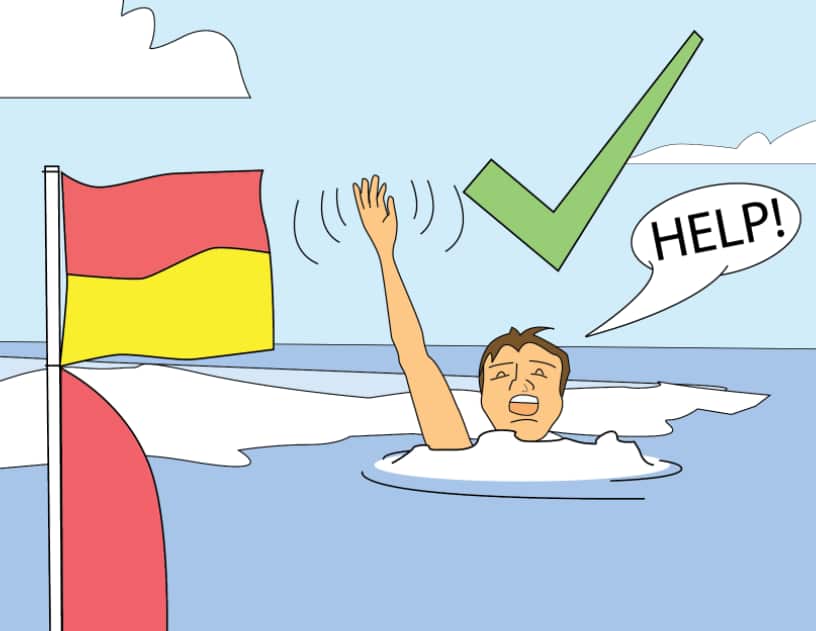
Even the most careful people can find themselves beyond of their limits in the water. If you are not feeling comfortable in the water and you require a lifesaver’s help to get back to shore, stay calm, raise your arm in the air and wave it from side to side. It will attract the attention of a lifesaver who will be able to come to your assistance. Stay calm and conserve your energy by floating on your back. It will ensure you have the energy to remain afloat until aid arrives.
Visit beachsafe.org.au to find out more about beach safety.