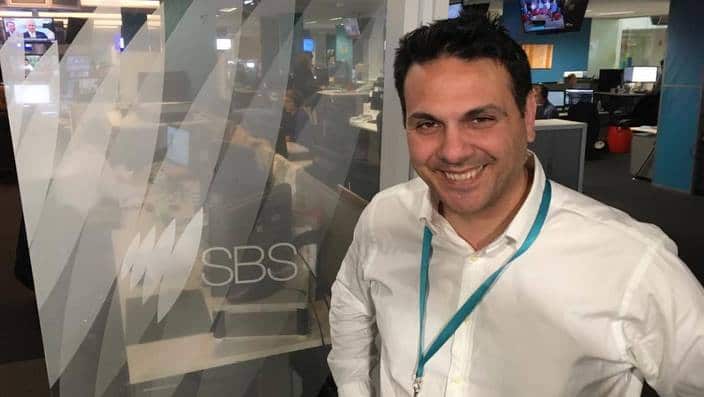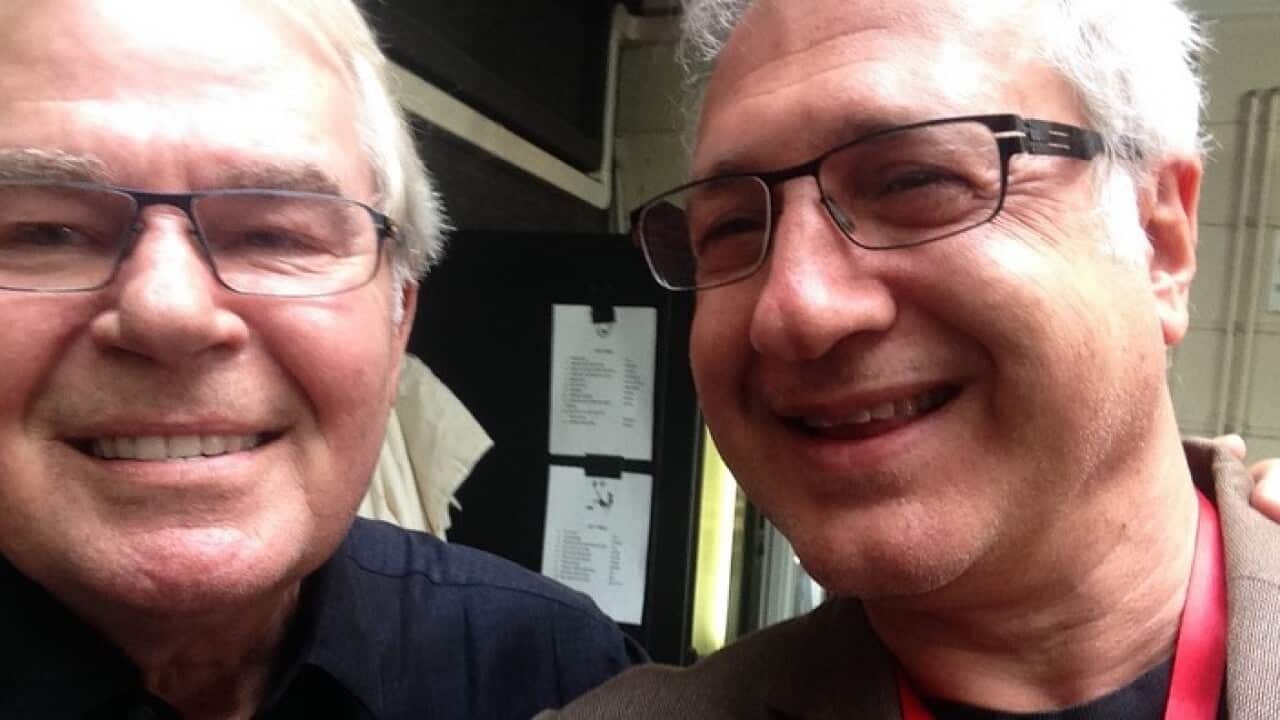
I started working at SBS on October 31, 1994. I still remember the date, of course, because for me SBS was a natural destination and, when I was hired, in a way I realised my Australian dream.
Almost 23 years later, I'm still here. In previous years, since my first days in Australia, I had been an SBS Radio listener and SBS TV viewer, and my favourite presenters were Silvio Rivier, Mary Kostakidis and Les Murray.
Silvio (later I found out that he was of Croatian and not of Italian origin, as I had assumed from his name) presented lifestyle programs, Mary was the newsreader and Les was the football expert.
Having arrived in Australia in 1957 as a refugee from Hungary, László Ürge (his real name) has always had a strong empathy with immigrant communities in this country and especially with refugees.
It surprised me that Les knew so much about the world of football (we’re talking about a pre-internet, pre-pay-TV and pre-satellite era) and could perfectly pronounce the names of non-anglo teams and players.
I was convinced that he was of Brazilian origin, because when he was talking about the Seleçao, he enunciated the players names - Taffarel, Romário, Aldair, Cafú, and so on - with nonchalance.
Returning to my first day at SBS, I saw Les Murray in the main hall of the building, but my shyness prevented me from approaching him and saying something like: "Good morning, Mr Murray. We will be colleagues, but I'm also a fan."
I was starstruck.
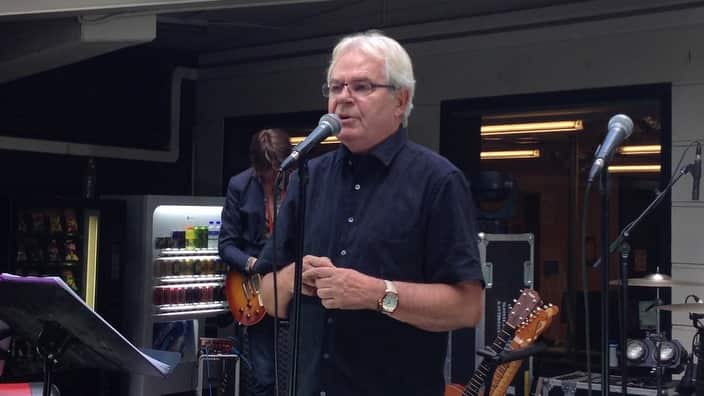
We officially met a few weeks later thanks to colleague Tony Palumbo, who had recently become the SBS face (and voice) of the televised matches of the Italian national team and of Serie A teams in the European cups.
As Tony himself recounted in his moving memory of Les, Murray took on the responsibility of entrusting the gig to a top sports journalist – albeit one who had a strong Mediterranean accent.
Elsewhere on TV, English, Scottish, New Zealand, American and South African accents were commonplace, but the 'wog' accents were only heard on SBS.
And there were people complaining, viewers who demanded that we put on air people "who speak proper English", but Les pushed through. He also gave the same opportunity to Uruguayan Nepo Washington González, Argentinean Raúl Blanco, Croatian Vlado Lušić and other ethnics who elsewhere would not have even been given a job interview.
Clearly, Les believed that competence trumps accent.
Below: Listen to SBS Italian's interview with Les Murray on his last day at SBS (in English, with questions in Italian)
Having arrived in Australia in 1957 as a refugee from Hungary, László Ürge (his real name) has always had a strong empathy with immigrant communities in this country and especially with refugees.
So much so that one of the social media tributes that appeared after his passing was from the Refugee Action Coalition, which has highlighted his courage in speaking in favour of asylum seekers at a time when they are often demonised.
"There were people complaining, viewers who demanded that we put on air people "who speak proper English", but Les pushed through."
Les decided to change his name because László Ürge was difficult to pronounce for Australians (he had also been taunted at school). The name Murray was suggested by his father, as Muray means Mura river in Hungarian.
Les is second-to-none for his contribution to the development of football in Australia.
His friend Johnny Warren, former Socceroo captain and SBS commentator until his death in 2004, had written two years earlier a book titled Sheilas, Wogs and Poofters in which he looked back at his illustrious playing career in a country that, at the time, did not consider football as a sport for real men or true blue Australians.
But today, when TV networks fight to secure A-League broadcasting rights, when stars like Alessandro Del Piero come to play in Australia and when the Socceroos regularly qualify for the World Cup, we can proudly say that Johnny Warren and Les Murray have won their war and Australia is all the better for it.
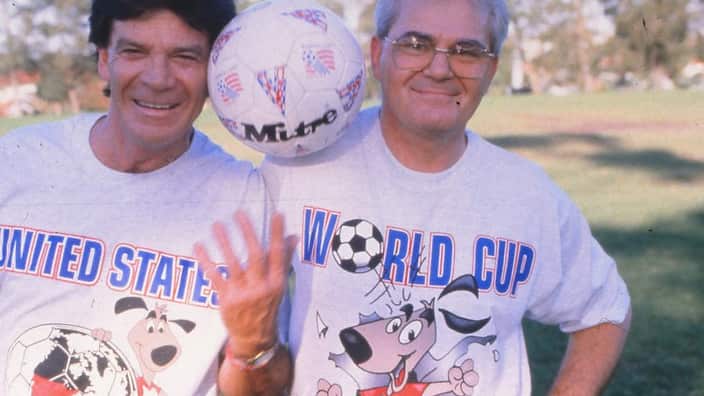
On Monday morning, when the news of Les' death reached us, a veil of sadness and dismay dropped across the SBS building. Some colleagues struggled to hold back the tears, and a few did not succeed.
A day later, given the tributes from all corners of the world to honour our colleague and friend, learning the news that New South Wales will give him a state funeral, and seeing the young and competent colleagues that Les helped to emerge at work at their desks, sadness is no longer the prevailing feeling.
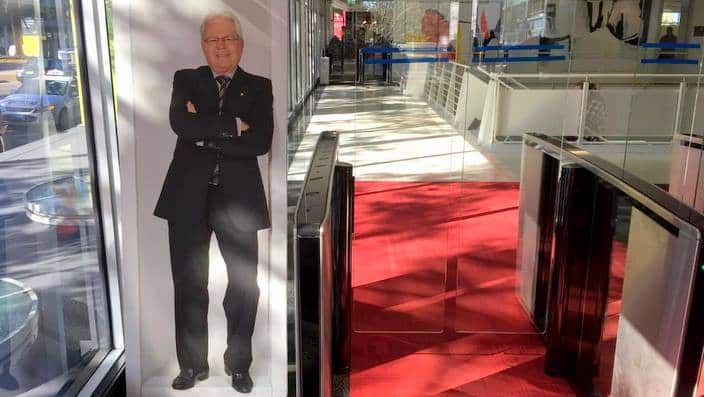
Some colleagues from SBS Sports have just placed an old, life size promotional photo of a smiling Les Murray at the entrance of the SBS building. As if to say: Do not be sad for me, my dream of giving dignity to football in Australia has been fulfilled.
==========
Below: SBS World News Supervising Sports Producer, Robert Grasso, reflects on the role Les Murray played in the development and rise of football in Australia (Interview by SBS Italian, in English)