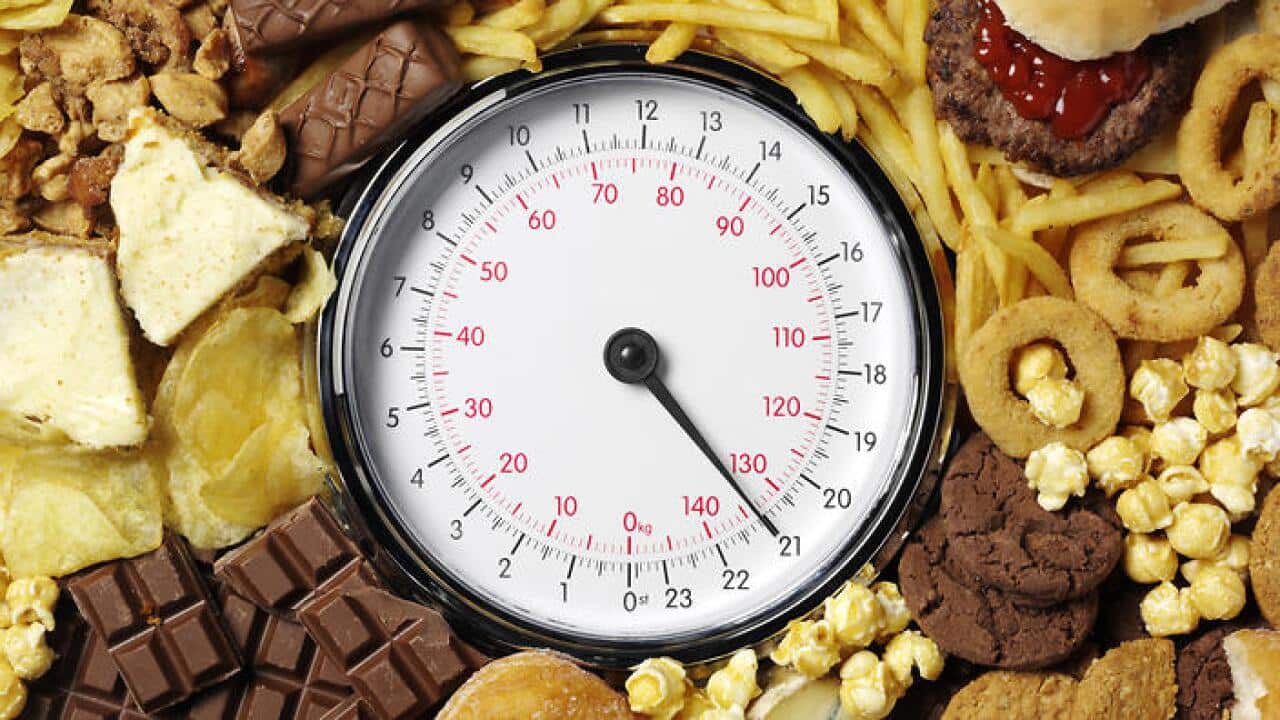
It is not surprising that 'to get fit' figures on the top of the list of many people's New Year resolutions. New Year often brings a fresh lease of enthusiasm among Australians to get fitter and get into shape. Head of Obesity and Population Health at Baker IDI Heart and Diabetes Institute, Dr Anna Peeters says it's in January after our holidays when we start making plans.
"I think one of the reasons that people see New Year as a time to put a New Year resolution around weight loss or improving the diet is because during Christmas and New Year we tend to eat a lot of extra and yummy food and lots of alcohol and soft drinks and after that people say let's get back to normal eating and more activity."
A video on eating habits in Australia produced by CSIRO.
The Australian Institute for Health and Welfare says three in five people, or 12 million Australians are obese or overweight.
And we're one of the fattest nations in the developed world. A 2013 study by University of Washington researchers ranks Australia as the 25th most obese country out of 200 nations surveyed. Yet, it seems most Australians are concerned about their weight. According to a Monash University 2012 study, 78 per cent of women and 64 per cent of men would like to lose a little or a lot of weight. Mother of three Jane Mavoa is one of those. She's decided to lose extra weight she's gained, saying she's set herself new health goals for the new year.
"I guess it is a good sort of point in time to make a fresh start. So I generally sort of start each New Year with putting all the Christmas eating and all the holiday where we over-indulge behind me and start the New Year with plans to eat healthier and do more physical activity."
Dr. Peeters agrees that the beginning of New Year is a good motivator to start anew.
It may not be easy to stick to a diet and exercise regime, especially when it means limiting your intake of calorie rich 'feel-good food' and having the discipline to exercise. However the use of technology is helping individuals keep a tab on their health targets. An overwhelming range of mobile apps are now available on smartphones to track your calorie intake and daily steps and monitor your sleep hours - measurements aimed to constantly remind you of your health goals. Marco Mangano has used the app Fitbit for two years, which monitors how many steps he takes each day using a wristband with the data logged to his smartphone. He is happy to share that he has stuck to his health goals.
"Since I've been using this app it's been actually, like I said it's been helping me monitor how much exercise I do per day and over the course of the two years I've probably lost lost about 25 kilos in weight."
Dr. Peeters says while the effects of fitness trackers still needs more study, people who regularly monitor their weight and food intake often succeed in keeping weight off.
"I think the area of digital apps to track physical activity and diet and your weight is a really interesting new area and there hasn't been a lot of evaluation yet but we do know that if you look at big weight loss registries from the United States, the people who are most successful in keeping their weight off, are those people who do regularly monitor what they eat, how much activity they do and what they weigh, so people think there is a lot of potential for those monitoring apps to assist weight loss but as I say the evidence isn't really there yet."

After the holiday season, some people opt for crash diets as a shortcut to lose weight they've put on.
Dietician's Association of Australia Spokesperson Julie Gilbert says people who go from one extreme point of bingeing to another extreme of crash diets in the New Year, seldom succeed in sticking to these diets.
"It's probably the most popular time of the year that people want to look for a quick fix, fad diets, crash diets out there. I think you have to look at them very very carefully. Any particular crash diet or fad dieting that is asking you to exclude certain food groups like dairy products, bread and cereals, don't do carbs, are definitely going to be harmful for you. The problem with them is also that they are very hard to sustain for any great length of time so while our intentions are really good and we certainly want to get rid of the weight we might have gained during Christmas period, most people will last about only three days on them."
Ms Gilbert suggests some simple alternatives to crash dieting. Her top tip is to control your portion size.
"The most important thing is to cut down your portion sizes. That is really the key thing. Now the best way to do that is to actually write down all the foods that you are actually eating. And it's amazing how you will find all those little things like - the leftover ham or the pudding slice floating around, if you actually record them, you actually find that - I don't want to eat that because I will have to write that down."
Her other tip is to look at what snacks you may be eating in between meals.
"Are you a person that sits in front of the TV after all the kids have gone to bed and eating a whole packet of Tim Tams or a whole big bag of chips. Getting rid of those little things can actually get you to lose weight without even really changing much of your diet."
There's eating better and there's also moving more.
Director and Exercise Physiologist at personal training company Bodyology, Ben Griffin, says he sees a surge of people taking up new gym memberships in January. His only advice to those who want to get fit is not to think of exercising as a quick-fix short term solution.
"You can typically tell people who are prepared to tell and make some lifestyle changes as opposed to those who are just trying to get some short term results. People who are ready to make some sacrifices to achieve the results are the ones who are more receptive to the information and look at it as more of a longer term plan as opposed to the short term plan."
He adds at the end of the day getting fit is all about having the determination, commitment and discipline to make exercise a regular part of your life.
"If people are willing and desperate enough to make some changes, you can get the results. If you stick to the plan and do the work, there is no secret recipes out there, there's no quick pill that is going to fix everything - it's just about consistency discipline and commitment and making sure that you do some exercise every day and make the best possible choices and there is always time to reward yourself but it needs to be done in moderation."
The Federal Government's Department of Health physical activity guidelines recommend adults aim for 30 minutes (or more) of moderately intense activity each day.
Their Healthdirect website includes tips on how to start exercising.



