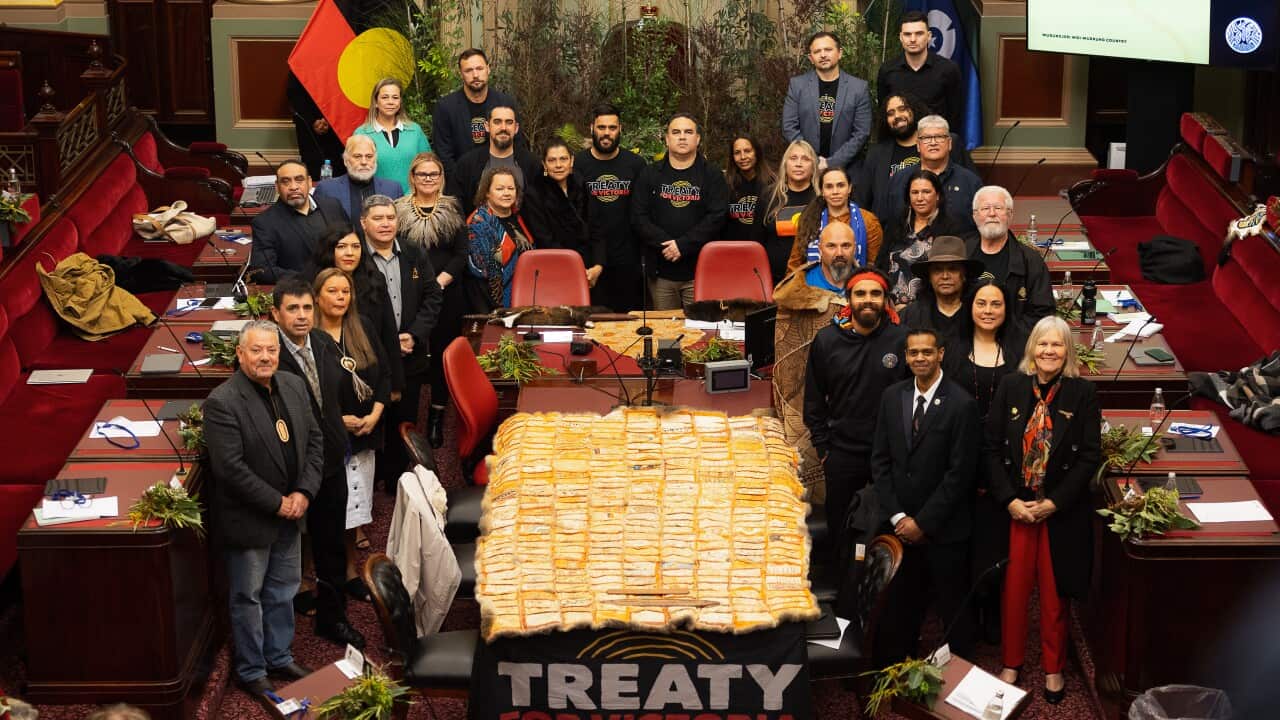
The First Assembly of First Nations of Victoria pose for a group portrait, Victoria's indigenous body negotiating a state treaty gathered at the Victorian Legislative Assembly for its first session after the election on July 26, 2023 in Melbourne, Australia. Credit: Tamati Smith/Getty Images
ប្រទេសអូស្ត្រាលីគឺជាជម្រកនៃវប្បធម៌ដែលមានវ័យចំណាស់ជាងគេបំផុតរបស់ពិភពលោក ប៉ុន្តែនៅតែជាប្រទេសមួយក្នុងចំណោមប្រទេសមួយក្តាប់តូច ដែលគ្មានសន្ធិសញ្ញាជាតិដែលទទួលស្គាល់ប្រជាជនដើមដំបូងរបស់ខ្លួន។ នេះមានន័យថា គេមិនដែលមានកិច្ចព្រមព្រៀងទូលំទូលាយអំពីការចែករំលែកដីធ្លី ធនធាន ឬអំណាចក្នុងការធ្វើសេចក្តីសម្រេចនោះទេ - ជាគម្លាតដែលមនុស្សជាច្រើនមើលឃើញថា ជាកិច្ចការដែលនៅមិនទាន់បញ្ចប់។ ស្វែងយល់ពីអត្ថន័យពិតប្រាកដនៃសន្ធិសញ្ញា - របៀបដែលវាខុសពីសិទ្ធិដីធ្លី និងកម្មសិទ្ធិជនជាតិដើម និងមូលហេតុដែលវាចាំបាច់។ Published 30 October 2025 11:42am
By Nikyah Hutchings
Presented by Sopharany Hay
Source: SBS
Available in other languages Skip to podcast episode content Share this with family and friends
ប្រទេសអូស្ត្រាលីគឺជាជម្រកនៃវប្បធម៌ដែលមានវ័យចំណាស់ជាងគេបំផុតរបស់ពិភពលោក ប៉ុន្តែនៅតែជាប្រទេសមួយក្នុងចំណោមប្រទេសមួយក្តាប់តូច ដែលគ្មានសន្ធិសញ្ញាជាតិដែលទទួលស្គាល់ប្រជាជនដើមដំបូងរបស់ខ្លួន។ នេះមានន័យថា គេមិនដែលមានកិច្ចព្រមព្រៀងទូលំទូលាយអំពីការចែករំលែកដីធ្លី ធនធាន ឬអំណាចក្នុងការធ្វើសេចក្តីសម្រេចនោះទេ - ជាគម្លាតដែលមនុស្សជាច្រើនមើលឃើញថា ជាកិច្ចការដែលនៅមិនទាន់បញ្ចប់។ ស្វែងយល់ពីអត្ថន័យពិតប្រាកដនៃសន្ធិសញ្ញា - របៀបដែលវាខុសពីសិទ្ធិដីធ្លី និងកម្មសិទ្ធិជនជាតិដើម និងមូលហេតុដែលវាចាំបាច់។ Key Points A treaty is a formal agreement between governments and Aboriginal and Torres Strait Islander peoples Many First Nations people see treaty as a step toward justice, respect, and better relationships in the future. A national treaty would create a single, country-wide agreement for recognising Aboriginal and Torres Strait Islander rights across Australia. 🎧ស្តាប់ផតខាស្តិ៍ដទៃទៀតជាភាសាខ្មែរ - Click here for more podcast in Khmer៕