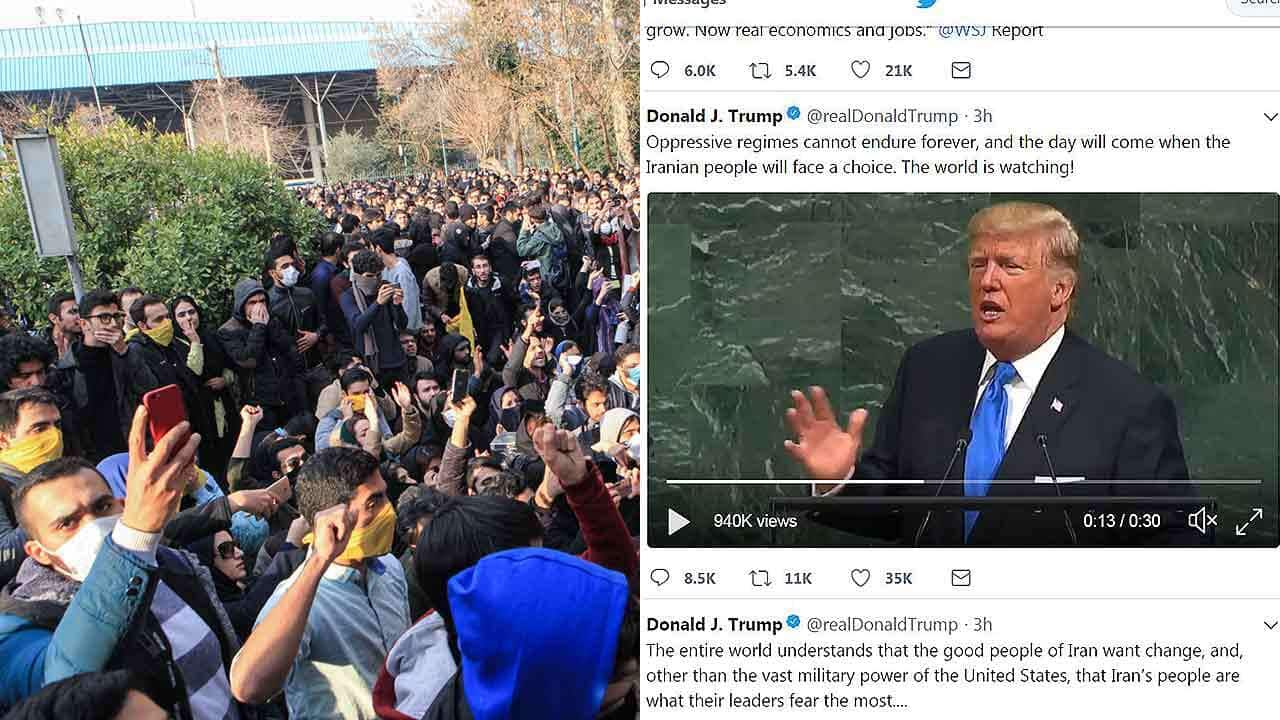
It comes as cities across Iran have been hit by a wave of anti-government protests, with at least 52 people arrested so far in the biggest mass dissent in nearly a decade.
And while authorities are warning against the participation in anti-government rallies, the United States, among others, has warned against the dismissal of the public anger.
Iranian police have used water cannons and tear gas to disperse hundreds of anti-government protestors, taking to the streets for the second day.
Protesters are frustrated over rising prices after a decade of falling living standards.
But there is also wider discontent with corruption and those in power.
Many are frustrated with Iran's President Hassan Rouhani and the country's supreme leader Ayatollah Ali Khamenei .
Iran's Vice President Eshaq Jahangiri has suggested hardline conservative opponents of President Rouhani are to blame for the protests, saying "all economic indications in the country are good. Yes, there is an increase in the prices of some products. And the government is working on fixing the causes of the high prices. Some of the events that have taken place in recent days are said to have been because of the economy. But there are other reasons. The people behind what is taking place think they'll be able to harm the government."
In a White House statement, the U-S has warned Tehran that the world is watching. "The Iranian government should respect their people's rights, including their right to express themselves".
US President Donald Trump has warned Tehran that "the world is watching," after at least six Iranian cities have been rocked by anti-government protests.
Mr Trump turned to Twitter to highlight reports of peaceful protests by Iranian citizens who he says are fed up with the regime's corruption and its squandering of the nation's wealth to fund terrorism abroad.
He says the Iranian government should respect their people's right to express themselves.
Iranian media reports demonstrators have turned out for a third day, despite warnings from security officials.
Protests in the Kurdish city of Kadmanshar are spreading to cities small and large across the country.
From the ancient city of Hamadan to the capital Tehran, this is the largest wave of demonstrations since 2009.
And with the growing protests, comes expanding frustrations.



