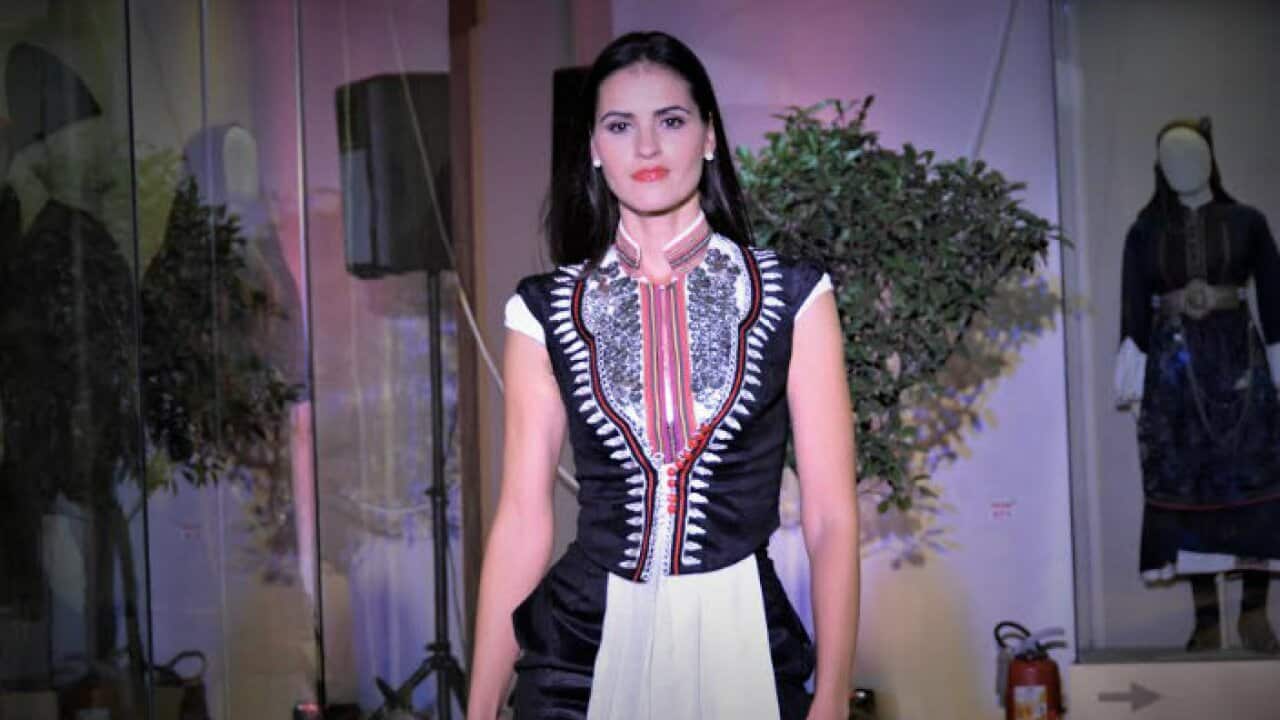
In modern times, younger generations of Macedonians often see traditional folk costumes as something that belongs in a museum rather than on a catwalk. One fashion designer challenging this perception is RMIT University mentor and Macedonian designer Nikola Buleski -- or “Bule”, as he is better known.
While creating his own contemporary fashion, Mr Buleski was inspired to draw creatively from Macedonia's folklore not only as a Macedonian proud of his heritage, but as a designer who recognised the aesthetic merit in traditional clothing. His other main motivator for infusing the past into the contemporary was the preservation of cultural roots.
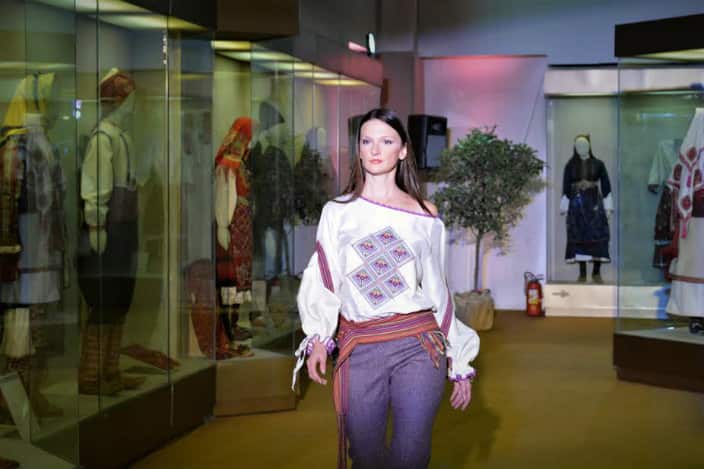
“It is nice to keep in touch with our roots and with our tradition by using a new, modern form and expression," Buleski says.
"We need to alternate the forms, because if we don’t, it will look like we remain at the same old spot, while the rest of the world keeps changing."
The fashion designer first became inspired to utilise his own cultural heritage in his work around 17 years ago when he created a collection that channeled traditional designs from the rural region of Galicnik, location in the western part of Republic of Macedonia.
“What was specific for that collection is that I used white embroideries that were applied on a white base, and I didn’t use any colours" Mr Buleski explains.
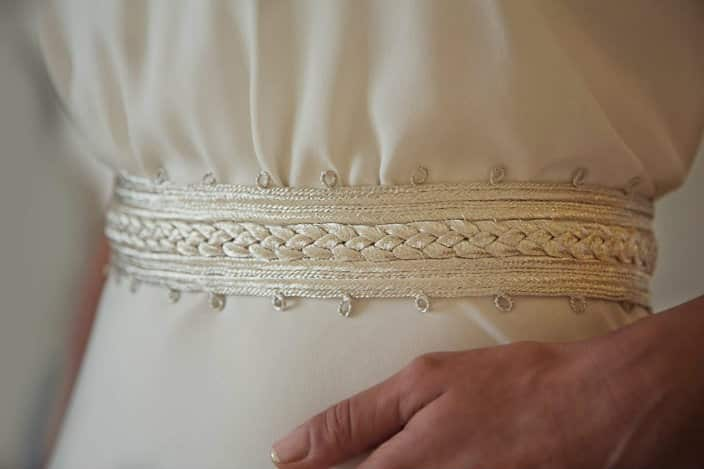
"On the other hand, for my latest collection named 'Beautiful Angelina', I used traditionally crafted cords related to the period named 'Ala Turka', which is omnipresent in Macedonian traditional costume."

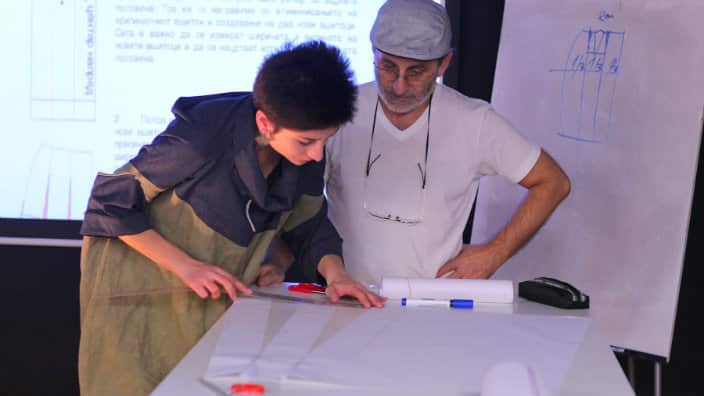
The process of creating this kind of attire inspired by folklore is quite long and hard, and requires profound knowledge and skill, explains Buleski, who earned his Diploma of Pattern-making and Production at the world-renowned fashion school, The Institute of Marangoni in Milan.
“Particularly long is the process of handcrafting the details which are to be applied to this kind of model. It can take up to 150-200 hours to be done, or 10-20 days for one piece to be created, which determines the high costs hence the high price of such fashion”, Mr Buleski explains.

Despite the high price, Mr Buleski has found a clientele for his unique designs that embody the opposite of fast-fashion.
“The young generations of Macedonians need to learn more about their roots, their history and cultural code, in order to appreciate it more.” he says. The designer has taken this passion a step further too by passing on his knowledge to the next generation. Though located in Skopje, Macedonia, he is part of the online Career Mentoring Program at Melbourne’s RMIT University.
“It was interesting that the first Australian student that I was mentoring through this academic program won an internship at the studio of Toni Matichevski, the well-known and renowned Australian designer of Macedonian decent as well.”
Before he became an online mentor at RMIT, Mr Buleski had lectured at several other universities, including the ESMOD International in Kuala Lumpur, the oldest Paris fashion design school with a 170-year-old tradition.