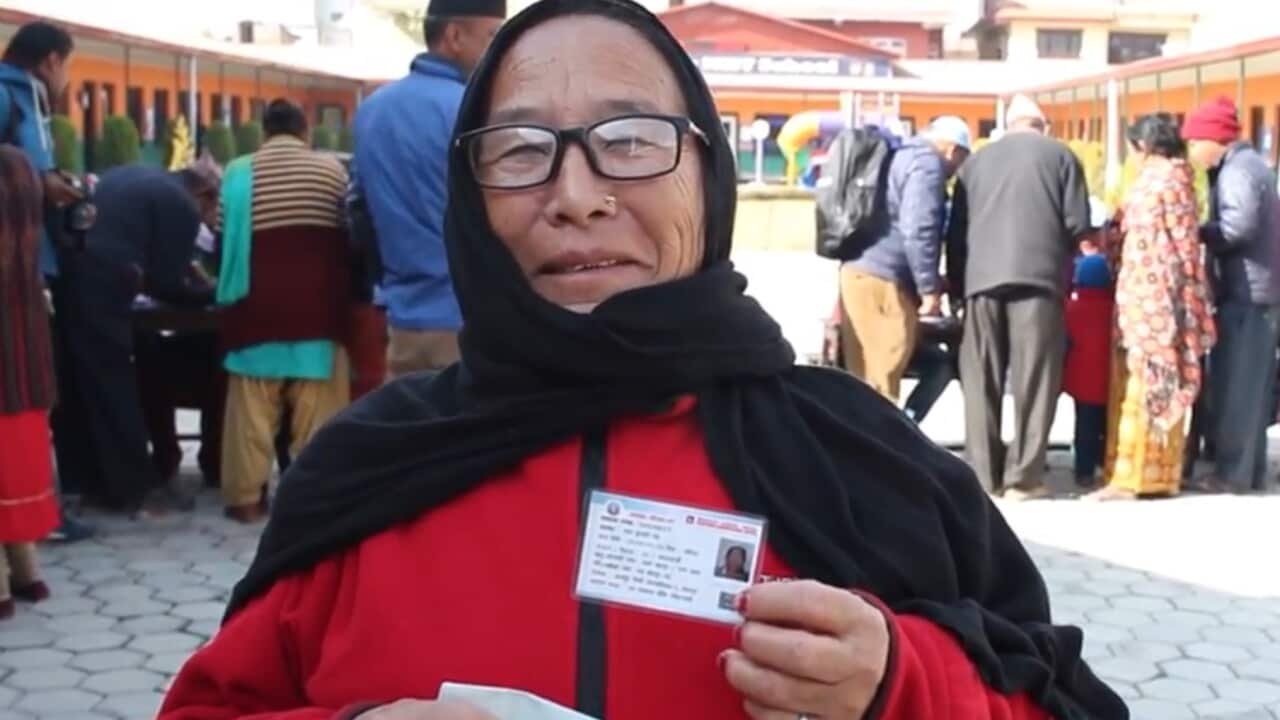
Candidates from more than two dozen political parties including eight major ones are vying for 128 seats for House of Representatives and 256 seats for provincial assembly.
It marks the first federal election since the new constitution was enacted in 2015 - up until 2006, Nepal was a Hindu Kingdom with a constitutional monarchy.
On 18 May 2006, the House of Representatives unanimously voted to curtail the power of the king and declared Nepal a secular state. In 2007 an interim constitution was created and amended to replace "Provisions regarding the King" to "Provisions of the Head of the State" – declaring Nepal a federal republic, and thereby abolishing the monarchy. This bill came into force on 28 May 2008 with the new formal Constitution of Nepal officially passed in September 2015.
A total of 323 candidates for House of Representatives and 484 candidates for provincial assembly were in the race in the first phase of election that was held in 32 districts of the country’s northern mountain region on November 26. The remaining 45 districts will be voting on Thursday.
Final preparations are concluding in Nepal as voters get ready to decide who they will pick to represent them in the lower house of the country’s federal parliament and the provincial assembly during the second phase of elections on Thursday 7 December 2017.
"Voters can cast their votes without any fear. Both voters and polling stations have tight security arrangements."
Chief Election Commissioner Ayodhee Prasad Yadav said necessary arrangement for the election is at its final stage and the deployed officials are busy distributing the voter card and preparing booths at the polling centers.
"Voters can cast their votes without any fear. Both voters and polling stations have tight security arrangements," he said.
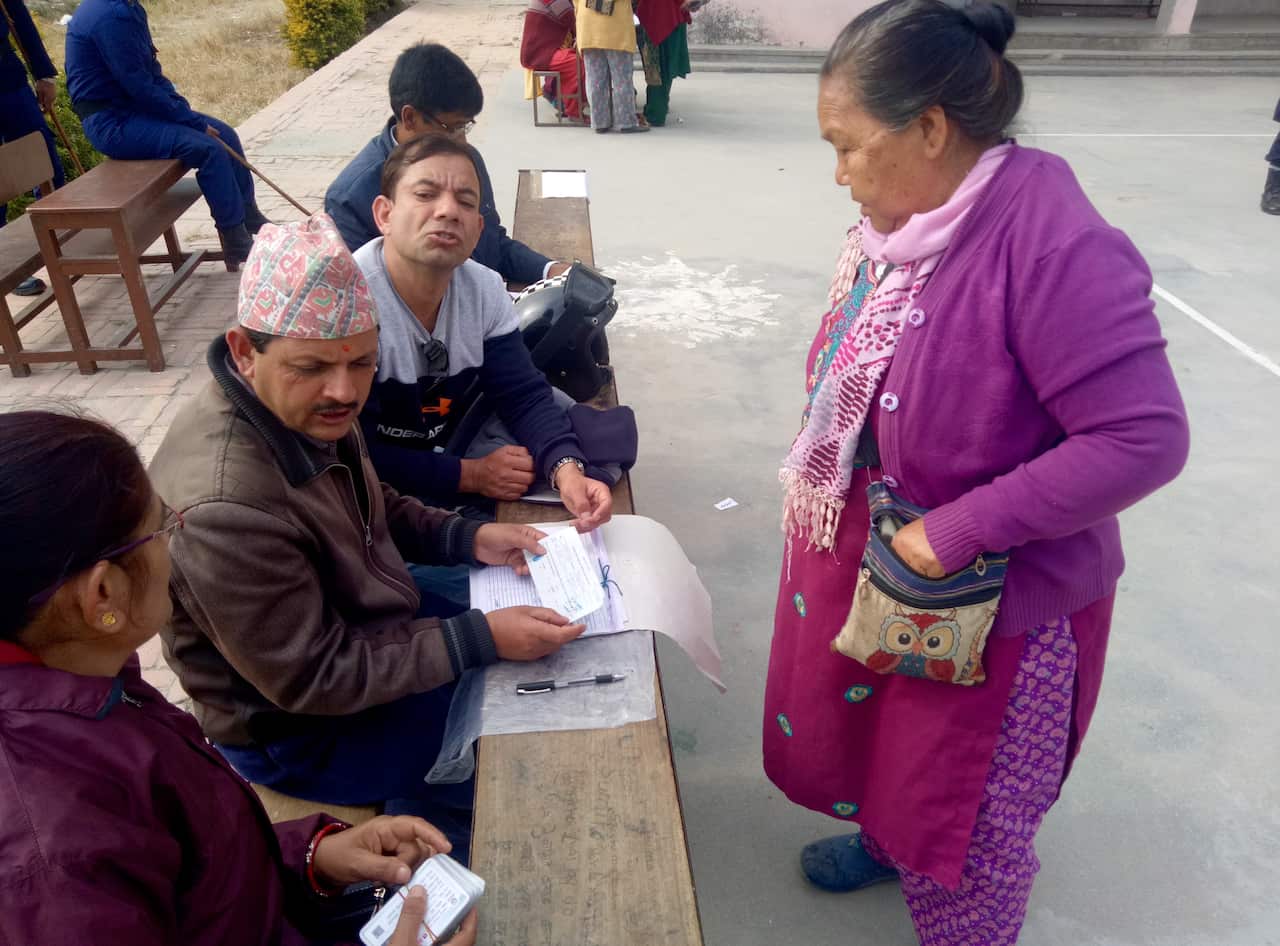
People from 45 districts including hilly and Tarai region were seen lining up in polling centers to receive their voter identity cards from Tuesday morning.
Maiya Rai, 33, was one of the voters lining up to get their voter identification card at a local school in Bhaktapur. She says she want to choose a leader who could address problems in the country.
"This election is very important to elect the right leader to facilitate the demands and needs of the country and the people," she says. "There is no place for those who do not work for the people."
Officials from the Election Commission are said to have distributed voter cards from more than 15 thousand polling centres on Tuesday and Wednesday.
Election official Ila Sharma says officials and volunteers have been deployed to voting centres for voter education to ensure proper voting procedures are followed.
Nepal’s biggest political party, the Nepali Congress will be competing against the recently formed Communist alliance between the Maoist and Nepal Communist Party UML to form a majority government.
Former BBC journalist Rabinda Mishra and his alliance of two new parties are hoping to win enough seats to become a national party.
More than five hundred thousand people are reported to have left the capital Kathmandu to get to their designated voting centres in various parts of the country.
According to Federation of Nepalese National Transport Entrepreneurs, approximately 1.4 million people have booked tickets for 6 days beginning 1st of December.
Around 35 thousand small and large vehicles are said to have left the capital during this period.
Nepal's political parties say these elections will bring the peace process to a "logical conclusion" and will give power to the people. The 2015 constitution helped setup a new governing structure in the country - federal, provincial and local government.
Local government elections were held in three stages in May, June and September of this year.
The new consitution is seen as an important part of the peace agareement that was signed between the Maoists and the governement in 2006. The The decade long armed conflict between the Maoist rebels and the government prior to the peace agreement resulted in the death of more than 15,000 people and displacement of thousands more.



