
The British government is looking for recruits from Commonwealth countries, including Australia and India, to overcome a shortage of recruits in the country’s military.
Currently facing a shortage of 8,200 personnel in the Army, Navy and Air Force, the British Defence Ministry has removed the mandatory requirement of minimum five-year British residence for applicants.
British Minister for the Armed Forces Mark Lancaster said an enhanced presence of Commonwealth service personnel will give Britain an operational advantage over its adversaries.
“From Australia to Jamaica, to Fiji and South Africa, Commonwealth recruits are already playing a key role in our Armed Forces. So we’re stepping up the numbers of recruits from the Commonwealth, knowing that they will bring key skills and dedicated service to our military, Mr Lancaster said.
“Their different perspectives will also help us to enhance our cultural understanding, giving us an operational advantage over our adversaries.”
Britain already employs over 4,000 foreigners from Commonwealth countries in its armed forces and currently allows 200 recruits from these countries, who do not meet the five-year residence requirement, to join duties in a limited number of jobs every year.
That number is now being boosted to 1,350 recruits per year, but will get there over several years.
Of the 1350 new annual recruits, the Army is expecting to hire around 1000 personnel, with the Navy and the RAF expecting to recruit around 300 and 50 respectively.
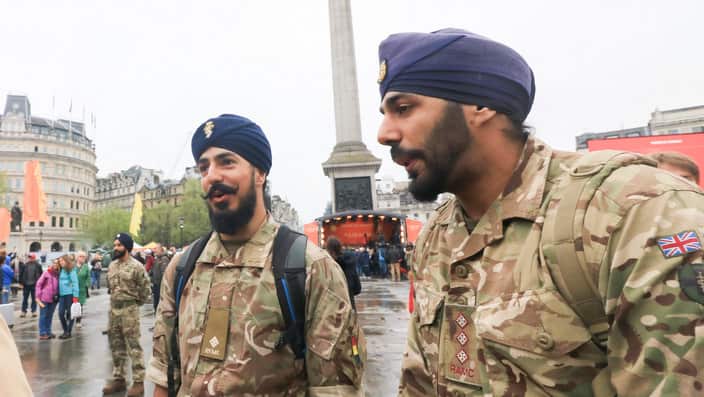
The Ministry of Defence said in a statement that those who have already applied for jobs in the armed forces and were on hold due to the limited number of positions will be given priority.
While the Royal Navy and Royal Air Force will begin recruitment procedures immediately, Army applications will open early next year.
Under the new policy, Commonwealth citizens over the age of 18 will be able to apply for all roles and ranks.
Becoming a British citizen
Those seeking to join the British armed forces need to have a valid visa and should be in Britain legally.
Once selected for the role, the recruits are given ‘exempt immigration control’ status while the recruit is in service. Recruits from Commonwealth countries are also allowed to bring their families, provided they meet the minimum income requirements.
Those who want to continue to stay in the UK after the end of their service, there’s an applicable fee they are required to pay. Only those recruits can apply to stay in the country after the end of their service who have served for at least four years. The period of service is counted towards residency as part of the requirement for British citizenship.
Indian Army under British rule
Approximately 1.3 million Indian soldiers fought in the World War I, over 70,000 having perished defending the British Empire. They fought against the German Empire in German East Africa and on the Western Front. Some of them displayed exemplary courage and won the highest battle honours. Indian divisions were also sent to Egypt, Gallipoli and nearly 700,000 served in Mesopotamia against the Ottoman Empire.
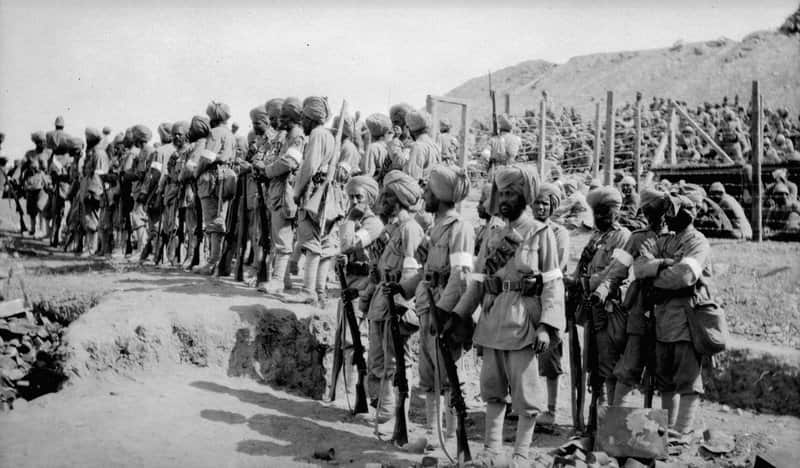
While the Indian freedom movement was at a crescendo of resistance against the British rule when World War II broke out, Indian troops once again fought with distinction with over 87,000 Indian soldiers laying down their lives in the battlefields across Europe, North Africa and South Asia.
Field Marshal Sir Claude Auchinleck, Commander-in-Chief of the Indian Army from 1942 asserted the British "couldn't have come through both wars if they hadn't had the Indian Army.



