

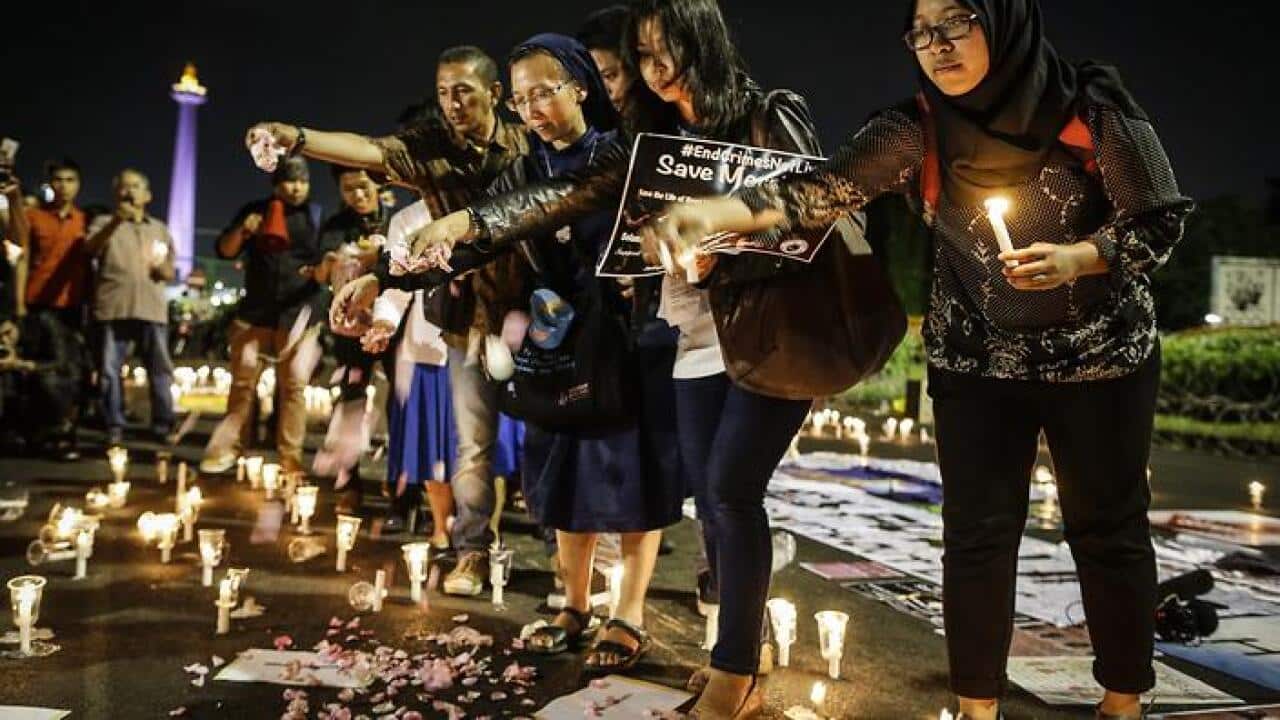
Indian national Gurdip Singh is reportedly among those spared from execution. 48 year old Singh, was convicted for smuggling 300gm of heroin into Indonesia back in 2005, and was sentenced to death in 2005.
Indian Minister for External Affairs Sushma Swaraj had tweeted as late as yesterday evening to say that her government was doing everything possible to spare Gurdip Singh from execution. Singh, also known as Vishal, hails from Jalandhar, Punjab.
It appears that Singh's co-accused, Pakistani national Zulfiqar may also have been spared last night. 52 year old Zulfiqar, who hails from Gujranwala was convicted for the same crime, but has always pleaded innocence. It is unclear if this respite from Indonesia is only temporary, and if further executions will be carried out at a later date.After 14 death row prisoners in Indonesia received notifications on Tuesday that they faced imminent execution, there were many ways they, their families and advocates called for mercy.
"Please don't let these families go through what we have gone through", "open your heart", "forgive".
But before 1am local time (4am AEST), on Friday, four of the fourteen drug convicts slated for executions were shot by a firing squad as heavy rain fell at Nusakambangan island prison in Central Java.
Known as the Alcatraz of Indonesia, it is the same place where Australians Andrew Chan and Myuran Sukumaran were executed, along with six others, in April last year.
Those executed on Friday were Indonesian man Freddy Budiman, as well as Nigerians Seck Osmane, Michael Titus Igweh and Humphrey Jefferson Ejike.
The executions come despite emotional pleas from prisoners, their families and lawyers for mercy.
The sister-in-law of Nigerian man Michael Titus Igweh wept on Thursday as she described how her family were still fighting for a second judicial review into his case when they read on a news website that he would be executed.
"We ask for justice to the government of honourable (President Joko Widodo) Jokowi. He (my brother-in-law) is a human, not an animal. Open your conscience, your heart, open your eyes," she told reporters outside the prison.
Meanwhile Sukumaran's mother Raji Sukumaran penned a letter to the president earlier this week, writing: "Please don't let these families go through what we have gone through".
According to official procedure, death row prisoners are taken to a field where a firing squad stand between five to 10 metres away and wait for their commander to swing a sword, before aiming for the prisoner's heart.
If the prisoner does not die immediately, an officer will shoot them in the head.
Describing the practice as "barbaric", the UN said it marked a worrying trend with Indonesia which is the most "prolific executioner" in Southeast Asia, after ending a de-facto moratorium on carrying out the death penalty in 2013.
Serious questions have also been raised about the legitimacy of the legal process that brought those to death row.
Nigerian man Humphrey "Jeff" Ejike, who was shot on Friday, had always maintained his innocence.
He was allegedly held without access to a lawyer for five months after his arrest, did not have an interpreter at trial and was beaten during interrogations.
But Indonesia is showing no signs of backing down, saying the death penalty remained a valid legal avenue within the country trying to fight drugs.
The other ten, including Indonesian woman Merry Utami, would face the death penalty at a later unspecified date, Noor Rachmad from the Attorney General Office said.
Tweeting after the executions, Community Legal Aid Institute LBH Masyarakat wrote: "we lost another client, another friend: Humphrey Jefferson. Another dark day for us ... very dark".