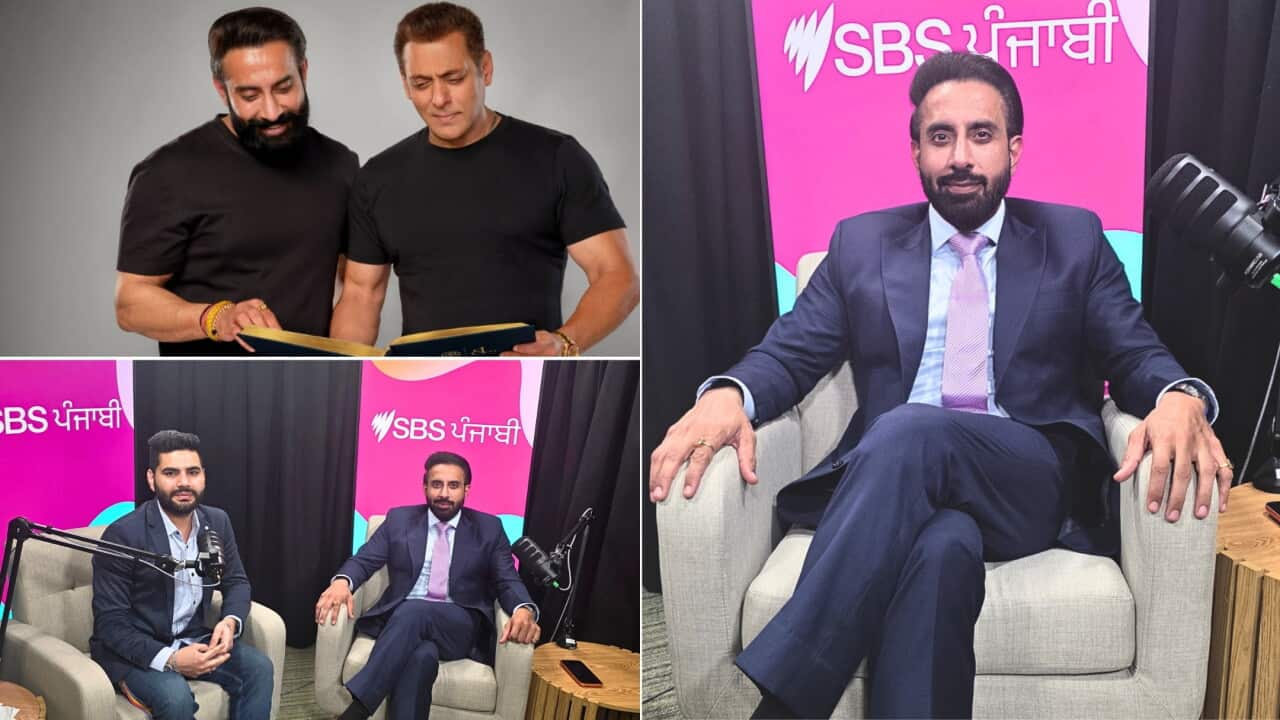


Millions of Australians will directly or indirectly receive a financial benefit as a result of the announcements made by Treasurer Josh Frydenberg in last night's budget, says finance expert Dr Harminder Singh. Hear his detailed analysis of the personal income tax cuts, cash payments for pensioners, deductions for business owners and more.
Highlights
- Low and middle-income earners will save at least $1,000 in personal income tax cuts
- People relying on Centrelink benefits to receive two cash payments of $250 each over the next eight months
- Small business receive incentives to write-off new purchases and hire young employees aged 16-35
"Although the budget forecasts a deficit of $213 billion, this isn't something to worry too much about," says Dr Harminder Singh, Associate Professor of Finance at Melbourne's Deakin University.
"When the money is spent for productive purposes, it will create stability, jobs, and will contribute to the country's future progress. So at a time like this, it is a welcome step," he tells SBS Punjabi.
"The federal government needed to provide an economic boost during this time of financial upheaval caused by the COVID-19 pandemic, when many businesses have suffered and people have lost their jobs. So it is good that the government has moved away from its mindset of bringing the economy into surplus, and instead has spent big to provide a major stimulus package," he told SBS Punjabi during its live broadcast on Tuesday, 6 October.
Last night's budget announced new funding of $98 billion including, $25 billion in direct COVID-19 response measures and $74 billion in new measures to create jobs.
The main features of the announcements are cash payments to people on Centrelink benefits, cuts to personal income tax rates, wage subsidy to employers hiring people aged between 15-35 and provisions for small business owners, all of which were analysed in detail by Dr Singh.
"According to my calculations, a person earning between $45,000- 90,000 annually will save just over $1,000 in taxes, whilst a person earning upto $120,000 will save $2,430. Largely this is a good thing, but my criticism of this change is that perhaps people in a higher income bracket didn't need a tax cut. So maybe they shouldn't have received this income tax reprieve, since the lower-income earners needed the money much more," said Dr Singh.
He added, "It is really good to see incentives for businesses who hire people aged between 16-35. Businesses are slowly opening up and now is a good time to incentivise them to employ youngsters. The government will give them $200 per week for every new employee aged 16-30 and $100 per week for every new employee aged 30-35. So in effect, the government is subsidizing businesses who employ youth, which is really good as the economy edges out of the coronavirus lockdown."Dr Singh says there is good news for small business owners. "Many in our community own small businesses and will be able to depreciate their assets quickly. This would include buying a taxi or investing in computer equipment and claiming it in the tax returns."
He expressed some concern about the negative net migration projected in the 2020-21 Budget, saying lower migration numbers aren't good for the economy.
"Overall, I rate the budget 8.5 out of 10," says Dr Singh.
(Click on the audio player above to hear his analysis).
Cash payments to welfare recipients
Welfare recipients will receive cash payments as part of this year's Federal Budget. Pensioners will receive two additional lump-sum cash payments of $250 dollars in December and March next year.
The money will go to aged and disability pensioners, veterans, people on carer payments and family tax benefit recipients.
Personal income tax benefits
The federal government says 11 million Australians will benefit from two announcements related to personal income tax. Firstly, low and middle-income earners will receive a one-off benefit of up to $1,080 through the low and middle-income tax offset (LMITO).
Additionally, tax brackets which were meant to change two years later, will now come into effect from 1 July 2020, as per the following
- the top threshold of the 19 per cent tax bracket will increase from $37,000 to $45,000; and
- the top threshold of the 32.5 per cent tax bracket will increase from $90,000 to $120,000.
Incentives for business to hire employees aged 16-35
JobMaker Hiring Credits will be paid to employers for up to 12 months for each new person hired aged between 16 and 35. Employees are required to work a minimum of 20 hours per week to be considered for this payment.
To be eligible, employers will need to demonstrate an increase in overall employee headcount and payroll for each additional new position created, and the Hiring Credit will be paid quarterly at the rate of $200 per week for those aged between 16-29, and $100 per week for those aged between 30-35.
Treasury estimates that this will support around 450,000 jobs for young people.
Other announcements for Small businesses
Last night's Budget announced that 99 percent of businesses can write off the full value of assets they purchase. Businesses with a turnover of up to $5 billion will be able to immediately deduct the full cost of eligible depreciable assets acquired from 6 October 2020 onwards and first used or installed by 30 June 2022.
The Government will also temporarily allow companies with a turnover of up to $5 billion to offset tax losses against previous profits on which tax has been paid. Losses incurred to June 2022 can be offset against prior profits made in or after the 2018-19 financial year.
Listen to SBS Punjabi Monday to Friday at 9 pm. Follow us on Facebook and Twitter.
People in Australia must stay at least 1.5 meters away from others. Find out what restrictions are in place for your state or territory.
Testing for coronavirus is now widely available across Australia. If you are experiencing cold or flu symptoms, arrange a test by calling your doctor or contact the Coronavirus Health Information Hotline on 1800 020 080.The federal government's coronavirus tracing app COVIDSafe is available for download from your phone's app store.
SBS is committed to informing Australia’s diverse communities about the latest COVID-19 developments.
News and information is available in 63 languages at https://www.sbs.com.au/language/coronavirus