
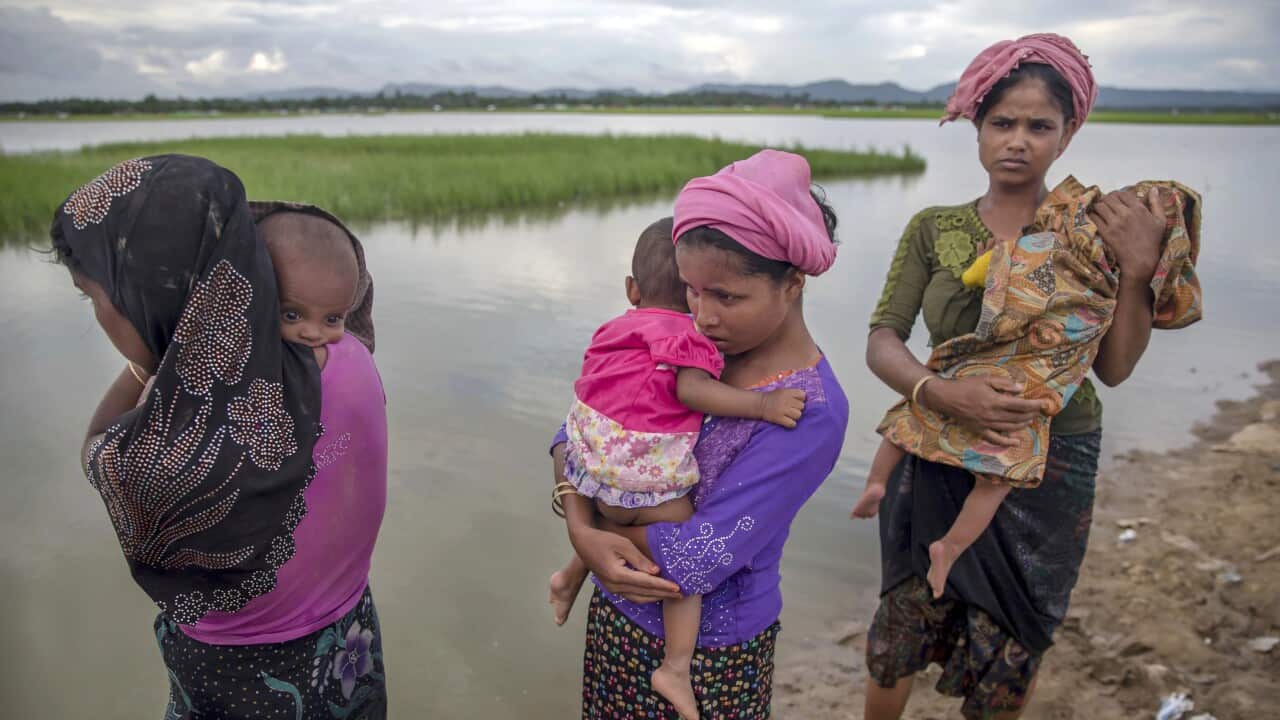

Rising sea levels, fires, floods and other disasters will increasingly leave people with no choice but to move. But where will they go? Under what laws and policies? And with what protections? It's these questions that will be asked at a three-day international conference this week.
As leaders debate the key target to reduce greenhouse emissions to net zero by 2050, there's another daunting milestone that date represents. According to the World Bank, by then climate change would have forced no fewer than 216 million people across six world regions to relocate.
But with concerted action now, it estimates the scale of climate migration could be reduced by as much as 80 percent.
The Kaldor Centre for International Refugee Law is hosting a conference addressing the questions of global warming displacement.
Centre director Professor Jane McAdam says it's an issue that's close to home.
"We know already that 80 per cent of disaster-related displacement over the past decade has occurred within the south Asia Pacific region. So that's millions and millions of people and last year, for example, globally, there were 31 million people displaced by the impact of a disaster."
With no legal definition of a climate refugee, establishing those legal frameworks, according to Jane McAdam, is a key sticking point -particularly in this region, where rising sea levels and more frequent extreme weather events are posing existential threats to the residents of pacific islands.
"We don't yet have clear international legal frameworks that would facilitate movement. In some parts of the world, in Africa for example, there are free movement agreements between certain countries or groups of countries, that mean people can move freely but we don't yet have anything like that in the Pacific, other than the trans-Tasman agreement that allows Australians and New Zealanders to move relatively freely."
Click on the player at the top of the page to listen to the feature in Punjabi.
SBS is committed to informing Australia’s diverse communities about the latest COVID-19 developments. News and information is available in 63 languages at https://www.sbs.com.au/language/coronavirus
Listen to SBS Punjabi Monday to Friday at 9 pm. Follow us on Facebook and Twitter.