
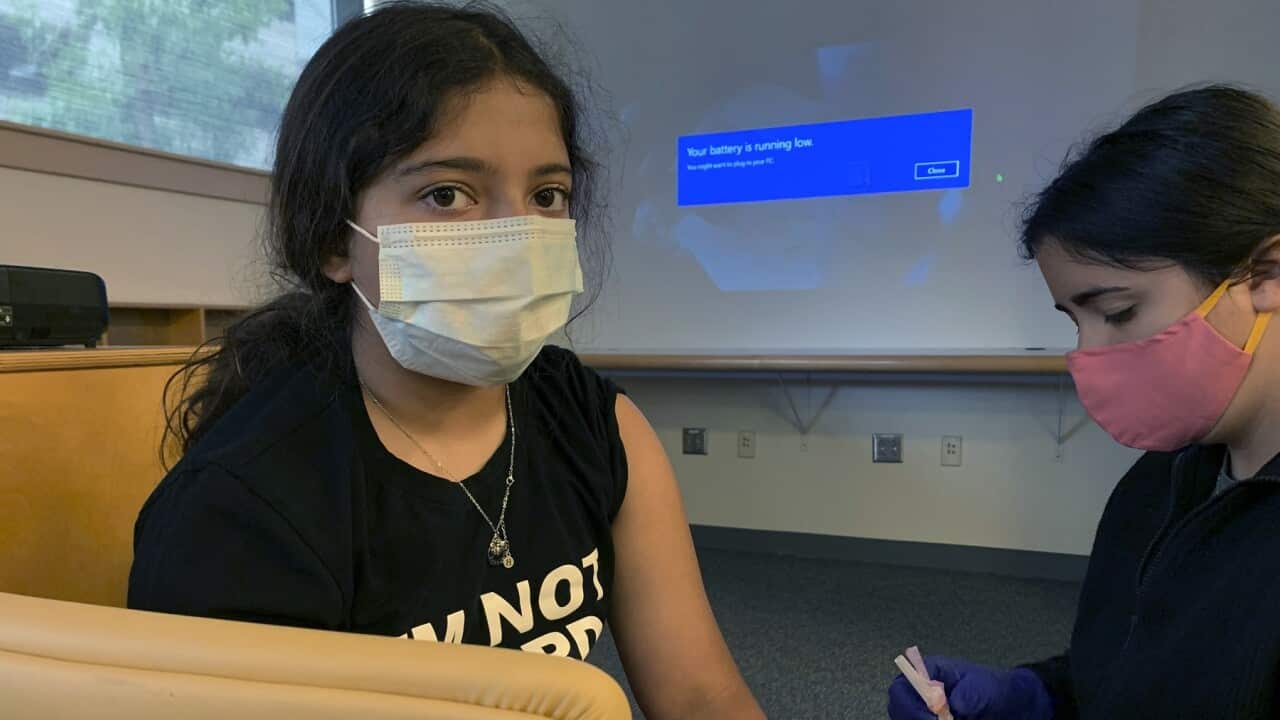

Pfizer says its COVID-19 vaccine produces a strong immune response for five to eleven-year-olds with evidence comparable to the older age group. It's hoped children will soon have authorised use of the vaccine in the United States, Europe and other countries as Pfizer shares its trial results.
There is optimism about greater protection against coronavirus for children as Pfizer prepares to send its study findings to US regulators.
In the US, 10-year-old Maya Huber took part in the study and she is looking forward to seeing her friends, without wearing a mask.
"I also thought, like, if I'm vaccinated or if I have the chance to become vaccinated, then COVID could end or it could just get better. And me and my friends could hang out more."
If the vaccine becomes available to more young people, it could prevent the spread of COVID-19 in schools.
The Pfizer vaccine - made in partnership with BioNTech - is already accessible to children aged 12 years and older.
Senior vice president at Pfizer, Dr Bill Gruber says he hopes to convince the younger cohort that this vaccine is safe and effective.
"We measure the ability of antibody from the children that were vaccinated to kill the virus and how well that matched up the antibody from 16 to 25-year-olds, and it matched very closely."
Pfizer is seeking US authorisation for the vaccine in the younger age group.
Regulators could determine whether this shot is approved for young children within three weeks of companies submitting an authorisation request.
And in other developments overnight, the United States will soon ease travel rules for visitors from China, India, Brazil and several other countries.
US Secretary of State Antony Blinken shared the news while meeting with UK Foreign Secretary Elizabeth Truss.
"We've made the announcement on the lifting of travel restrictions, which is something we've been talking about for some time. We're pleased that we're able to have that with us."
Click on the player at the top of the page to listen to this audio in Punjabi.
People in Australia must stay at least 1.5 metres away from others. Check your state’s restrictions on gathering limits.
If you are experiencing cold or flu symptoms, stay home and arrange a test by calling your doctor or contact the Coronavirus Health Information Hotline on 1800 020 080.
News and information is available in 63 languages at sbs.com.au/coronavirus
Listen to SBS Punjabi Monday to Friday at 9 pm. Follow us on Facebook and Twitter.