
Health authorities are concerned that African women may become the world's least vaccinated population, because of disinformation, and a lack of access. International Monetary Fund says the coronavirus pandemic has worsened global poverty and inequality. And the US Food and Drug Administration has recommended a half-dose booster shot for high-risk groups.
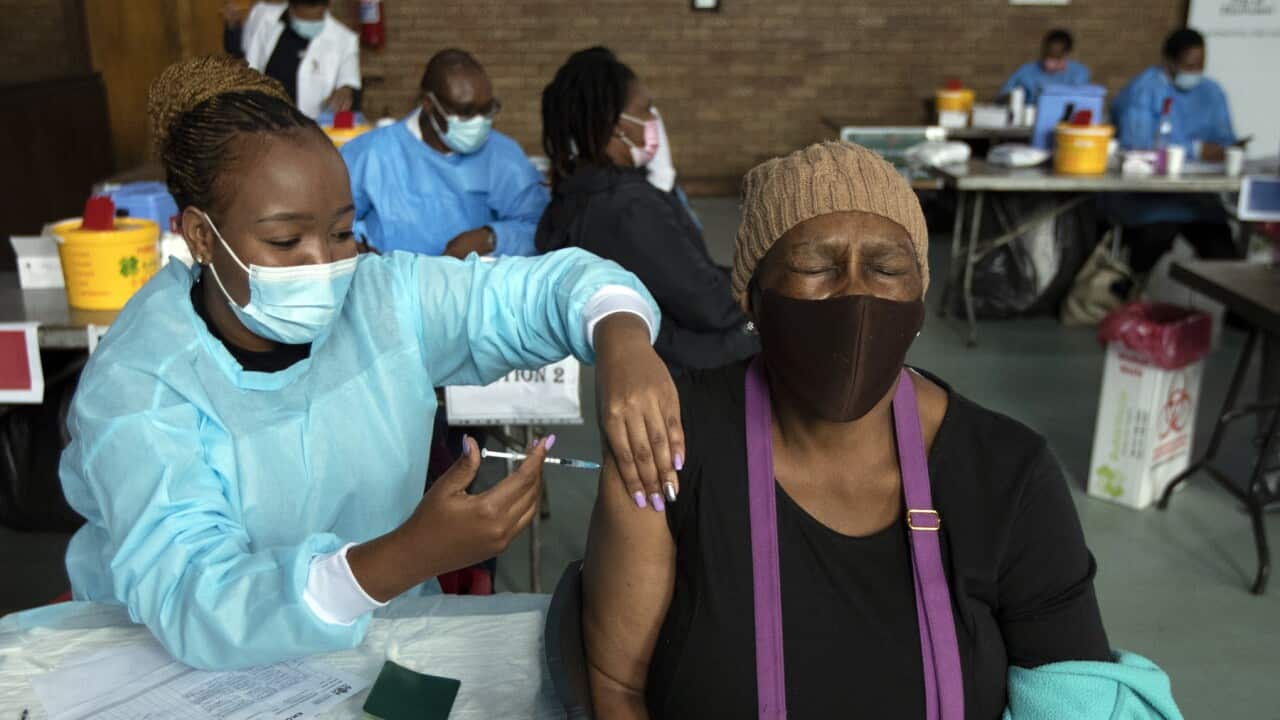
Health authorities fear that the disinformation, combined with inequities in global vaccine distribution, could leave African women as the least vaccinated population in the world against Covid-19.
Meanwhile, the World Health Organisation says most Covid-19 cases in Africa are going undetected.
New modelling from the WHO suggests as few as one in seven infections are being picked up - largely due to low testing rates.
While Africa officially has officially recorded eight million Covid-19 cases, the actual number could be as high as 59 million.
It's prompted the WHO to announce plans to increase testing in eight African countries, with a goal to test seven million people in the next year.
Doctor Matshidiso Moeti is the World Health Organisation's regional director for Africa.
"In Africa, with our low vaccination rates, it's vitally important to have a better grasp of where and how the virus is circulating in our communities. With limited testing, we are still flying blind ((little information to guide)) in far too many communities in Africa. Most tests are carried out on people with symptoms but much of the transmission is driven by asymptomatic people."
This week the IMF downgraded its outlook for the global recovery from the pandemic recession, because of supply chain disruptions and disparities in vaccination rates between rich and poor nations.
The IMF's International Monetary and Financial Committee chair Magdalena Andersson is calling for immediate action to achieve universal vaccination.
"Therefore, we encourage the multilateral leaders task force to accelerate access to vaccines and to facilitate coordination among international partners, and this also includes mobilising critical financing. Moreover, we agreed to take steps to reach the global goals, vaccinating at least 40 per cent of the population in all countries by the end of 2021 and 70 per cent by mid-2022. And the pandemic has worsened poverty and inequalities globally."
Click on the player at the top of the page to listen to the feature in Punjabi.
SBS is committed to informing Australia’s diverse communities about the latest COVID-19 developments. News and information is available in 63 languages at https://www.sbs.com.au/language/coronavirus
Listen to SBS Punjabi Monday to Friday at 9 pm. Follow us on Facebook and Twitter.