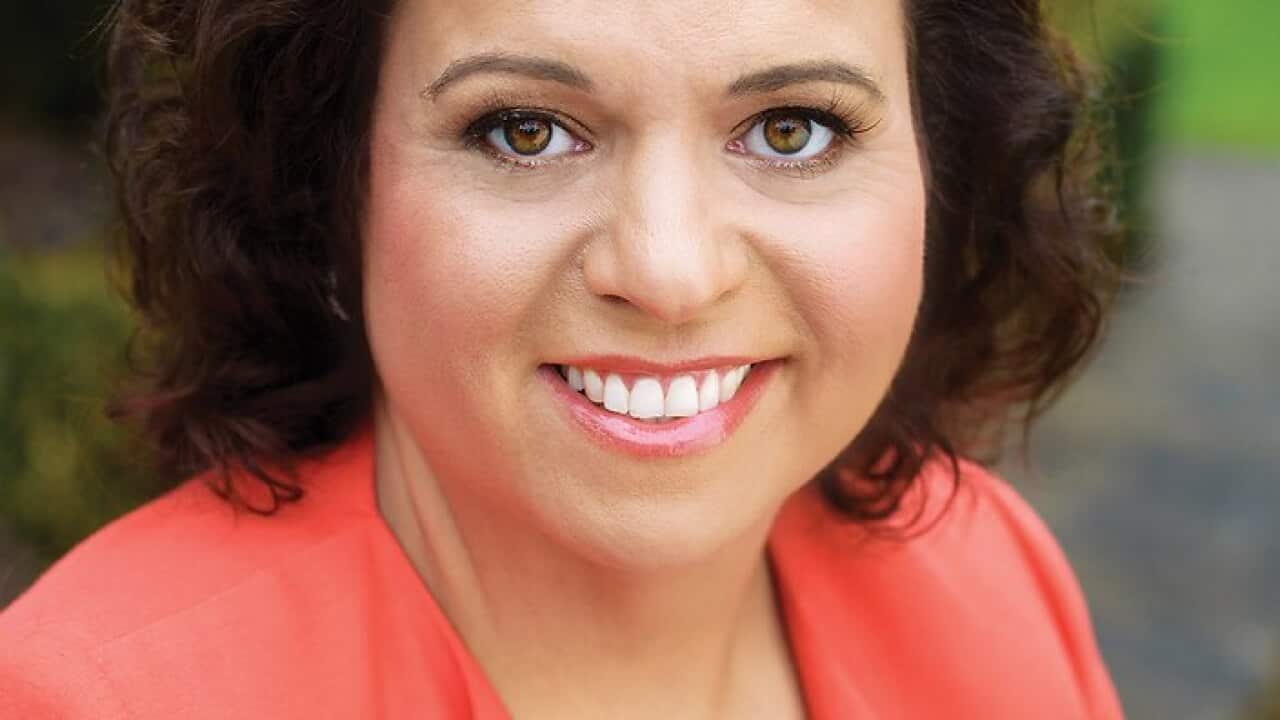

'I can’t fathom why Australian can’t open its arms to more people who make a conscious choice to become Australian citizens', says Michelle Rowland MP, the former Shadow Minister for Citizenship and Multiculturalism.
The Shadow Communications Minister Michelle Rowland, formerly the Shadow Minister for Citizenship and Multiculturalism in Australia, has spoken to SBS Punjabi about many matters pertaining to her current and former portfolio, especially addressing issues relating to permanent residency, citizenship and international education.
She has served as a Member for Greenway since 2010, a constituency which boasts of a large subcontinental demographic, including a high density of Punjabi residents.
Ms Rowland expressed serious concerns about citizenship approvals in Australia, which had dipped to a 15-year low last year and despite a rise in number of approvals, the waiting period often ballooning to two years.
"I’ve seen the frustration in local residents who want to become Australian citizens, who’ve completed all the documentation and are sitting around waiting for their citizenship ceremonies or for their paperwork to be processed.
"
"I can’t fathom why Australia can’t open its arms to more people who make a conscious choice to become Australian citizens. We’ve never had such a low pathway to permanency. I think it should be the aim of all Australian governments to have as many people seeking to be permanent Australians, so in other words, gain citizenship."
"I find it perverse that we are in 2019 and our levels of citizenship are so low. I put it down to bureaucratic issues, but its certainly not beyond the control of the government," she added.
She also raised concerned about downgrading the risk assessment level of Indian international students to Level 3, saying it will "have an adverse impact on the education industry."
"I’m sure this is something we can explore in the parliament and I know a number of my colleagues who represent high subcontinent constituencies feel the same."
She said this is matter that the Senate could be looking into shortly.
"This is something we need to explore through the Senate estimates process that’s coming up. The reasons given for changing the category appear quite vague to me. I can’t recall a time when we had such a high level of concern about the levels of students coming from the subcontinent."
"We should actually be encouraging them, if for no other reason education as an export market is very important to Australia. We want to see overseas students come to Australia, study and take a path to permanency," she said.
Ms Rowland acknowledges that the Punjabi community's issues mirror those of the wider community - in that they want "they want adequate facilities and better infrastructure."
"They are very concerned about broadband and technology generally – even about getting basic mobile services in new suburbs."
She said the other major concern among her constituents is about uncertainty in the economy, "with people working 2-3 jobs" to make ends meet.
Ms Rowland spoke passionately about supporting public interest journalism, also raising concerns about hate and fake news being proliferated through social media.
"Its a conundrum that governments find themselves in because rules that apply to traditional or legacy media don’t apply to online platforms like Google or Facebook. It's a great challenge for not just regulators but journalists as well and public interest journalism is now greatly challenged."
"People must be able to differentiate between fake news and good journalism – we should promote public interest journalism and increase media literacy of people so they question what they’re reading."
Addressing the raids on ABC earlier this year, Ms Rowland said, "they were meant to intimidate journalists and whistleblowers," adding, "journalists should be allowed to do their jobs."
When asked about broadband affordability and the fact that Australia has ranked last among 36 OECD countries on price of entry-level broadband, she said, "We have a serious problem with infrastructure which has not kept pace with the needs of consumers."
"We need to lift our game in digital inclusion. It’s a problem for the economy when whole sections of people miss out. The digital divide between people who have fibre and copper connections is unacceptable."
To hear the full interview, click on the audio link above.
Listen to SBS Punjabi Monday to Friday at 9 pm. Follow us on Facebook and Twitter.