
The Turnbull Government is taking the credit after updated Budget figures show a $4 billion improvement to the budget deficit for the 2016-17 financial year. The Government says improved tax earnings from a higher employment rate and lower spending on social security are responsible for the improved Budget position.
Australia's budget figures have turned out healthier than Treasurer Scott Morrison predicted a few months ago.
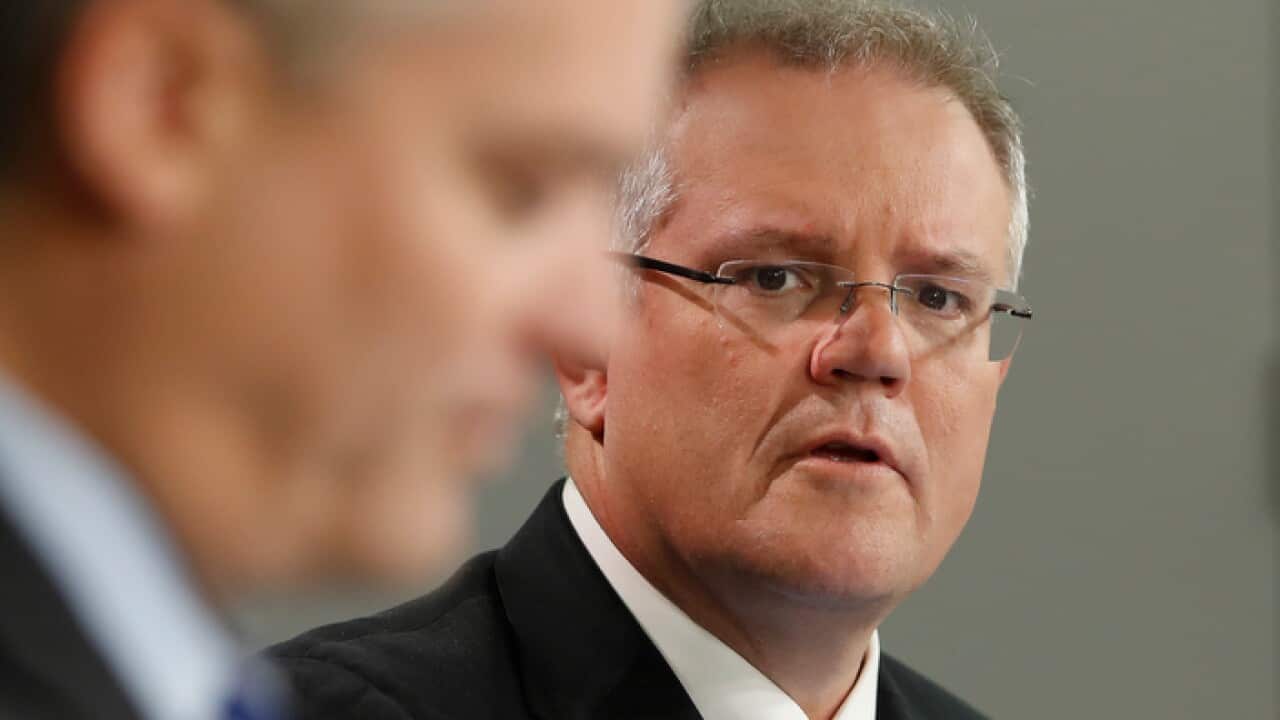
The Treasurer credits what he calls the Government's "disciplined" approach.
Scott Morrison:
"Final budget-outcome figures demonstrate again the wisdom of the careful approach that we've been taking as an economic team with the Prime Minister to our budgets. Our disciplined approach to financial management, implemented over successive budgets and updates, has been successively and successfully de-risking the budget."
On budget night in May, the 2017 deficit was expected to come in at $37.6 billion.
But there has since been a $4.4 billion improvement.
It is the lowest deficit in the four-year life of the Coalition Government.
Finance Minister Mathias Cormann says improved revenue -- or money coming in from tax and other sources -- is largely responsible, rather than lower spending.
He says global factors are also involved.
Mathias Cormann:
"There've been a whole range of well-documented, you know, obviously global economic headwinds that we've had to accommodate, and, over the years, we've had to deal with very serious revenue writedowns on the back of, in particular, significantly lower global commodity prices for key commodity exports like iron ore and coal and so on. I mean, these are all things that we've well and truly documented in the past."
But on the spending side, the Government says its cuts to welfare payments have been the main saving.
Senator Cormann credits "lower than anticipated payments" to the National Disability Insurance Scheme, (NDIS) citing an unexpectedly slow increase in people moving to the scheme.
However, Opposition frontbencher Anthony Albanese points out, in 2014, then treasurer Joe Hockey predicted the deficit would drop to just $2.8 billion by 2017-18.
Anthony Albanese:
"This, of course, has come in at three times the figure that Joe Hockey predicted in the first Coalition budget in 2014. We've also seen the debt increase by some $147 billion on this Government's watch. And in my area of infrastructure, it's a disaster. You've had, over the Government's first three years, $3.9 billion of underspend on what it itself said it would commit to over the following 12 months."
Access Deloitte Economics' Chris Richardson says both workers and companies have paid more tax than the Government expected they would back in the May budget.
Chris Richardson:
"You can see it across the board. More jobs means more personal tax. More profits means more company tax. More spending means more GST. Almost all of the types of tax that the government raises looking a little bit better than they thought ..."
The Government has several key measures from the budget it wants passed in the remaining five weeks of parliament.
They include increasing the Medicare surcharge to help fund the NDIS and savings in higher education.
Chris Richardson:
"You're still seeing a deficit of over $30 billion. We've been in deficit for the better part of a decade. And although the economy's looking better and that's helping, the economy itself won't do it. Canberra has to compromise its way to difficult things, to cutting spending and to raising taxes, to put Australia's budget on a firmer foot(ing)."