
New South Wales has become the last state to pass voluntary assisted dying laws. It followed a 10-hour debate before the upper house finally passed the bill, 24 votes to 13.
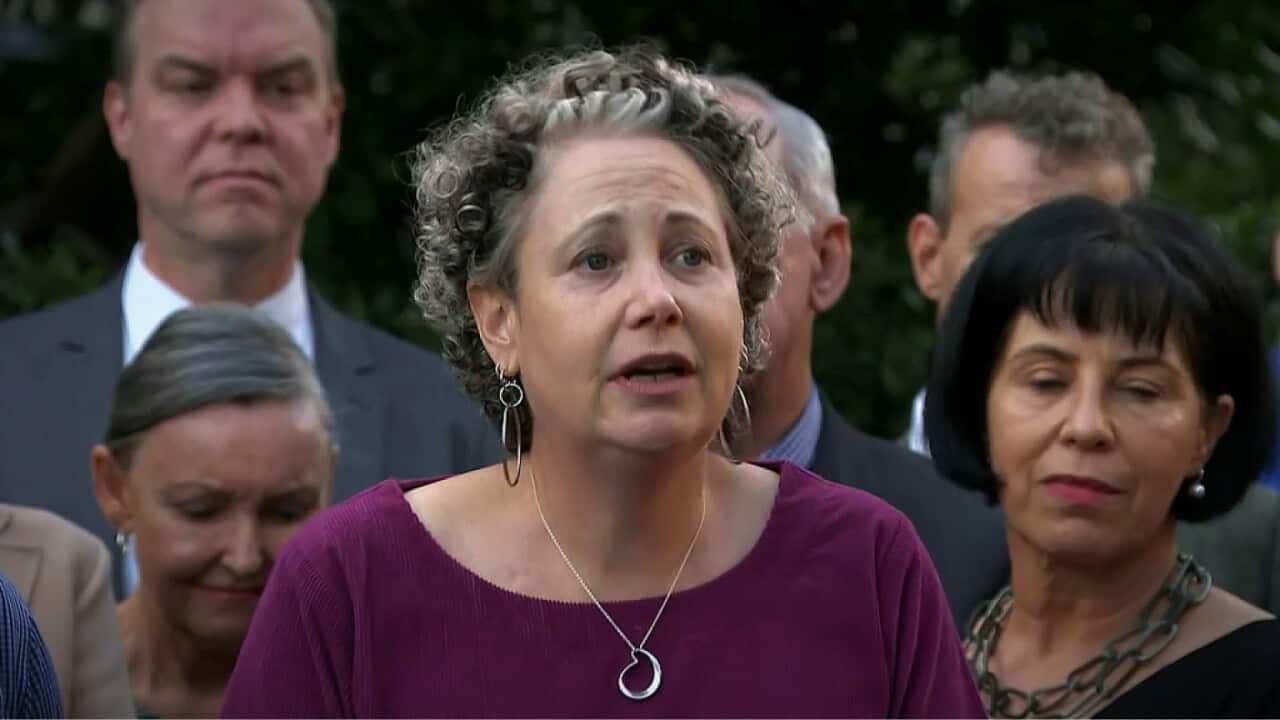
Siobhan O'Sullivan was diagnosed with ovarian cancer in 2020 and was told she only had one year to live.
The 48-year-old has had three different types of chemotherapy and major surgery.
On Thursday May 19, New South Wales became the last state to pass voluntary assisted dying laws, following a 10-hour debate.
Ms O'Sullivan says she's relieved the bill has passed into legislation.
"For me, it would be a comfort. I do not wish to die yet. I never thought for a second that I would get a really terminal aggressive cancer, and then it happened to me. So, I don't want to die, I want to be alive, but I am going to die from this cancer. And what I want most of all is to avoid the worst of the suffering. If my suffering isn't great, then my intention is to live as long as I possibly can, but if my suffering is really great, that is where laws such as this would be a great comfort to me."
On Thursday May 19, politicians and advocates gathered to celebrate the Assisted Dying Bill passing into law.
The bill was introduced by Independent MP Alex Greenwich in October 2021.
It had the highest number of co-sponsors for any bill in Australian Parliament, with 28 MPs from both sides of the house.
Mr Greenwich has thanked those involved.
"Today is a historic day for New South Wales. A day where compassion has won, and voluntary assisted dying has been passed into law in New South Wales. This has been a long journey in this place, with many attempts prior to this one. And I want to honour the work of MPs Cate Faehrmann and Trevor Kahn, who had previously worked on bringing legislation to this Parliament. More importantly, I want to thank the diversity of co-sponsors who worked together across party lines to see this legislation be embraced by the New South Wales parliament."
The bill applies to people with a terminal illness that would cause death within six months or a year for a neurodegenerative condition.
Applicants also have to be experiencing suffering that can't be alleviated by palliative care, and must be assessed by two independent doctors.
The Catholic Church was critical of the bill passing the upper house.
Archbishop Anthony Fisher of the Catholic Archdiocese of Sydney has called it "a truly dark day for New South Wales" and says he's "deeply saddened the bill has passed the New South Wales parliament".
He also described the legislation as "disturbing in nature".
Doctor Brendan Long is the CEO of the lobby group 'Right to Life' New South Wales.
He says the new laws go against what his organisation stands for.
"It's a shameful, it's a disgraceful piece of legislation because it doesn't really respect the value of human life, which is what our organisation is about defending. Really, the message that the politicians are giving people of New South Wales is there are sort of two classes of citizens. Those whose lives are worth living and those who are not. And this bill sort of says, 'Well, take the poison pill, your life's not worth living.' That goes against our ideology, our view of the world, which is that every second of human life is precious."
Doctor Long says he's concerned about funding for effective palliative care.
The state's Premier Dominic Perrottet has pledged to improve palliative care.
New South Wales is the last state to pass voluntary assisted dying laws.
Victoria passed the laws in 2017, followed by Western Australia in 2019.
Tasmania, South Australia and Queensland passed laws last year.
Under federal law, voluntary euthanasia and assisted dying are illegal in the ACT and Northern Territory.
While the NT was the first jurisdiction in Australia to legalise assisted dying in 1995, it was overruled by legislation passed by the former Prime Minister John Howard's government in 1997.
During election campaign 2022, Labor committed to reviewing the laws in the territories in case of victory.
The New South Wales upper house spent 10 hours debating almost 100 amendments on Wednesday night May 18 before the final vote of support on Thursday May 19.
It will take 18 months for the new legislation to come into effect.
MP Alex Greenwich says he's "passing the baton" to those in federal Parliament to ensure people in the territories have the same "end-of-life choices".
"So, now our focus must shift to the federal Parliament. And it's incumbent on our colleagues in Federal Parliament to pass laws to allow the territories to be able to legislate for this compassionate law reform."