
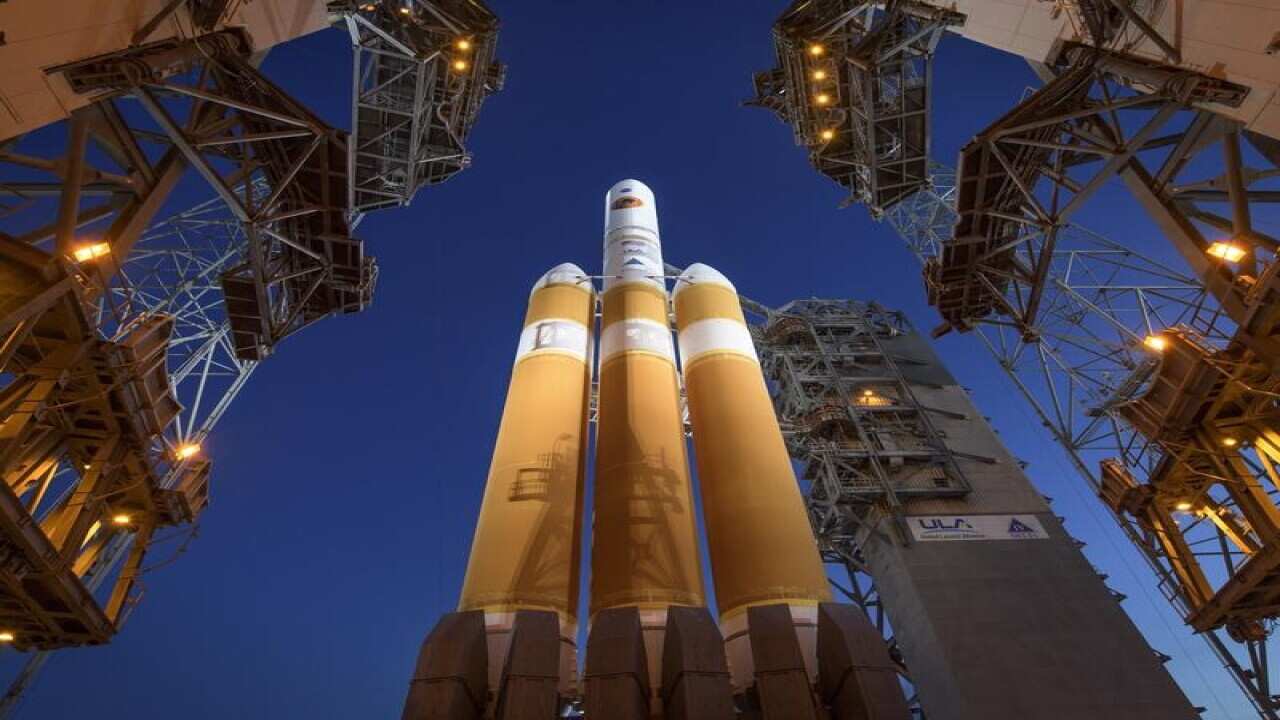

CAPE CANAVERAL, FLA. — A NASA spacecraft rocketed toward the sun Sunday on an unprecedented quest to get closer to our star than anything ever sent before.
Source Associated Press
The Parker Solar Probe will fly straight through the wispy edges of the corona, or outer solar atmosphere, that was visible during last August’s total solar eclipse. It eventually will get within 3.8 million (6 million kilometers) of the sun’s surface, staying comfortably cool despite the extreme heat and radiation, and allowing scientists to vicariously explore the sun in a way never before possible.
No wonder scientists consider it the coolest, hottest mission under the sun, and what better day to launch to the sun than Sunday as NASA noted.
Protected by a revolutionary new carbon heat shield and other high-tech wonders, the spacecraft will zip past Venus in October. That will set up the first solar encounter in November. Altogether, the Parker probe will make 24 close approaches to the sun on the seven-year, $1.5 billion undertaking.
Parker will start shattering records this fall.On its very first brush with the sun, it will come within 15.5 million miles (25 million kilometers), easily beating the current record set by NASA’s Helios 2 spacecraft in 1976. By the time Parker gets to its 22nd orbit of the sun, it will be even deeper into the corona and traveling at a record-breaking 430,000 mph (690,000 kilometers per hour).
Nothing from Planet Earth has ever hit that kind of speed.
With this mission, scientists hope to unlock the many mysteries of the sun, a commonplace yellow dwarf star around 4.5 billion years old. Among the puzzlers: Why is the corona hundreds of times hotter than the surface of the sun and why is the sun’s atmosphere continually expanding and accelerating, as the University of Chicago’s Parker accurately predicted in 1958?
A mission to get close up and personal with our star has been on NASA’s books since 1958. The trick was making the spacecraft small, compact and light enough to travel at incredible speeds, while surviving the sun’s punishing environment and the extreme change in temperature when the spacecraft is out near Venus.
More than 1 million names are aboard the spacecraft, submitted last spring by space enthusiasts, as well as photos of Parker, the man, and a copy of his 1958 landmark paper on solar wind.