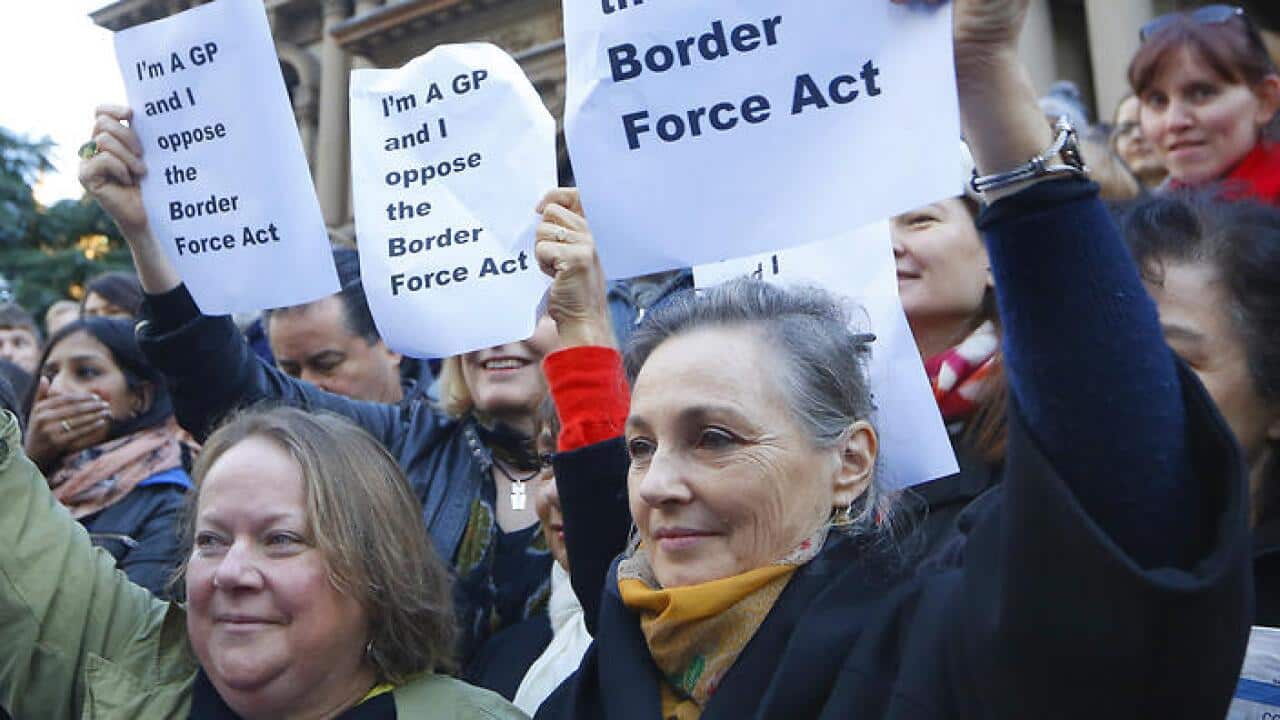
The Australian government has amended the secrecy and disclosure provisions of the 2015 Australian Border Force Act to exempt health professionals.
The law mandates a two-year jail term for unauthorised disclosure of "protected information" regarding asylum seeker detention centres.
Michael Pezzullo, Immigration Department Secretary, signed the amendment on September 30.
The amendment defines health practitioners as general and specialist doctors, dentists, nurses, psychologists and health advisers, among others.
The change comes after advocacy group Doctors for Refugees began challenging the government at the High Court in July on the grounds that the law prevented health practitioners from upholding their code of conduct which stipulates they “protect and advance the health and well-being of individual patients, communities and populations”.
Doctors for Refugees co-founder Dr Barri Phatarfod told SBS that while doctors would no longer fear jail sentences for reporting what they are duty bound to report, potential ramifications remain.
She said they would "likely still face potential civil legal action" from their employer, the Immigration Department, or International Health and Medical Services, depending on their contract.
Dr Phatarfod said the government must also exempt other professionals looking after asylum seekers at the centres such as lawyers, teachers and social workers.
"Silencing them under threat of jail sentences still means the conditions facing those in detention largely takes place under a cloak of secrecy, which is still unacceptable."
Refugee Council of Australia's acting CEO Tim O'Connor agreed it was concerning that non-health workers were still threatened with two years' jail for disclosing information about the camps to the public, especially because of the "abuse that they witness in these Australian funded, managed and operated centres".
"Nor does this back-flip alter the appalling conditions, nor the systemic lack of transparency and accountability that pervades Australia’s detention regime," Mr O'Connor told SBS.
"There is a well-documented pattern of abuse and impunity in offshore detention, including cases of abuse, child sexual abuse and reports of rape that have not been adequately investigated.
"The Australian Government should urgently address this issue, instead of repeatedly denying allegations and threatening those who speak out."
A spokesperson from the Immigration Department told SBS on Thursday that it had "consistently made clear" that the Australian Border Force Act does not prevent employees, contractors or consultants such as health practitioners from reporting issues and concerns through "the appropriate channels".
"Despite consistent incorrect claims and reporting of the Australian Border Force Act, the act is not and has never been an instrument to 'gag' lawful disclosures in the public interest regarding the operation of either the regional processing or the immigration detention network in Australia, and the department and the [Immigration] Minister [Peter Dutton] has made this clear on multiple occasions."
The spokesperson clarified that the amendment "makes clear" that health practitioners performing services for the department are not subject to the act, which includes secrecy and disclosure provisions.
"The department still expects that health practitioners will maintain their strict ethical, professional and contractual obligations of confidentiality and privacy."
Dr Phatarfod said it was important the government acknowledged changing the law.
"So the same information that was a 'lawful disclosure' until July 1 2015 became 'unlawful' overnight [when the act was introduced] and now has become 'lawful' again," she said.
Australia’s freedom of speech is not protected like the US, through the First Amendment of its Constitution.
However the High Court has held that there is implied freedom of political communication within Australia’s democracy.