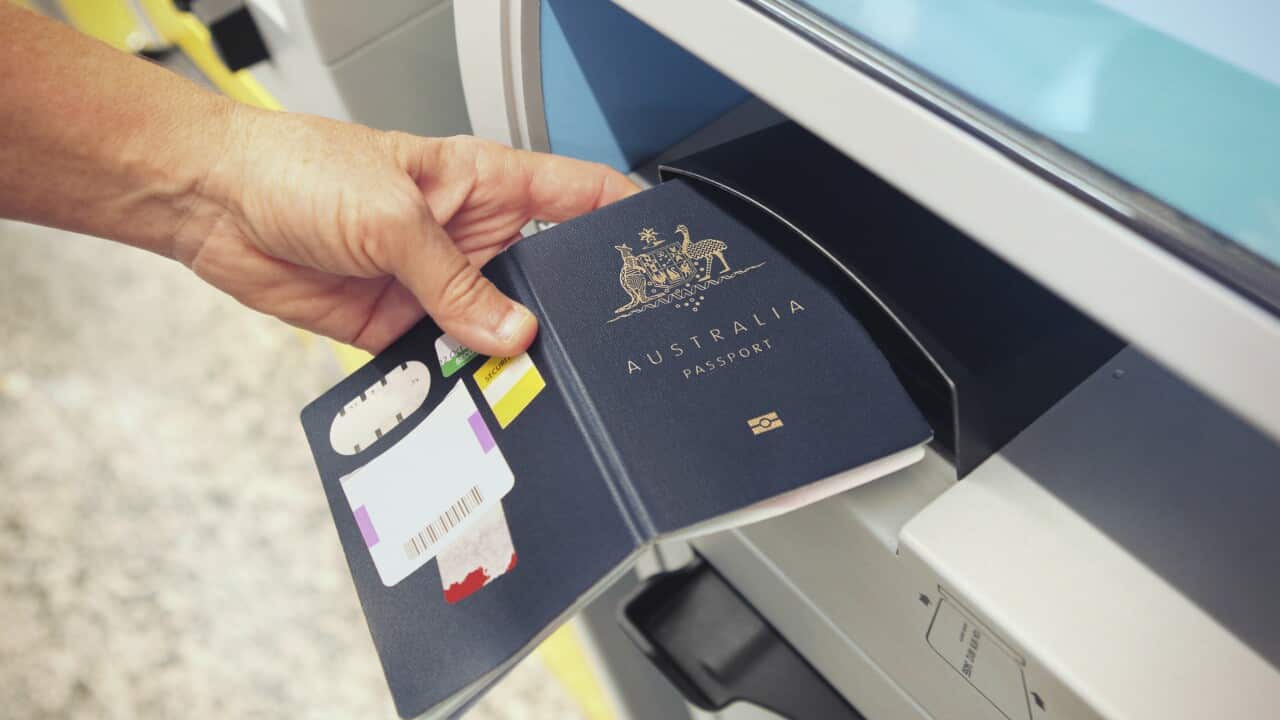
The world's most powerful passports have been revealed in new rankings, showing Australia has maintained its position within the top 10.
Singapore again took the top spot as the world's most powerful passport, according to the Henley Passport Index's latest quarterly measure, which ranks travel documents based on the number of destinations holders can access without a visa.
Australia retained its seventh-place position, alongside Latvia, Liechtenstein and the United Kingdom, with visa-free access to 182 countries.
At the other end of the spectrum, Afghanistan again ranked last, with access to just 24 countries without a visa.
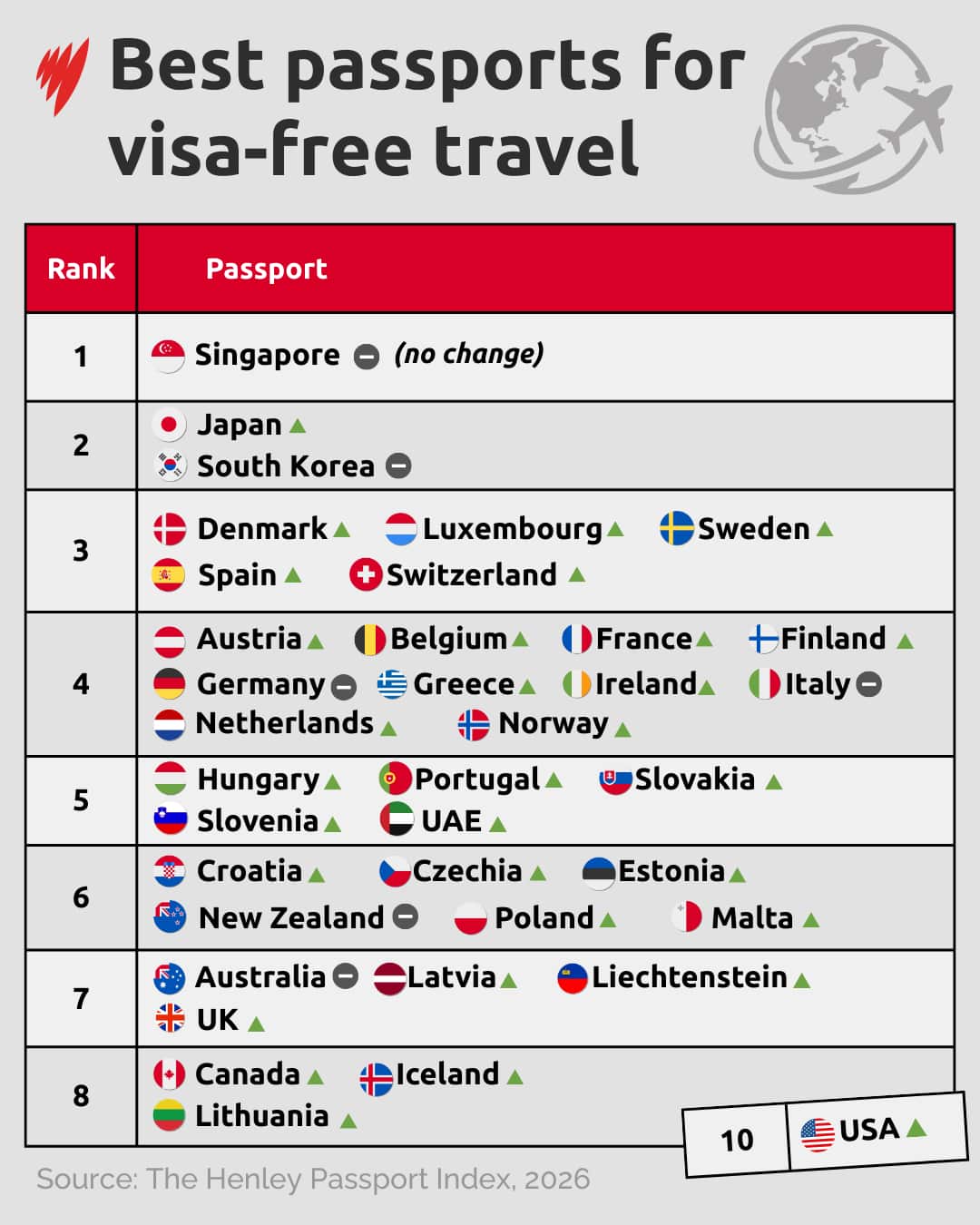
The world's most powerful passports have been revealed, with Australia still holding firm while the US and UK slip. Source: SBS
UK continues to plummet, US back in top ten
Japan and South Korea share second place on the index, followed by Denmark, Luxembourg, Spain, Sweden and Switzerland in third.
Ten European countries tied for fourth, while Australia's neighbour New Zealand ranked just ahead in sixth.
The UK, which tied with Australia in seventh place, recorded the steepest year-on-year decline, losing visa-free access to eight destinations over the past 12 months.
The US, meanwhile, managed to claw its way back into the top ten after briefly dropping out in late 2025 — the first time that had happened since the index began.
But the rebound comes with a caveat — the US recorded the second-largest annual decline after the UK, losing visa-free access to seven destinations in the past year.

"Passport power ultimately reflects political stability, diplomatic credibility, and the ability to shape international rules," Misha Glenny, director of the Institute for Human Sciences in Vienna, says in Henley & Partners' report.
"As transatlantic relations strain and domestic politics grow more volatile, the erosion of mobility rights for countries like the US and UK is less a technical anomaly than a signal of deeper geopolitical recalibration."
How passports have changed over 20 years
Over the past two decades, the US has recorded the third-largest drop in rankings — behind Venezuela and Vanuatu — falling from fourth place in 2006 to tenth in 2026.
The UK has seen the fourth-largest decline, dropping from third to seventh over the same period.

By contrast, the United Arab Emirates has been the strongest performer globally, adding 149 visa-free destinations since 2006 and climbing 57 places to rank fifth.
Several countries across the Western Balkans and Eastern Europe have also made significant gains, including Albania (+36 places), Ukraine (+34), Serbia (+30) and North Macedonia (+27).
Share


